



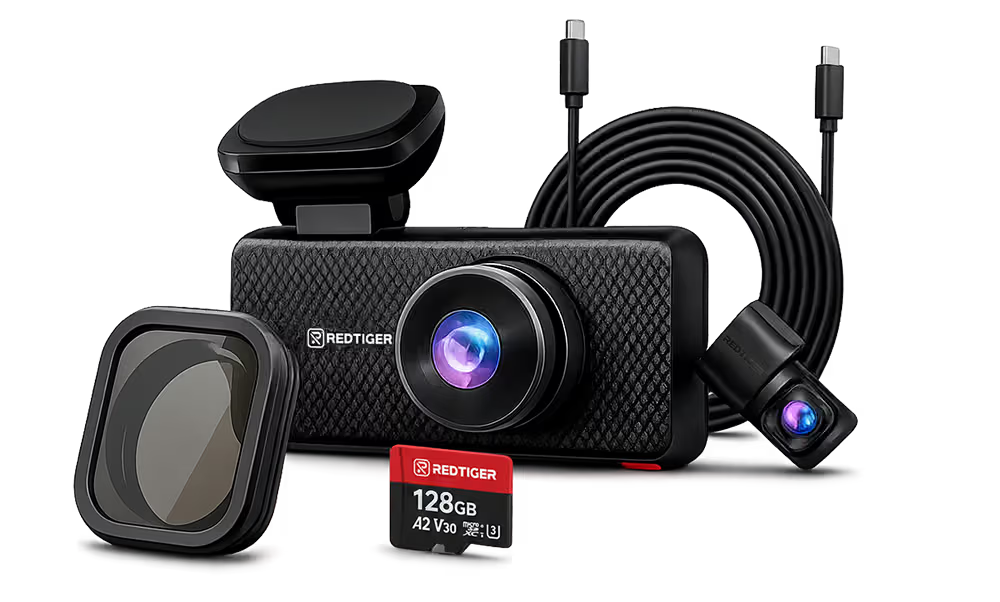



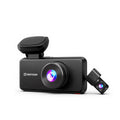
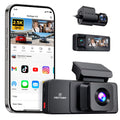

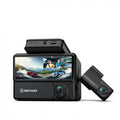


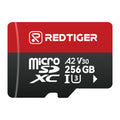









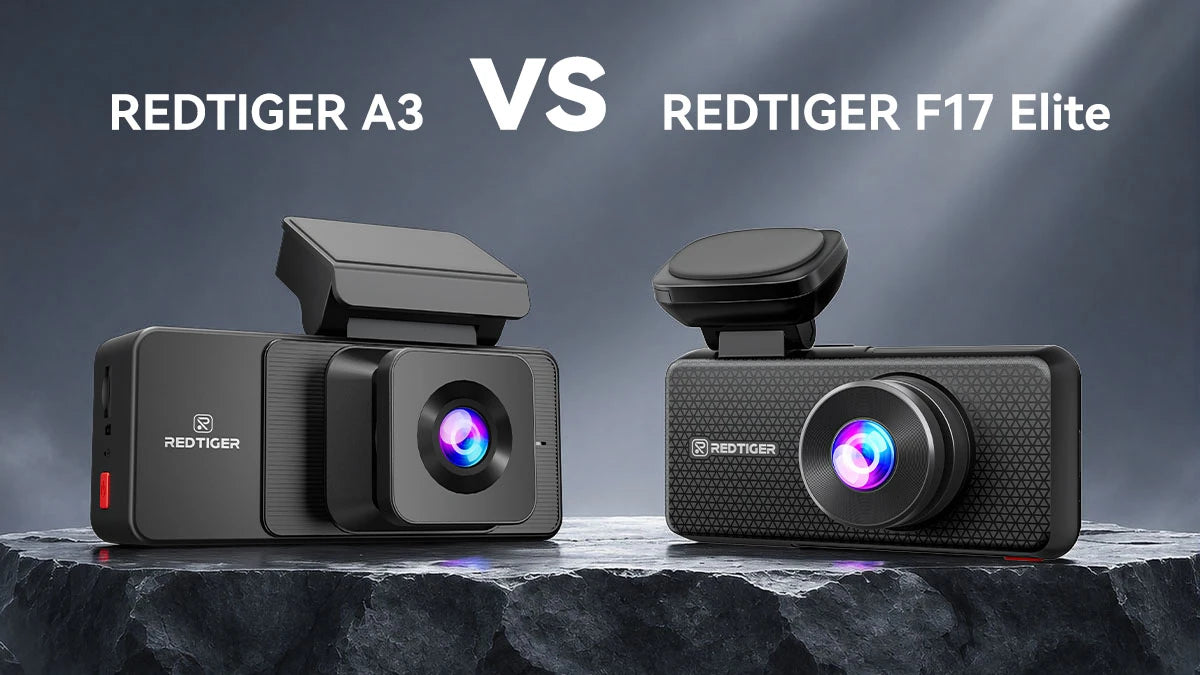
Choosing between the REDTIGER A3 and REDTIGER F17 Elite? You are comparing two three-channel dash cams: a front camera, an interior camera, and a third rear-facing camera. REDTIGER's product documentation lists that third channel as an in-cabin rear camera — and the packaging list describes it as a built-in, non-waterproof rear camera, so check the installation diagram for your own vehicle before assuming it can sit outside. Both give you three-angle coverage.
However, they differ in resolution, night features, wireless speed, and price. That's what the A3 vs F17 Elite decision is really about.
This REDTIGER A3 vs F17 Elite comparison guide covers video quality, night vision, smart features, parking, and cost. The A3 is a practical, entry-level pick, while the F17 Elite is the advanced option.
REDTIGER A3 vs. F17 Elite: Video Resolution and Recording Coverage
The F17 Elite records at higher resolution on every channel. It captures 4K in front, 2.5K at the rear, and 1080P inside. Meanwhile, the A3 records 2.5K in front and 1080P at the rear and inside.
Both feature a windshield-mounted system with a dedicated 3M mount. Both dash cams cover three angles at once.
REDTIGER A3: 2.5K Front and Dual 1080P Recording
The A3 pairs a 2.5K (1440P) front camera with 1080P rear and interior cameras. It captures plates and passenger interactions in a dispute.
The REDTIGER A3 uses an f/1.6 lens. It's a solid base for daily driving and rideshare use, keeping the price gap between the A3 and F17 Elite wide.
REDTIGER F17 Elite: 4K + 2.5K + 1080P Three-Channel Recording
The F17 Elite uses a Sony STARVIS 2 IMX678 sensor for 4K front video, an IMX675 for the 2.5K rear camera, and a 1080P interior camera. That's a step up on both outside views.
DashCamTalk lists the front and interior cameras at 25 fps and the rear at 30 fps. So, the REDTGER A3 vs F17 Elite gap becomes clearer in front- and rear-cam resolution.
Does 4K Always Mean Better Dash Cam Footage?
No. Sensor quality, exposure, HDR, lighting, and compression shape the video. Some "4K" cams stretch a smaller image, upscaling it to 4K. A good sensor delivers real detail in the pixels.
Watch real sample footage from each camera rather than judging by resolution alone. For the A3 or F17 Elite, 4K gives you more zoom, but your routes and lighting conditions matter, too.
REDTIGER A3 vs. F17 Elite: Night Vision and Low-Light Performance
The A3 focuses on infrared night vision for the cabin. The F17 Elite adds STARVIS 2 sensors, dual HDR, NiteGuard parking mode for low-light imaging, and full-color night vision inside. Pick the F17 Elite if low-light detail matters.
REDTIGER A3: Infrared Night Vision for Cabin Recording
The A3 uses infrared lights and low-light optimization to improve cabin visibility at night. Its comparison table lists the A3's night capability as IR Night View, with no HDR or WDR.
That keeps things simple for routine night driving and rideshare checks. The F17 Elite takes a different approach in the A3 vs F17 Elite night-vision contest.
REDTIGER F17 Elite: STARVIS 2 Front and Rear Sensors, Dual HDR, and NiteGuard™
The F17 Elite pairs STARVIS 2 front and rear sensors with HDR. On REDTIGER's model comparison table the F17 Elite is listed with front HDR and rear HDR, while the A3 is listed with no HDR or WDR. Worth knowing: REDTIGER's product documentation does not list an HDR entry for the F17 Elite, and an independent early-unit review reported that the F17 Elite had no HDR setting in the menu — so if HDR matters to you, confirm it on the current model in the app before you buy.
NiteGuard is REDTIGER's low-light parking mode, and the A3 doesn't offer it. However, it's only available on the front camera.
Which Model Fits Your Nighttime Driving Needs?
In the A3 vs F17 Elite night test, choose the A3 for routine night recording and cabin checks. Choose the F17 Elite if you want stronger low-light imaging on the road.
One technical detail matters: the F17 Elite's full-color night vision applies to the cabin camera. The front and rear cameras use their STARVIS 2 and HDR technology.
Smart Features Compared: Wi-Fi, Voice Control, GPS, and Ease of Use
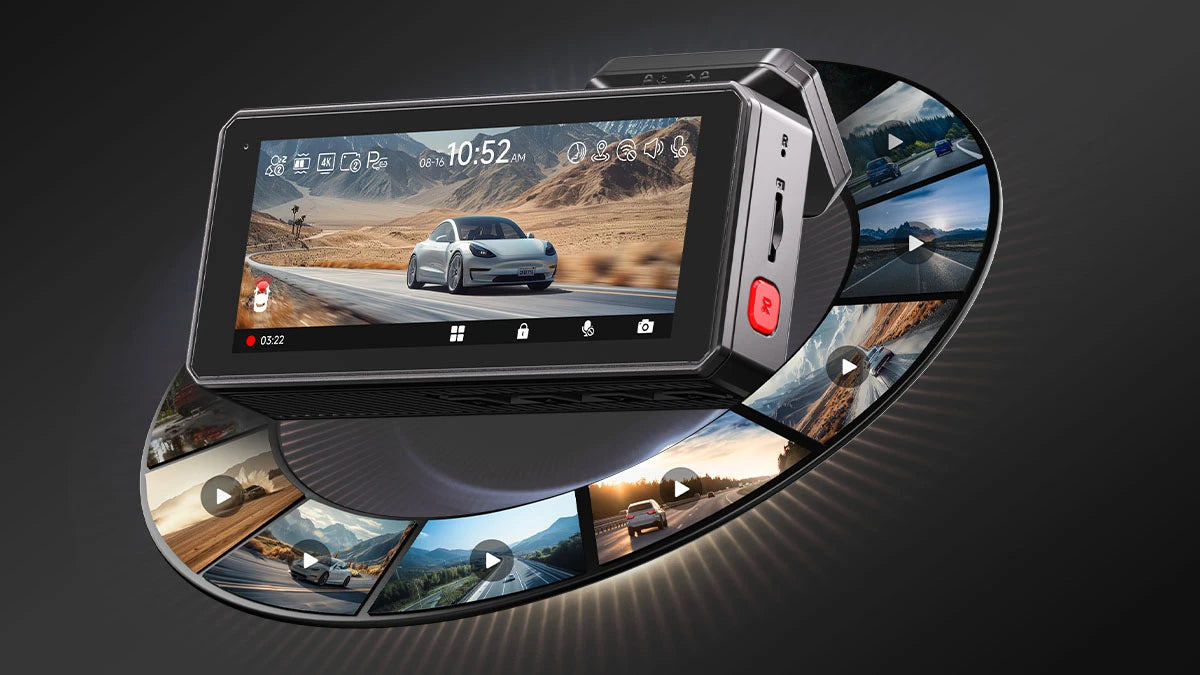
Both 3-channel dash cams connect to your phone over Wi-Fi. The F17 Elite adds Wi-Fi 6, a touchscreen, and voice control. The A3 keeps controls simple. The F17 Elite or A3 choice comes down to how much hands-on control you want.
REDTIGER A3: Essential Connectivity for Everyday Drivers
The A3 connects through the REDTIGER Cam app. You can preview, download, and share clips from your phone. It supports 5GHz and 2.4GHz Wi-Fi and has no touchscreen or voice control. That straightforward approach suits drivers who check footage only after an event.
REDTIGER F17 Elite: Wi-Fi 6, Touchscreen, and Voice Control
The F17 Elite lists Wi-Fi 6 at up to 30Mb/s, a touchscreen, and voice control. Faster transfers save time when you move long clips. Voice commands help you act without taking your hands off the wheel.
GPS logging records location for trips and driving history. On REDTIGER's own model comparison table, the F17 Elite is listed as GPS Logger supported and the A3 as GPS Logger not supported. If route history or speed logs matter to you, that difference belongs on your shortlist — the A3 does not record them.
Which Features Will You Actually Use?
In the F17 Elite vs A3 feature test, if you open the app only occasionally, the A3's setup is enough. If you move big files often or want hands-free control, the F17 Elite's upgrades pay off.
Setup is simple on both. Both install inside the cabin: the front unit goes at the A-pillar area, with the rear camera positioned below it, and both F17 Elite's front and interior lenses can be adjusted independently. Larger vehicles, like vans, may need a longer rear cable.
Parking Mode and Three-Channel Protection: A3 vs. F17 Elite
Both cameras support parking mode, but both need a hardwire kit. REDTIGER's kit cuts power 60 seconds after the vehicle voltage drops below 11.8V (±0.2), so a parking recording can end before your card is full. The F17 Elite adds NiteGuard for low-light parking. Parking mode doesn't mean every mode works the same way or runs without power.
How REDTIGER A3 Supports Everyday Parking Monitoring
With a hardwire kit, the A3 watches your car while parked. Once the kit is installed the parking menu offers Off, G-Trigger recording and time-lapse recording at 12, 24 or 48 hours; the F17 Elite offers the same three options with NiteGuard added on the front camera. The A3 ships with parking mode switched off, and in-car power mode the menu shows "Unsupported, please insert the ACC".
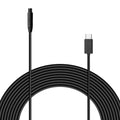
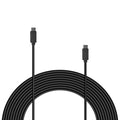
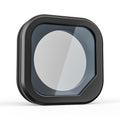
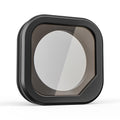
What arrives in the box depends on where you buy. REDTIGER's product documentation lists a 32GB microSD card already in the slot for the A3 and a 128GB microSD card for the F17 Elite, with no hardwire kit in either list. The bundles sold on REDTIGER's US store are built the other way round: every A3 bundle includes a hardwire kit and the base one ships without a card, and the F17 Elite base bundle pairs the camera with a hardwire kit while the Extend Pack adds the 128GB card, 33-foot extension rear cables, a one-year extended warranty and a polarizing filter. The A3 also uses a supercapacitor rated from -20°C to 70°C.
What Makes F17 Elite's NiteGuard Parking Mode Different?
NiteGuard is built for low-light parking recording and works on the front camera. The A3 table entry for NiteGuard reads "Not supported." Both cameras still need steady power, so any A3 vs F17 Elite parking plan needs a kit.
What Do You Need for 24/7 Parking Surveillance?
You need a compatible hardwire kit, power management, and the right settings. A cigarette-lighter connection loses power when the ignition is off, so you need hardwiring to run parking mode. The kit's low-voltage cutoff protects your battery.
Parking mode types also change storage use. Continuous parking uses the most space, while motion, impact, and time-lapse modes use less.
Loop recording and the G-sensor work the same way on both. Loop recording overwrites the oldest clips, and the G-sensor locks impact footage so it's not overwritten. Always save the last and/or important clips soon after an event.
Price, Storage Capacity, and Overall Value: Which Dash Cam Is Worth It?
The A3 costs far less, while the F17 Elite costs more for higher specs and more storage. REDTIGER lists the A3 at around $75 and the F17 Elite at about $260.
REDTIGER A3: Affordable Three-Channel Coverage
The A3 lists a $75 sale price, down from $160, with a hardwire kit option. It supports up to 256GB of microSD storage. REDTIGER offers 64GB, 128GB, or 256 GB card options.
Reviewers rate it 5.0 out of 5 from 14 reviews. One fleet buyer needed longer rear cables for passenger vans, and REDTIGER sent extensions free.
REDTIGER F17 Elite: Paying for More Advanced Features
The F17 Elite lists $260 and supports up to 512GB. The bundle includes a 128GB card and a hardwire kit.
The reviewer on DashCamTalk put the F17 Elite at around $240 when it was tested, called it a capable mid-range three-channel dash cam with real 4K from the STARVIS 2 front and rear sensors, and singled out the movable front and interior lenses and the color night vision for the cabin. The same review flags the front and interior recording at 25 fps, notes that the mount has some visible movement over bumps, and says the F17 Elite has no HDR setting. Price is only part of the REDTIGER F17 Elite vs A3 story.
Compare the Total Cost Before Buying
Add the card, the hardwire kit, and any extra cable — and check what your bundle already includes, because the documentation and the US store bundles are not packaged identically. REDTIGER also sells longer rear cables for larger vehicles.
Storage size matters for three-channel recording. REDTIGER lists 128GB as 3–4 hours and 256GB as 6–8 hours for 4K + 2.5K + 1080P. The A3 records at lower resolution, so it will generally fill a card more slowly — REDTIGER does not publish a recording bitrate for the A3, so treat the exact saving as an estimate rather than a figure.
REDTIGER A3 vs. F17 Elite: Which One Is Best for Your Driving Style?
Choose the A3 if you want budget-friendly, practical coverage. Choose the F17 Elite if you want sharper recording, stronger low-light imaging, and faster transfers. Your daily routes, nights, and budget should decide whether to choose the A3 or F17 Elite.
Choose REDTIGER A3 If You Want Practical, Budget-Friendly Coverage
The A3 suits daily commuters, first-time buyers, and budget rideshare drivers. The entry-level dash cam records three channels, supports parking mode with a hardwire kit, and uses a simple app workflow. That balance gives the A3 the value win against the F17 Elite.
Choose REDTIGER F17 Elite If You Want More Advanced Recording
The F17 Elite suits highway drivers, night drivers, and anyone who often moves big files. It brings 4K front video, STARVIS 2 sensors, dual HDR, Wi-Fi 6, and voice control.
Full-color cabin night vision also helps rideshare drivers. That's where the F17 Elite wins the A3 vs F17 Elite performance round.
Is Upgrading from A3 to F17 Elite Worth It?
It's worth the trouble if the A3's lower resolution, lack of HDR, or slower transfers bother you. If you are satisfied with your footage, keep it. Upgrading mainly buys better detail and low-light imaging.
Think about what else you could improve first. A larger memory card, a hardwire kit, and a clean install may fix more problems than a new camera. If your A3 footage already serves you well, keep it.
REDTIGER A3 vs. F17 Elite: Final Verdict
The A3 is the practical pick, whereas the F17 Elite remains the performance pick. The table below summarizes the key differences.
Summary Comparison: REDTIGER A3 vs REDTIGER F17 Elite
|
Feature
|
REDTIGER A3
|
REDTIGER F17 Elite
|
|
Video Resolution
|
2.5K front, 1080P rear and inside
|
4K front, 2.5K rear, 1080P inside
|
|
Night Vision
|
IR night view, no HDR or WDR listed
|
STARVIS 2, dual HDR, full-color cabin
|
|
Wi-Fi
|
5GHz/2.4GHz
|
Wi-Fi 6, up to 30Mb/s
|
|
Controls
|
App only; no touchscreen or voice
|
Touchscreen and voice control
|
|
Parking Mode
|
Yes; hardwire kit needed
|
Yes, plus NiteGuard; hardwire kit needed
|
|
Storage
|
Up to 256GB microSD
|
Up to 512GB microSD
|
|
Price
|
$74.99, reduced from $159.99
|
Limited time Deal $259.9, reduced from $349.99
|
That said –
- Pick the A3 for budget, simple use, and three-angle coverage.
- Pick the F17 Elite for 4K detail, HDR night imaging, and fast transfers.
Match your driving habits and on-road needs to choose the right option. You can always start with the A3 while keeping a future upgrade to the F17 Elite in mind.


Frequently Asked Questions (FAQs)
What is the difference between the REDTIGER A3 and F17 Elite?
The F17 Elite records at higher resolution with STARVIS 2 sensors and dual HDR. It offers Wi-Fi 6, touchscreen, voice control, and NiteGuard. The A3 is simpler and costs less.
Is the REDTIGER A3 a good dash cam for beginners?
Yes. In the A3 vs F17 Elite lineup, it costs less, uses a simple app, and still records front, rear, and cabin video. The A3 is an entry-level dash cam that gets the basics right.
Is the REDTIGER F17 Elite worth the extra cost?
It is, as the A3 vs F17 Elite specs show, if you value 4K detail, low-light imaging, and fast transfers. If you only need basic three-channel coverage, the A3 may be enough.
Which REDTIGER dash cam has better night vision?
The F17 Elite has stronger low-light technology, with STARVIS 2 sensors, dual HDR, and full-color cabin night vision. The A3 relies on infrared night vision, which isn't very effective at capturing detail.
Can both REDTIGER dash cams record while parked?
Yes. In the A3 vs F17 Elite comparison, both support parking mode when connected to a hardwire kit. Only the F17 Elite adds NiteGuard parking mode.

Leave a comment
All comments are moderated before being published.
This site is protected by hCaptcha and the hCaptcha Privacy Policy and Terms of Service apply.