



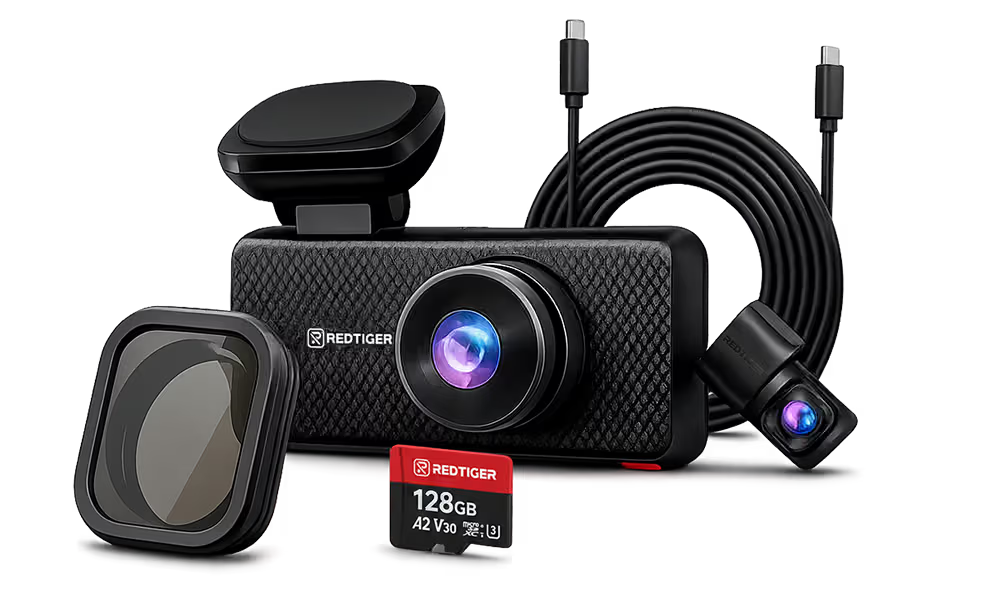



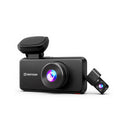
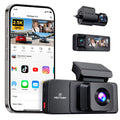

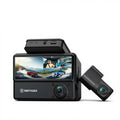











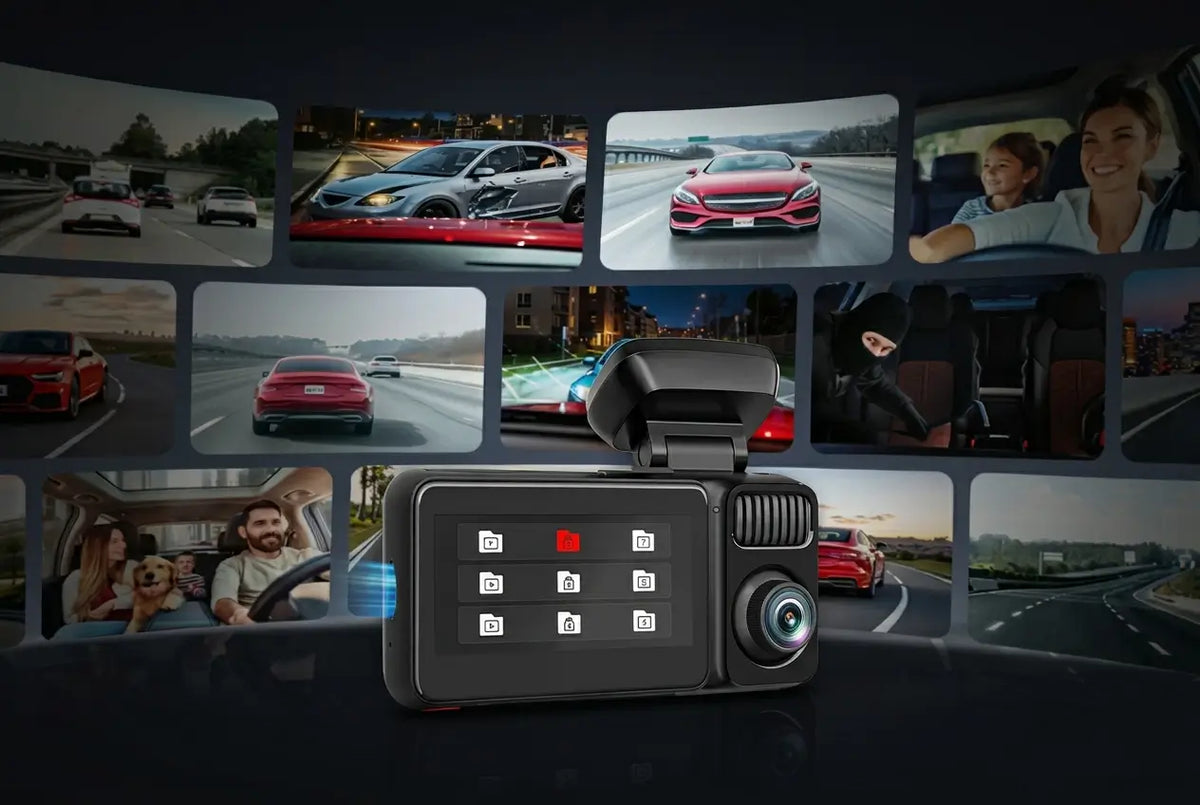
A single commuter mostly needs a dash cam to watch the road ahead. A family needs more than that. The dash cam for families has to cover front, rear, and interior cabin footage at once.
A household car or SUV may have a teen driver building experience, kids and pets in the back seat, and school carpool or rideshare duty on top of everyday errands. A reliable family dash cam setup combines solid 4K front recording with clear cabin footage and 24-hour parking protection for the driveway.
This article walks you through why families need more coverage than a standard dash cam. We'll look into the essential factors and which REDTIGER model qualifies as the best dash cam for families.
Why Do Family Vehicles Need a Dash Cam?
Families face driving situations a solo commuter rarely runs into. You may have a new driver building skills with kids and pets riding along. Sometimes, the car doubles as a rideshare or carpool vehicle.
Each driving situation calls for different camera coverage to record what happens on the road. That's why choosing from the best dash cams for family use means looking beyond a single forward-facing lens to find a setup that provides reliable coverage for every journey.
Teen and New Driver Safety
A dash cam lets parents see how a new driver is doing behind the wheel. You can get their hard braking, speeding, and distracted-driving moments. These are easy to talk about after the fact but hard to fully understand secondhand.
NHTSA data shows new teen drivers are 2x more likely to be involved in a deadly crash. It mostly arises from inexperience. Teens are 3x more likely to engage in risky behavior with other teen passengers.
A family-friendly dash cam with front and cabin coverage makes that risk real. It turns the drive into something a parent can see and talk through.
Backseat and Cabin Monitoring
An interior-facing camera lets a parent keep an eye on younger kids and pets in the back seat. It's especially beneficial on long road trips or routine errands.
You won't even need to glance back and take your eyes off the road. The feature becomes useful more often than you might expect, especially on longer drives.
Rideshare, Carpool, and Shared Vehicles
You may pull the family car for a double duty for rideshare driving and school carpools. You may even lend the SUV/car to some neighborhood drivers.
That's where cabin footage becomes a solid record of who was in the vehicle and what happened.
The footage preserves evidence to settle a dispute. However, it's just as useful for simple peace of mind when more than one person drives the same car.
What Features Should the Best Family Dash Cam Have?
No single dash cam is the automatic right choice for every family. The most important features depend on how your household uses the vehicle.
Front, Rear, and Interior Channel Coverage
A 3-channel setup- front, rear, and cabin- covers the three directions for a family vehicle. You'll see the road ahead, what's happening behind, and who's inside the car. A front-only camera leaves you blind in two of those three directions.
High-Resolution Front Camera for Evidence
4K front recording captures enough detail to read a license plate or road sign clearly. It serves as evidence in a dispute or claim more than it does for everyday viewing.
Interior Night Vision Without Distraction
A cabin camera needs to work well in the dark. And it should do so without adding a bright, distracting light source inside the car. Infrared night vision solves the issue.
It illuminates the cabin in a spectrum invisible to the human eye. You won't have to deal with a glowing dash light to get clear cabin footage.
Easy App Access for Quick Footage Sharing
When something happens, pulling up a clip on your phone feels like a must. You want it done in a minute or two, not by digging an SD card out of the camera.
You may not always be able to find a proper, functional card reader. That's when a responsive companion app can prioritize getting the footage within minutes.
24-Hour Parking Mode for Driveway Protection
Parking mode keeps the camera watching the car after the engine's off. It uses the G-sensor impact detection and time-lapse recording. It differs from continuous full-quality video.
The mode lets the cam run for a full day or more without draining the battery or filling the SD card. Some additional features suit a family vehicle better than a solo commuter's car.
Wide Operating Temperature Range: For cars that sit in a driveway through both hot summers and cold winters.
Supercapacitor Power: Holds up better than a lithium battery in a parked car sitting in direct sun.
Large microSD Support: Matters more for a family vehicle logging longer road trips and more overall driving hours.
Voice Control: Lets the driver adjust settings or lock a clip without taking a hand off the wheel.
Feature availability varies a lot between models. So always check the specific spec sheet, and don't assume every family-marketed dash cam includes everything.
Best Dash Cam for Families in 2026
Five models stand out for family use, ranging from REDTIGER to WOLFBOX. Each model comes with a different balance of channels, resolution, and price. The table below compares their core specs.
|
Model
|
Channels
|
Resolution
|
Night Vision
|
WiFi and App
|
|
|
REDTIGER VisionPano 40
|
4 (front + rear + dual cabin)
|
2.5K front + 2.5K rear + 1080P + 1080P dual cabin
|
Dual Sony STARVIS 2
|
5.8GHz, REDTIGER app
|
Mid-premium
|
|
REDTIGER F17 Elite
|
3 (front+rear+cabin)
|
4K/2.5K/1080P
|
Full STARVIS 2 (NiteGuard™ front/rear + cabin full-color night vision)
|
5.8 GHz WiFi 6 (up to 30 Mb/s)
|
Premium
|
|
REDTIGER VP20
|
3 (front+cabin+rear), 530°
|
2.5K+2.5K+1080P
|
4 IR lights, cabin-focused
|
WiFi, REDTIGER app
|
Mid-range
|
|
WOLFBOX G900TriPro
|
3 (mirror+bumper)
|
4K/2.5K/1080P
|
STARVIS IMX678
|
5.8GHz, WOLFBOX app
|
Premium
|
|
WOLFBOX G900 Pro
|
2 (mirror front+rear)
|
4K/2.5K
|
STARVIS 678
|
5.8GHz, WOLFBOX app
|
Mid-premium
|
Best REDTIGER Dash Cam for Your Family
REDTIGER's three family-oriented models split cleanly by priority: total vehicle coverage, everyday all-around use, or cabin-focused visibility. Here's what each one brings to a family vehicle.
REDTIGER VisionPano 40
The VisionPano 40 uses four channels with dual Sony STARVIS 2 sensors. It features 2.5K resolution on the front and rear cameras plus 1080P dual cabin cameras that cover the left and right of the interior, together encircling the vehicle end to end.

It includes built-in HDR, 5.8GHz WiFi, GPS, and parking monitoring. It's the most complete option for families who want the broadest possible vehicle and cabin coverage in one system.
REDTIGER F17 Elite
The F17 Elite offers 3-channel front, rear, and cabin coverage.
Front camera (Sony STARVIS 2 IMX678, 4K): NiteGuard™ Superior Night Vision — optimised for low-light and parking-mode clarity, including license-plate capture.
Cabin camera (Sony STARVIS IMX662, 1080P): Full-color night vision (cabin only) with infrared illuminations — designed to capture clear, colour-accurate footage of passengers inside the vehicle even in total darkness.
Rear camera (Sony STARVIS 2 IMX675, 2.5K): Standard STARVIS 2 low-light enhancement.
Integrated 5.8 GHz WiFi 6 (up to 30 Mb/s) enables faster clip transfers. It's built for families who want strong resolution and reliable everyday coverage without stepping up to a 4-channel setup.
REDTIGER VP20
The VP20 delivers 530-degree coverage through three channels. It has a 2.5K front camera, a 2.5K interior camera with 4 IR lights, and a 1080P rear camera.

That makes the cam a strong option for cabin visibility and side-angle coverage in low light. It's for families who care most about clearly seeing what's happening inside the car.
Which REDTIGER Dash Cam Is Right for Your Family?
Finding the right REDTIGER model means matching channel coverage to your family's driving pattern. It has nothing to do with picking whichever one has the most features.
For the Most Complete Vehicle Coverage: REDTIGER VisionPano 40
You may park in busy shared lots, drive a larger vehicle, or simply want no blind spots around the car. The VisionPano 40's four-channel surround coverage is built for that priority.
For Everyday Family Driving: REDTIGER F17 Elite
Families often handle typical household commutes, school runs, and occasional road trips. The F17 Elite's 3-channel setup covers front, rear, and cabin without requiring a fourth camera angle.
For Wide-Angle and Cabin Night Visibility: REDTIGER VP20
You may need clear nighttime cabin footage and wide side-angle coverage for a teen driver or frequent carpool tasks. The VP20's 530-degree layout and IR-lit interior camera are built specifically for that.
How to Choose Based on Your Family's Driving Scenario
How to Install a Family Dash Cam in Your Vehicle
Installation and camera positioning affect how much of the cabin and rear you capture. Take your time to get it right. A few placement details make a big difference in a multi-camera family setup.
Mount the Front Camera Behind the Rearview Mirror
Center the front camera near the top of the windshield, close to the mirror. It should stay out of the driver's direct line of sight while still capturing a clear forward view.
Route the Rear Camera Cable Through the Headliner
Run the rear camera cable along the headliner and down the A-pillar without draping it across the interior. Tuck it behind trim panels for a cleaner, more secure install.
Position the Interior Camera for Cabin Coverage
Angle the interior camera to capture the front seats and, ideally, the second row. Don't point it directly into a bright window, which could wash out the footage.
Install a Hardwire Kit for 24-Hour Parking Mode
Wire the hardwire kit into a fuse that's switched with the ignition. Otherwise, parking mode can drain the battery overnight.
Conclusion
A family dash cam is worth considering for the price because it covers three specific things. It's about catching up with a new driver's habits, what's happening in the back seat, and who's in the car during a carpool or rideshare trip.
Your household may need the VisionPano 40's full surround coverage, the F17 Elite's balanced setup, or the VP20's cabin-focused night visibility.
Match the camera to how your family uses the vehicle. Chasing the highest numbers, features, or specifications can lead to the wrong purchase. Start with your driving pattern, and choosing the right REDTIGER dash cam becomes easy.
Frequently Asked Questions (FAQs)
What is the best dash cam for families in 2026?
It depends on your household needs. The REDTIGER VisionPano 40 offers the most complete coverage. Meanwhile, the F17 Elite balances front, rear, and cabin recording for everyday driving. The VP20 focuses on cabin visibility for new drivers and carpools.
Is a 3-channel dash cam better for families?
For most families, yes. A 3-channel setup covers the road ahead, what's behind the car, and the cabin. The last one is especially important for monitoring teen drivers, backseat visibility, and rideshare or carpool documentation.
Do families need a 4-channel dash cam?
Not always. A 4-channel setup like the VisionPano 40 adds interior dual-cabin coverage for full vehicle encirclement. It's worth it for larger vehicles or busy shared parking. However, most families get complete coverage from a well-configured 3-channel system.
What is the best budget dash cam for a family?
Among REDTIGER's family-oriented lineup, the VP20 offers 3-channel coverage with a cabin-focused IR camera. It's even available at a more accessible price point than the flagship F17 Elite or VisionPano 40.
Is parking mode worth having on a family vehicle?
Yes. A family car often sits in driveways, school parking lots, and shared lots for hours at a time. 24-hour parking mode documents anything that happens during that time without running the engine.

Leave a comment
All comments are moderated before being published.
This site is protected by hCaptcha and the hCaptcha Privacy Policy and Terms of Service apply.