






















Quick answer: Not every dash cam qualifies as vehicle incident recording hardware. A camera that loop-records video is not automatically incident-grade. Four hardware standards separate cameras that produce useful evidentiary footage from cameras that simply record: native sensor resolution at 4K (not interpolated), a calibrated 3-axis g-sensor with automatic clip locking, GPS atomic time synchronization, and storage rated for continuous write cycles. This guide defines the line and shows how to evaluate any camera against it.
The Two Categories
The dashcam market contains cameras at prices from $30 to $400+. Resolution claims overlap. Brand names look similar. Packaging uses the same stock imagery. The functional divide is not about price — it is about what the footage can actually establish.
Basic dash cam: Records video continuously. Has a lens and a sensor. Stores footage on an SD card via loop recording. If nothing unusual happens, the footage cycles out. If something does happen, the camera may or may not have captured it usefully — depending on where the card is in the loop cycle, whether the resolution resolves the license plate, and whether the relevant clip was protected before overwrite.
Vehicle incident recording hardware: Meets a specific functional standard. Footage produced by incident-grade hardware can establish: the license plate of the vehicle involved, vehicle speed at impact, a GPS-synchronized timestamp, and road conditions in both directions — to a standard acceptable in an insurance claim or legal proceeding.
The four hardware specs that determine which side of the line a camera falls on are measurable requirements that either a camera meets or it does not.
The 4-Spec Checklist for Incident-Grade Hardware
Spec 1: Native Sensor Resolution — 8MP Minimum, No Interpolation
The first point of failure in budget cameras is interpolated resolution. A sensor that physically captures 2K or 2.5K can output a "4K" file by upscaling the image algorithmically. The file label says 4K. The actual pixel detail is not present.
The practical test: at 40–50 feet — standard following distance at an urban intersection — can the footage resolve individual characters in a 7-character US license plate?
- Native 8MP sensor (true 4K): Yes, under standard daylight conditions. Each character occupies enough pixels to be unambiguous.
- Interpolated 4K from a 2K sensor: Typically no. At this distance, plate characters become ambiguous under HEVC or H.264 compression artifacts.
How to verify: look for the image sensor model number in the product listing — not just the output resolution. Sony IMX678, IMX675, and IMX800 are 8MP or higher native sensors. A listing that says "4K" without specifying the sensor or native pixel count should be treated as potentially interpolated until confirmed.
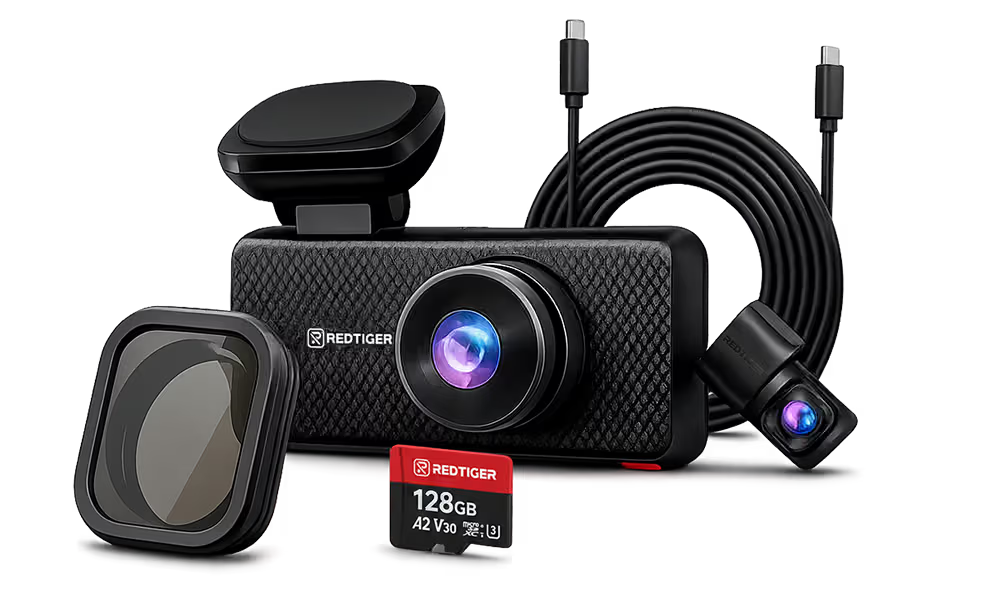
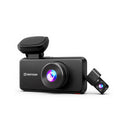
Incident-grade standard: Native 8MP sensor or documented equivalent. The Sony IMX678 STARVIS 2 used in the REDTIGER F77 and F7NA is an 8MP BSI CMOS capturing natively at 3840×2160 — not an upscaled output.

Spec 2: G-Sensor — 3-Axis, Adjustable Threshold, Automatic Clip Lock
A basic g-sensor detects vibration in one axis and plays an alert or logs a flag. A 3-axis g-sensor measures acceleration and deceleration force across all three directions simultaneously — detecting frontal deceleration (front-end collision), lateral force (T-bone), and vertical force (impact from above or below).
The critical function is what happens at the moment of trigger. Two behaviors exist in the market:
Notification only: Camera logs an event flag or plays a beep. The clip remains in the loop recording queue and can be overwritten if the card fills.
Automatic clip lock: Camera immediately moves the current clip — and the clip immediately preceding it — to a protected event folder. Loop recording cannot access this folder. The clip survives until manually deleted.
Incident-grade hardware requires automatic clip lock. Notification without protection is insufficient if the card is near capacity at the time of impact.
Incident-grade standard: 3-axis g-sensor, user-adjustable sensitivity, automatic protected-folder lock. For a full mechanical explanation of how clip locking works, see the g-sensor and GPS technical guide.

Spec 3: GPS — Satellite Atomic Time Sync, Not Camera-Internal Clock
Every camera has an internal clock. Internal clocks drift — a typical drift rate is 1–3 minutes per month. A claim filed two weeks after an incident, with a camera whose clock was last set at purchase, may carry a timestamp that is off by minutes or more. In a legal context, timestamp discrepancy requires active reconciliation.
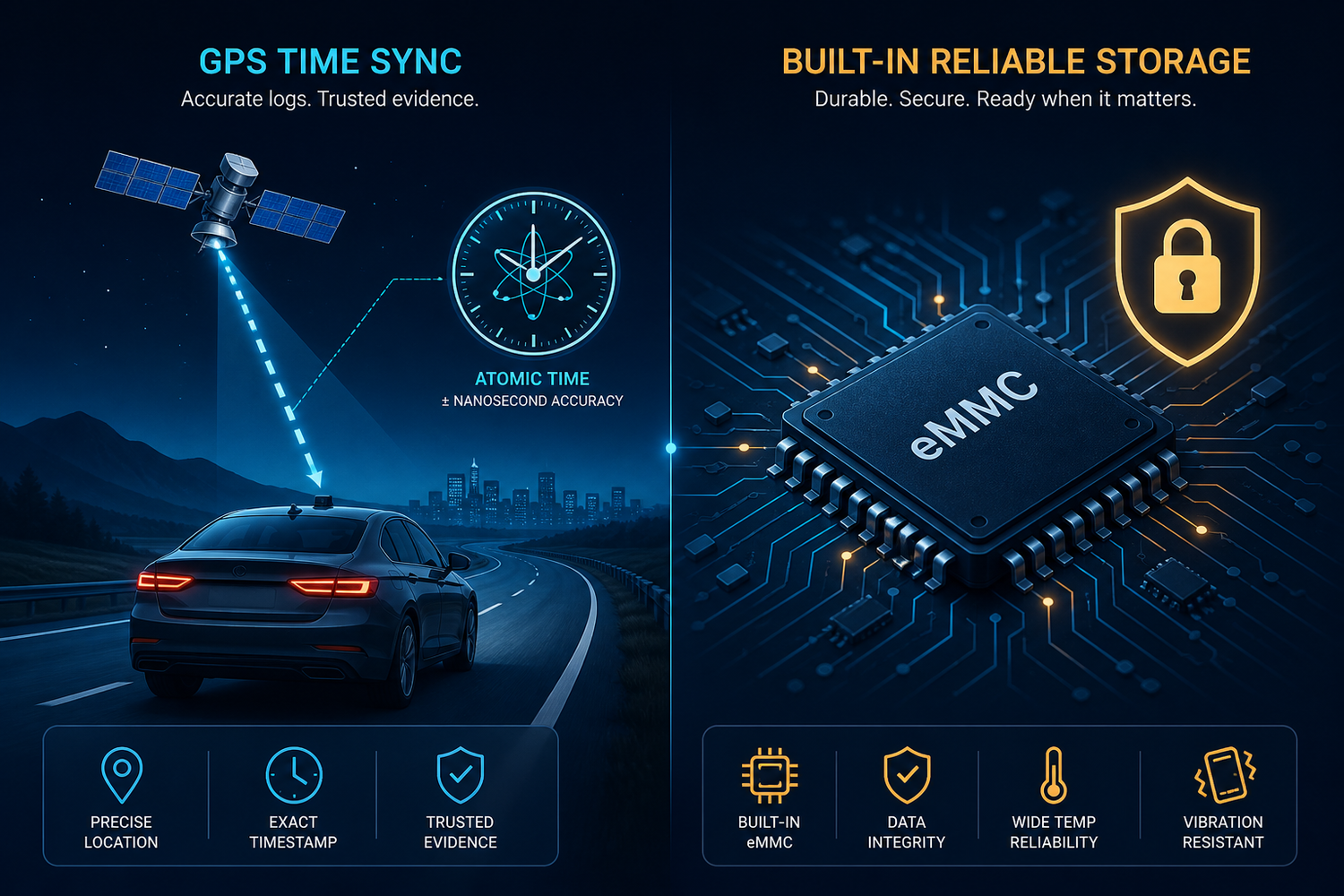
GPS-synchronized timestamps pull from the GPS satellite network's atomic clock, accurate to within 1 second of universal time regardless of when the camera was last manually configured. GPS also embeds location coordinates and vehicle speed in every clip — data that resolves location and speed disputes without relying on driver recollection.
How to verify: the product listing must state "built-in GPS" — not ADAS (Advanced Driver Assistance Systems), which uses camera-based lane detection and does not provide satellite positioning. A camera can have ADAS without GPS.
Incident-grade standard: Built-in GPS receiver with satellite time synchronization, speed logging, and coordinate embedding in clip metadata.
Spec 4: Storage — Rated for Continuous Write Cycles
Consumer-grade SD cards carry write-cycle ratings designed for intermittent camera use — typically 1,000–3,000 cycles before degradation. A dash cam performing continuous loop recording writes data 8–14 hours per day. Under this load, a standard Class 10 SD card can exhaust its rated write cycles within 6–12 months.
The failure mode is silent: the camera continues recording, but a percentage of clips contain corrupted frames or incomplete segments — unplayable at the moment you need them.
Two storage approaches meet the incident-grade standard:
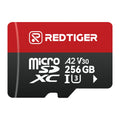
- High-endurance SD (UHS-I Speed Class 3 / U3, labeled "high-endurance"): Rated for 10,000+ hours of continuous recording. Not all SD cards sold as "compatible" with dash cams meet this standard.
- Built-in eMMC: Flash memory physically soldered to the circuit board using wear-leveling algorithms designed for high-duty-cycle embedded applications. No slot failure, no card loss, no replacement required. The REDTIGER F77 uses built-in eMMC (128GB or 256GB) — the only storage architecture that eliminates the write-cycle failure mode entirely.
Incident-grade standard: High-endurance UHS-I U3 SD card, or built-in eMMC. A camera shipped with a standard Class 10 SD card does not meet the storage standard regardless of sensor quality.

Where Budget Cameras Fail the Checklist
Price does not determine incident-grade status, but the failure modes cluster in the $30–$100 range:
| Failure mode | Consequence |
|---|---|
| Interpolated 4K (2K sensor, upscaled output) | Cannot read license plate at 40–50 feet |
| Single-axis g-sensor | Misses lateral force in T-bone collisions |
| G-sensor notification only (no clip lock) | Clip may still be overwritten if card is full |
| No GPS | Speed and timestamp unverifiable in dispute |
| Standard Class 10 SD in continuous recording | Corrupted clips within 6–12 months, no warning |
A $150 camera that meets all four standards outperforms a $250 camera that misses two of them. The checklist is the evaluation tool — not the price.
The F77: Reference Implementation
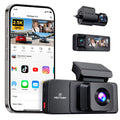
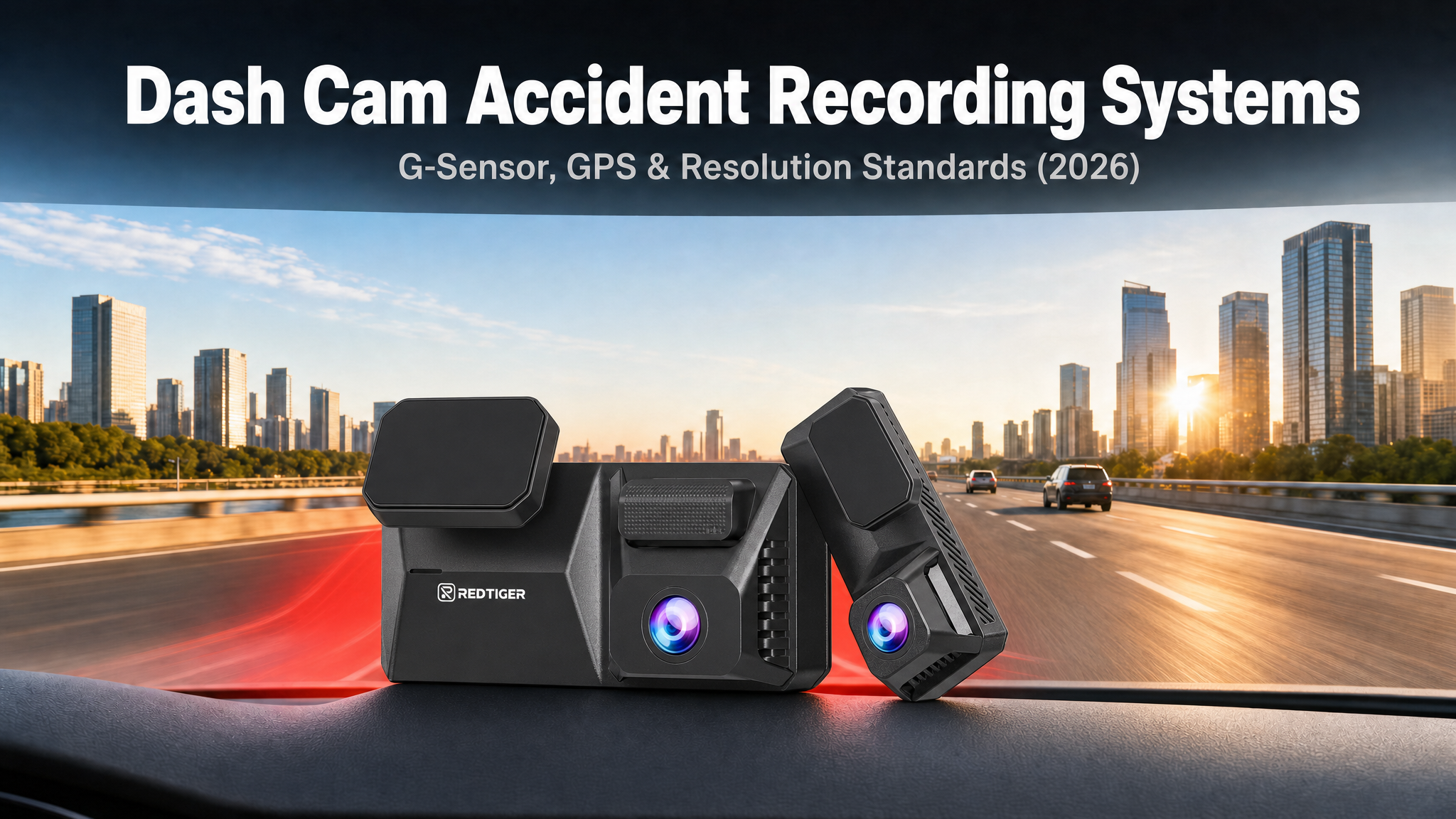
The REDTIGER F77 meets all four standards:
| Checklist standard | F77 specification |
|---|---|
| Native sensor resolution | Sony IMX678 STARVIS 2 / 8MP / native 4K — front and rear |
| G-sensor | 3-axis / Low-Medium-High adjustable / automatic protected clip lock |
| GPS | Built-in / satellite atomic time sync / speed + coordinates on every clip |
| Storage | Built-in eMMC 128GB or 256GB — no SD card required |
The F77 is the only REDTIGER camera with built-in eMMC storage. For long-term, high-mileage deployments — commercial vehicles, fleet use, or any vehicle where recording continuity is a liability requirement — eMMC eliminates the storage reliability variable for the camera's full operational lifespan. The F77 is available at $219.99 for the 128GB model and $249.99 for the 256GB model (compare-at $399.99) — a price point that undercuts many single-sensor "4K" cameras that fail the native-resolution standard.

Is the F7NA Also Incident-Grade?
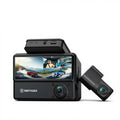
Yes — with one tradeoff. The REDTIGER F7NA meets the resolution standard on the front channel (Sony IMX678 STARVIS 2 / native 4K), has a 3-axis g-sensor with automatic clip lock, built-in GPS with satellite synchronization, and uses a standard SD card slot (requiring a high-endurance UHS-I U3 card to meet spec 4).
The rear camera on the F7NA records at 1080P rather than native 4K. For front-direction incidents — the most common dispute scenario — front-channel footage from the F7NA meets the same license plate legibility standard as the F77. For rear-direction incidents at distance, the resolution margin is narrower.
The F7NA transfers footage at 20 Mb/s over WiFi 6 — significantly faster than the F77 for on-scene retrieval. For the full comparison on which camera fits which scenario, see the accident recording standards guide.
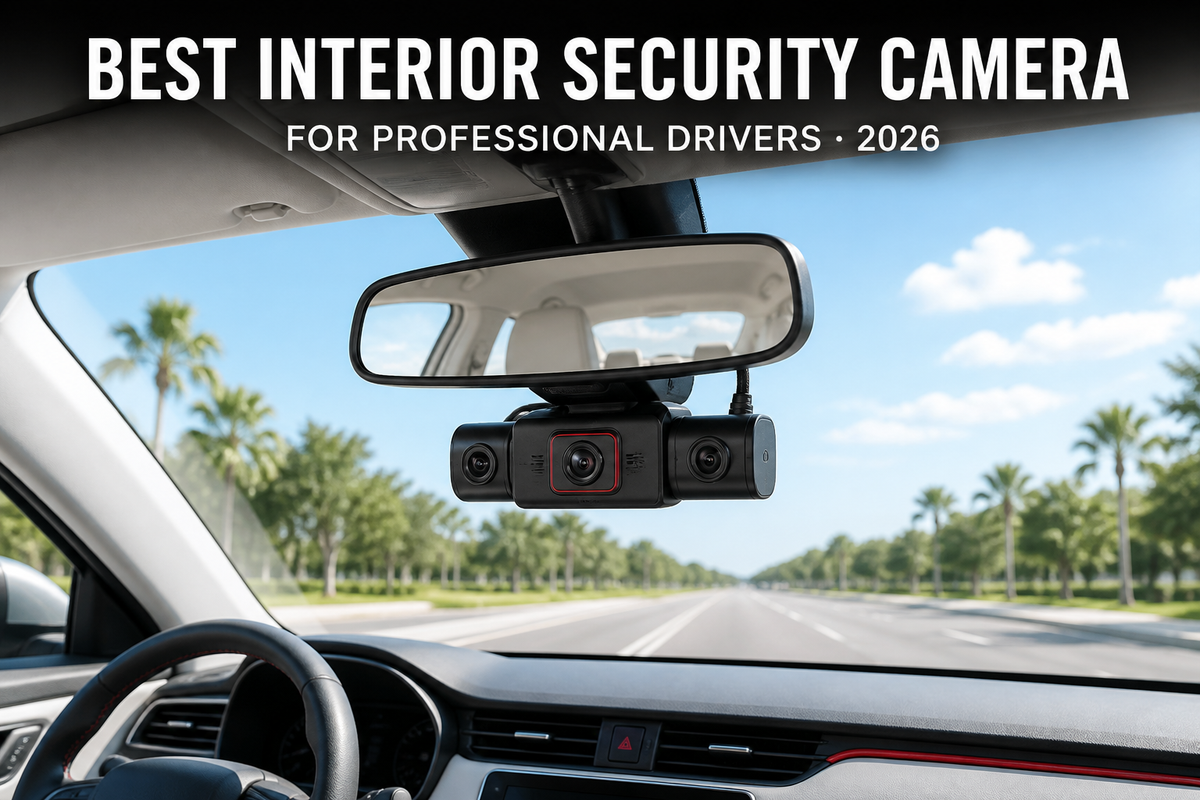
For commercial vehicles where all three liability surfaces require documentation, the REDTIGER F17 Elite adds a third channel: full-color interior cabin recording (Sony IMX307 / NiteGuard), front 4K, and rear — incident-grade across all three directions. See the 3-channel dash cam guide for fleet applications.

Frequently Asked Questions
What is the difference between a regular dash cam and vehicle incident recording hardware?
A regular dash cam records video continuously via loop recording. Vehicle incident recording hardware meets a specific evidentiary standard across four specs: native resolution sufficient to read license plates at standard following distance (40–50 feet), a 3-axis g-sensor that automatically protects footage before loop recording can overwrite it, GPS-synchronized timestamps accurate to satellite atomic time, and storage rated for continuous write cycles without degradation. A camera can be expensive and widely reviewed without meeting all four standards — verify each spec individually rather than relying on marketing claims.
How do I know if my current dash cam qualifies as incident-grade hardware?
Check four items against your camera's documentation: (1) Does the product listing name the image sensor model and its native megapixel count — not just the output resolution label? (2) Does the g-sensor specification say "3-axis" and does the camera automatically move triggered clips to a protected folder that loop recording cannot overwrite? (3) Does the camera have built-in GPS — satellite positioning, not just ADAS lane detection? (4) Is the SD card rated as high-endurance UHS-I Class 3 for continuous recording, or does the camera use built-in eMMC? If any of these is absent or unclear, the camera may not meet the full standard.
What is interpolated 4K and why does it matter for incident recording?
Interpolated 4K means the image sensor captures at a lower resolution — commonly 2K or 2.5K — and the camera's processor scales the output to 3840×2160 to match the 4K label. The file is large but does not contain the actual image detail that a native 8MP sensor captures. At 40–50 feet, an interpolated 4K image often cannot resolve individual characters in a US license plate clearly under compression. Native 4K from a physical 8MP sensor can. The difference is most apparent when playing footage on a monitor and attempting to read a specific plate at distance — the scenario that occurs in almost every disputed collision claim.
Do I need front and rear cameras to qualify as incident recording hardware?
A front-only camera can qualify as incident-grade in its own channel if it meets all four standards. But front-only coverage is insufficient for the scenarios where rear documentation is the decisive evidence: rear-end collisions where the approaching vehicle's speed and distance matter, reverse-motion disputes, and parking lot damage from a vehicle that passed behind yours. Complete vehicle incident recording hardware covers both directions simultaneously on a synchronized GPS-tagged timeline. For commercial vehicles, three-channel coverage — front, interior cabin, and rear road — is the documentation standard for full liability.
How do I verify a camera has automatic g-sensor clip locking rather than just a vibration alert?
Check the camera's user manual or support documentation for what happens to storage at the moment of g-sensor trigger — not what the camera displays or sounds. Incident-grade behavior: the triggered clip is immediately moved to a separate protected event folder, and that folder is excluded from loop recording overwrites. Non-incident-grade behavior: the camera beeps, overlays an icon, or logs a flag — but the clip remains in the loop recording queue. The manual section on "g-sensor" or "emergency recording" will describe which behavior applies. If the documentation does not mention a protected event folder separately from loop recording storage, the g-sensor provides notification without protection.
REDTIGER vehicle incident recording hardware: The F77 — native 4K front + rear / Sony IMX678 STARVIS 2, eMMC 128GB built-in, 3-axis g-sensor, GPS. The F7NA — native 4K front / Sony IMX678 STARVIS 2, WiFi 6 at 20 Mb/s, 3-axis g-sensor, GPS. See also: g-sensor and GPS technical guide | accident evidence retrieval guide

Leave a comment
All comments are moderated before being published.
This site is protected by hCaptcha and the hCaptcha Privacy Policy and Terms of Service apply.