



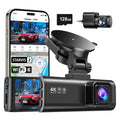
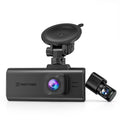
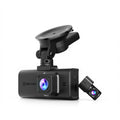

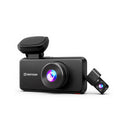
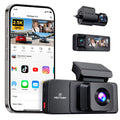

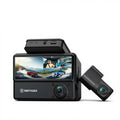











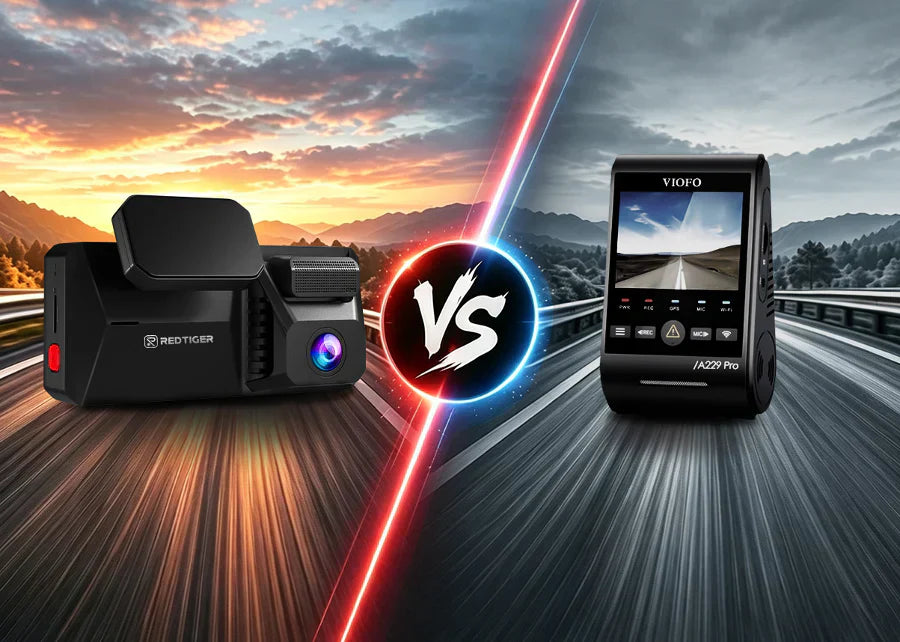
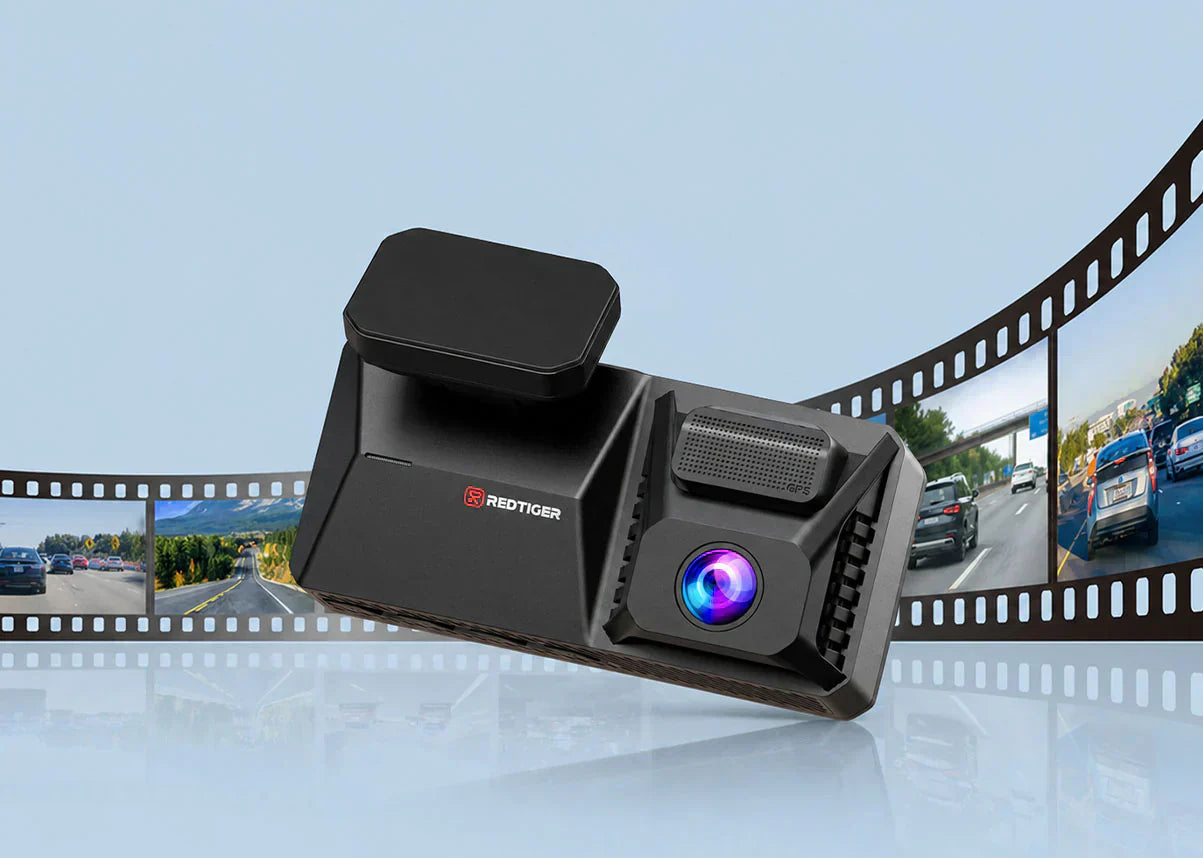
Narrowing your dash cam search down to Redtiger vs Viofo means you're looking at two top brands in the mid-range market. Both deliver genuine value with real followings. Once you get past the specs, the differences between the Redtiger F77 and the Viofo A229 Pro become clear and consequential.
This comparison breaks down how the two dash cams perform across video quality, night recording, features, and everyday usability. Thus, pick the best dash cam that fits your driving style perfectly. No filler or marketing spin; only a straight look at what each dash cam does and who it's best suited for.
Redtiger F77 vs Viofo A229 Pro: At a Glance
Both cameras target the same price bracket and claim strong 4K video quality. However, the sensor choices, connectivity options, and feature sets differ in ways that matter depending on your priorities.
|
Specification |
Redtiger F77 |
Viofo A229 Pro |
|---|---|---|
|
Front Resolution |
4K UHD (3840×2160) @ 30fps |
4K UHD @ 30fps |
|
Rear Resolution |
4K UHD (3840×2160) @ 30fps |
2K QHD @ 30fps |
|
Front Sensor |
Dual Sony IMX678 (front + rear) |
Sony IMX678 (front only) |
|
Rear Sensor |
Sony IMX678 |
Sony STARVIS 2 IMX675 |
|
HDR Processing |
Super Night Vision 2.0 with HDR |
HDR |
|
Wi-Fi |
Dual-band 5.8GHz Wi-Fi 6 + 2.4GHz |
Dual-band 5GHz + 2.4GHz |
|
GPS |
Built-in |
Built-in |
|
Voice Control |
Yes (hands-free commands) |
Yes (hands-free commands) |
|
Parking Mode |
Yes (G-sensor+Time-Lapse) |
Yes (motion + impact detection) |
|
Display |
4-inch IPS touchscreen |
2.4-inch IPS (non-touch) |
|
App Connectivity |
RedTiger App (iOS + Android) |
VIOFO App (iOS + Android) |
|
Field of View (Front) |
170° |
140° |
|
Max Storage |
128/256GB built-in eMMC + microSD |
512GB microSD |
How Do Redtiger and Viofo Compare on Video Quality?
The biggest separation between these two lies in the rear channel. The Redtiger F77 shoots 4K on both the front and rear cameras using dual Sony IMX678 sensors.
Meanwhile, the Viofo A229 Pro pairs its 4K front camera with a 2K rear unit on a Sony STARVIS 2 IMX675 sensor. Many drivers want the sharpest possible rear footage, especially at highway speeds. And that difference becomes significant and immediate in side-by-side recordings.
a. Front Camera: Both Strong, With Subtle Processing Differences
At the front, both cameras use the Sony IMX678 sensor, and both top out at 4K/30fps. The gap between them is narrow in daylight. Where they begin to diverge is in how each camera's processor handles high-contrast scenes.
Consider a tunnel exit into bright daylight, glare from oncoming headlights, or deep shadows alongside lit road surfaces. The F77's Super Night Vision 2.0 HDR processing handles such transitions cleanly, recovering shadow and highlight detail.
b. Rear Camera: Where the F77 Pulls Ahead
It's the clearest specification gap between the two dash cams. The Redtiger F77 puts a Sony IMX678 sensor in both channels. It's the same high-performance sensor that's become the benchmark in 4K dash cam imaging.
The Viofo A229 Pro uses a Sony STARVIS 2 IMX675 sensor on the rear, which is capable but records at a lower 2K resolution rather than 4K. In practice, the F77's 4K rear footage captures license plates farther away.
c. Super Night Vision 2.0: What It Actually Does
The F77's Super Night Vision 2.0 combines hardware and software to lift low-light performance beyond the IMX678 sensor's capability. The system applies multi-frame HDR processing in real time. Thus, it stacks and blends frames to reduce noise, recover shadow detail, and maintain highlight accuracy.
The footage reads license plates, facial features, and road markings in any condition. The A229 Pro's HDR performs well in well-lit night environments. In contrast, the F77 delivers peace of mind in pitch-black darkness.
Feature Comparison: Redtiger F77 vs Viofo A229 Pro
Both are well-equipped beyond basic recording. The meaningful feature gaps are voice control, Wi-Fi band performance, and the depth of the companion app experience.
Voice Control: Hands-Free Operation with the F77
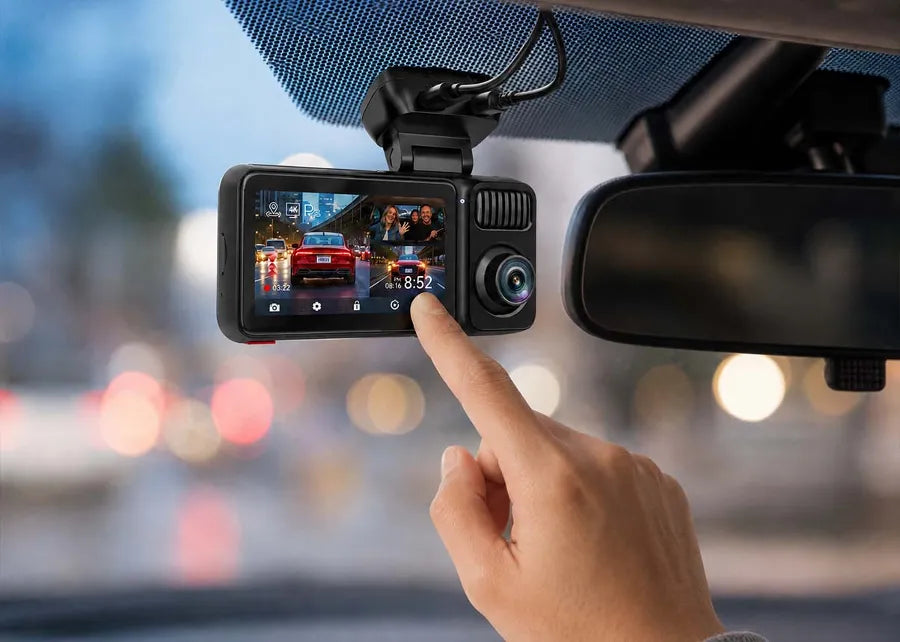
The Redtiger F77 supports voice commands that let you control it without touching or pressing. Commands like starting a recording, triggering an emergency save, taking a snapshot, and switching modes all work through voice activation. It keeps your eyes on the road and your hands on the wheel.
The Viofo A229 Pro also offers voice control, though with a more limited command set — mainly starting a recording, taking a photo, and toggling Wi-Fi. The F77 recognizes a wider range of commands and pairs them with a 4-inch touchscreen, while the A229 Pro relies on a smaller, button-operated display. For drivers who want the most complete hands-free experience, the F77 keeps a practical edge. For a wider look at hands-free options, see our guide to the best dash cams with voice control.
Wi-Fi 6: Faster File Transfers from Camera to Phone
Both cameras use dual-band Wi-Fi on the same 2.4GHz and 5GHz bands. The meaningful difference is the standard: the F77 uses the newer Wi-Fi 6 (802.11ax), which downloads 4K files several times faster than standard Wi-Fi dash cams. In real-world use, the F77's Wi-Fi 6 pulls a 30-second 4K clip to your phone quickly.
After an incident, when you want to secure a copy of the footage quickly, that speed advantage matters. Wi-Fi 6 is also designed to handle crowded airwaves better than older Wi-Fi standards, and by using the upper 5.8GHz channels, the F77 tends to sidestep the lower channels that most routers and devices default to — a real help in parking garages, dense urban areas, and office lots.
GPS Logging: Both Deliver, With Similar Output
Both the F77 and the A229 Pro include built-in GPS that records location coordinates and speed data. It has great evidentiary value in insurance claims and legal proceedings.
The GPS performance between the two is comparable. Both lock onto satellites quickly after startup and maintain consistent logging. Neither has a notable advantage; GPS is a baseline feature.
Parking Mode: Similar Protection, Different Triggers
The two cameras handle parking surveillance differently. The Redtiger F77 pairs G-sensor (impact) detection with time-lapse recording. In G-Trigger mode it stays off until a bump wakes it, records a short locked clip, and powers down again; in time-lapse mode it records at a low frame rate across a 12-, 24-, or 48-hour window. The F77 does not use motion detection. The Viofo A229 Pro, by contrast, offers motion detection alongside impact (G-sensor) triggering, so it can start recording when it senses movement even without a physical bump.
Both require hardwiring to a low-voltage cutoff fuse tap for steady parking surveillance, and both shut down automatically when the battery runs low to avoid draining it. The trade-off is coverage style: the F77's time-lapse modes are efficient for long unattended stretches and reliably lock impact events, while the A229 Pro's motion detection adds a way to catch activity that doesn't involve a bump.
Installation and Daily Usability: Redtiger vs Viofo
Both dash cams mount to the windshield via adhesive or suction and route the cable to a 12V outlet or a hardwire kit. And the installation experience is similar in broad strokes.
Mount Design and Windshield Footprint
The Redtiger F77 review reveals a magnetic quick-release mounting system. It snaps onto the adhesive base plate and releases cleanly for removal. It enables quick removal in high-theft areas or switching it between vehicles.
The A229 Pro uses a push-click mount system that's secure but doesn't disengage cleanly. Some users reported that it requires more force than expected. Both have a similar windshield footprint. Neither is large enough to obstruct the driver's view.
Cable Management and Clean Installation
The F77's cable layout makes routing along the headliner and A-pillar straightforward. Its power cable exits the unit at a convenient angle and runs naturally without sharp bends.
The A229 Pro's cable exits from the side of the unit, in a slightly awkward position that makes routing it cleanly difficult. In both cases, routing the cable completely into the headliner and pillar trim takes 20–30 minutes. Neither cam requires professional installation.
App Experience: RedTiger App vs VIOFO App
Both connect to a companion smartphone app for clip review, settings adjustment, and Wi-Fi file transfer. The RedTiger app is consistently rated for clean interface design and fast connection establishment.
The VIOFO app is functional and covers the necessary features. Still, it has received user feedback around connection stability, particularly on the initial pairing step. Both apps are available for iOS and Android and receive regular updates.
Value Comparison: Which Dash Cam Gives You More for Your Money?
The Redtiger F77 and Viofo A229 Pro sit in a similar price range. And it makes the feature and performance gap a genuine value consideration.
What You Get for the Price with the Redtiger F77?
The F77 packages include several features at its price point that the A229 Pro either omits entirely or offers at a noticeably lower spec level.
- Dual 4K Recording: Front and rear both at 4K/30fps — a feature that costs significantly more on competing brands.
- Dual Sony IMX678 Sensors: The same high-performance sensor on both channels, not just the front.
- Super Night Vision 2.0: Multi-frame HDR processing that lifts night performance well above standard HDR.
- Voice Control: A broader hands-free command set than the A229 Pro's more basic voice controls.
- Wi-Fi 6 (5.8GHz): The newer Wi-Fi 6 standard delivers faster real-world file transfers.
- Magnetic Quick-Release Mount: Faster removal and cleaner daily operation than push-click alternatives.
Where the Viofo A229 Pro Has Its Own Appeal
The A229 Pro isn't without strengths. Viofo has an established reputation for hardware build quality. Also, the A229 Pro's front camera performs well in normal daylight.
The camera is well-regarded for its reliable hardware and straightforward firmware updates. Many drivers prioritize front-channel video quality above all else, with little emphasis on voice control or 4K rear recording. And they should find the A229 Pro a solid performer at its price point.
Long-Term Value: Durability and Support
Both brands offer manufacturer warranty coverage and active firmware update programs. Redtiger's customer support response times have been consistently rated positively by buyers across major retail platforms. Even the company has actively maintained the F77's firmware since launch, with stability and feature improvements.
Viofo similarly supports its products actively. The F77's dual IMX678 setup represents a more future-resistant hardware investment for long-term value. Display technology and recording infrastructure improvements enable 4K rear footage to deliver more usable detail.
Who Should Buy Which Camera?
The two dash cams should make it to the shortlist of anyone looking into mid-range dash cams. However, the ultimate choice comes down to specific priorities.
Choose the Redtiger F77 When –
- You want 4K resolution on both the front and rear channels, not just the front.
- Low-light and night recording performance is a top priority.
- Hands-free voice control matters to you for daily driving convenience.
- Fast Wi-Fi file transfers are important, especially for quick clip retrieval after incidents.
- You want the most complete feature set at the mid-range price point.
- You drive at highway speeds where rear plate capture distance is critical.
Choose the Viofo A229 Pro When –
- Front-channel 4K video quality is your primary focus, and rear resolution is secondary.
- You prefer Viofo's established hardware reputation and community support.
- Extensive voice control and a touchscreen aren't priorities for you.
- You're satisfied with 2K rear recording for your typical driving environment.
- You want a reliable, no-frills implementation with a well-supported firmware history.
Conclusion
The two options are well above average for the mid-range dash cam market. Choosing one comes down to a clear question: how much does your rear channel matter to you?
The Redtiger F77 is the stronger choice when you need 4K performance, low-light processing, and voice control. You can settle for the Viofo A229 Pro when front-only 4K performance with sufficient core features seems enough.
Nonetheless, F77 offers more capability per dollar than the A229 Pro at comparable pricing. Explore the full Redtiger F77 specs and see the dual 4K, dual IMX678 setup.

Frequently Asked Questions (FAQs)
1. Is the Redtiger F77 actually better than the Viofo A229 Pro?
The Redtiger F77 offers a more complete package for its price. The Viofo A229 Pro is a strong front-channel cam with excellent build quality and community support. Still, it holds some performance gaps compared to the F77's dual-4K setup.
2. Does the Redtiger F77 work well for night driving?
Yes. Night recording is one of the F77's strongest selling points. The combination of Sony IMX678 sensors on both channels and Super Night Vision 2.0 multi-frame HDR processing delivers some of the best low-light performance available.
3. Can I use both cameras without a subscription?
Yes. Both the Redtiger F77 and the Viofo A229 Pro store footage locally on a microSD card. You can access it through the respective companion apps without any subscription. GPS data, parking mode, loop recording, and all core features are available with no recurring fees.
4. Which dash cam is easier to install?
Both require simple DIY installation without help. The Redtiger F77's magnetic quick-release mount simplifies the initial positioning and adjustment process. The A229 Pro's mount is also straightforward but less flexible during positioning.
5. What memory card does each camera need?
The Redtiger F77 records to built-in 128GB or 256GB eMMC storage and also accepts a microSD card for backups, while the Viofo A229 Pro supports microSD cards up to 512GB. For stable 4K recording, use a high-endurance UHS-I card rated U3 (V30) or higher; a slower card can cause dropped frames or recording interruptions at 4K.

Leave a comment
All comments are moderated before being published.
This site is protected by hCaptcha and the hCaptcha Privacy Policy and Terms of Service apply.