



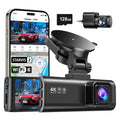

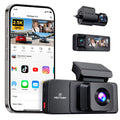

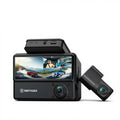




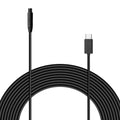







You installed a dash cam and plugged it into the cigarette lighter. The moment you shut off the engine, it goes dark. Someone dents your car in the parking lot at 2 a.m., and your camera was off. That’s where a hardwire kit for a dash cam comes in.
A hardwire kit connects your dash cam to your vehicle’s fuse box, giving it power even after you turn off the ignition. It unlocks parking mode, turning your cam into a 24-hour surveillance device for your parked vehicle.
This guide explains exactly what a hardwire kit for a dash cam is, including how to choose and how to install the right one. If you’re using a Redtiger camera and want real around-the-clock coverage, it seems the piece you’ve been missing.
What Is a Hardwire Kit for a Dash Cam?
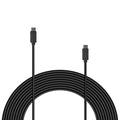
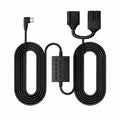
A dash cam hardwire kit is a wiring accessory. It connects your dash cam directly to the vehicle’s electrical system through the fuse box. Thus, the kit replaces the cigarette lighter as the power source.
Your dash cam can get two types of power. One, constant power that stays on even with the engine off. The other is ACC (ignition-switched) power, which tells the camera when the vehicle is running.
The two let the camera operate in full driving mode while you’re on the road. They switch automatically to parking surveillance when you leave. The result: you get a camera that never fully powers down.
What a Hardwire Kit Contains
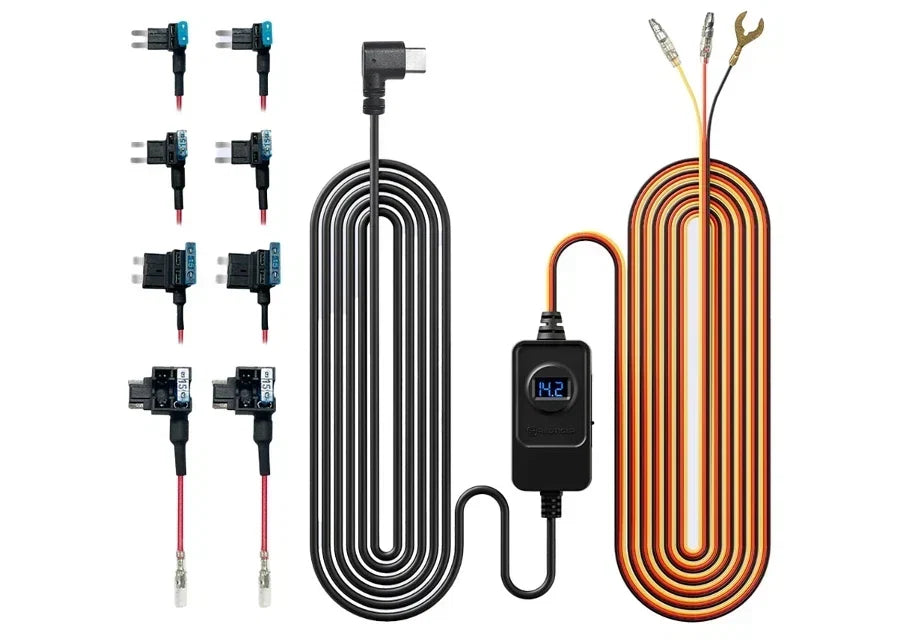
- Power Cable with Inline Voltage Protection Module: The main cable that runs from the fuse box. It usually comes with a built-in or inline circuit to monitor battery voltage.
- Fuse Taps (Add-a-Fuses): Small adapters that plug into existing fuse slots in the fuse box, tapping into two specific circuits — one constant and one ignition-switched.
- Ground Wire with Ring Terminal: A short wire that attaches to a metal bolt on the vehicle's chassis. It provides the necessary reference ground for stable power delivery.
Some kits may include a fuse puller, zip ties, electrical tape, and spare fuses. The Redtiger hardwire kit includes everything needed for a complete installation.
How It Differs from the Cigarette Lighter Connection
The cigarette lighter connection is simple: plug in, and the camera runs. But in most cars, the 12V socket loses power when you turn off the ignition. And the camera stops.
A hardwire kit bypasses such limitations entirely. The kit keeps the camera powered regardless of ignition state. The ACC wire tells the camera when the engine is running.
How Does a Dash Cam Hardwire Kit Work?
The hardwire kit uses two wires tapping two different fuse circuits, plus one ground wire. The setup gives the dash cam continuous power with situational awareness.
The cam monitors which circuits are live to know whether you’re driving or parked. The low-voltage protection adds a safety layer, preventing excessive battery drainage.
Constant Battery Power (the Yellow Wire)
The yellow wire taps into a fuse slot that carries power at all times (even with the engine off). The circuit powers the camera during parking surveillance. That’s how the cam can watch your vehicle overnight.
Not all fuse slots are constant. You need to identify a slot with a tester or multimeter that remains live when the car is off. Common live slot examples include the interior lights, clock, or memory circuits.
ACC Power (the Red Wire)
The red wire taps into an ACC (accessory) fuse. It carries power only when the ignition is in the ON position. And it signals the camera to detect whether the vehicle is running.
A live ACC circuit means the camera knows you’re driving and records normally. Any drop in ACC signal lets the cam read it as a parking event, switching to surveillance mode automatically.
Ground Connection (the Black Wire)
The black ground wire completes the electrical circuit. It attaches to any bare metal bolt on the vehicle’s chassis. A solid ground connection prevents a steady installation from causing flickering, resets, or erratic behavior.
Automatic Mode Switching
When you start the car, the ACC circuit comes live, and the camera enters driving mode. When you park and turn off the engine, the ACC signal drops. The camera detects it automatically and switches into parking mode within a few seconds.
Low-Voltage Protection
This feature makes hardwiring safe for your battery. Left unchecked, a camera drawing constant power could drain the battery beyond thresholds. Low-voltage protection monitors the battery voltage in real time.
When voltage drops to a preset threshold (mostly 11.8V on the Redtiger), the kit cuts power to the dash cam automatically. When you return and start the car, the kit restores power, and the camera resumes normal operation.
Why Is a Hardwire Kit Essential for Parking Mode?
Parking mode transforms a dash cam from a driving recorder into a full-time security system. But the camera must have the power to keep recording. Without a hardwire kit, the cam has no power and thus no functioning parking mode.
To enable parking mode, Redtiger offers hardwire kits designed to work with its compatible dash cams, supplying continuous power while supporting automatic switching between driving and parking modes.
24-Hour Surveillance
Constant power means the camera monitors your vehicle continuously. There’s no window of time when your parked car is unprotected simply because the engine is off.
Impact Detection
The G-sensor monitors potential physical contact. Any bump, door ding, or collision above the sensitivity threshold wakes up the camera to trigger a locked recording clip.
Buffered Parking Mode
Buffered parking mode keeps a short loop of footage in memory at all times. When a trigger event fires, the camera saves the seconds before and after the event.
Theft Monitoring and Overnight Protection
Car theft and attempted break-ins happen overwhelmingly after dark or early morning hours. A hardwired cam in parking mode documents what happens to your vehicle.
Hardwire Kit vs Cigarette Lighter Power: Which Is Better?
There are drivers with dash cams who never need parking coverage. A cigarette lighter connection works fine for them. But for the parking mode, a hardwire kit becomes the superior choice.
|
Feature |
Cigarette Lighter Power |
Hardwire Kit |
|---|---|---|
|
Parking Mode |
Not supported |
Full 24-hour support |
|
Always-on power |
Cuts off with ignition |
Constant battery power |
|
Hidden wiring |
Cable hangs visibly |
Fully tucked, clean look |
|
Battery protection |
No cutoff protection |
Auto low-voltage cutoff |
|
Installation difficulty |
Easy (plug-in) |
Moderate (fuse box tap) |
|
Cigarette lighter freed |
Port occupied |
Port stays available |
|
Recording while parked |
Camera powers off |
Continuous surveillance |
|
Professional appearance |
Loose cable |
OEM-quality finish |
How to Install a Hardwire Kit for a Dash Cam
Installing a hardwire kit for a dash cam is a DIY-friendly job. The core steps are the same regardless of vehicle make or model. Most installations take 30–60 minutes.
Step #01: Gather Your Tools
Obviously, you’ll need the hardwire kit. Get a circuit tester/multimeter to identify fuse types and a plastic trim removal tool to avoid scratching interior panels. Also, don’t forget the needle-nose pliers or a fuse puller, zip ties, and electrical tape.
Step #02: Run the Cable First
Route the hardwire cable from your dash cam’s mounting position along the headliner, down the A-pillar, and across the dashboard to the fuse box.
Do it before making any electrical connections. Tuck the cable into the gap between the headliner and the trim using the plastic tool for a clean look.
CAUTION: Don’t route the cable down the A-pillar through or near the side curtain airbag channel. Check your vehicle’s service manual closely.
Step #03: Identify the Right Fuse Slots
Open the fuse box cover (usually under the dashboard, driver’s side).
Use your circuit tester to identify: (1) a constant-power fuse that carries power even with the ignition off; and (2) an ACC fuse that carries power only when the ignition is on. Engineer Fix recommends marking both.
- Common Constant Fuses: interior light, clock, memory seats.
- Common ACC Fuses: radio, heated seats, center console outlets.
Verify each with the tester before committing.
Step #04: Connect the Three Wires
Plug the fuse taps into the identified slots. The yellow wire goes to the constant fuse, and the red wire to the ACC fuse. Attach the black ground wire to a bare metal bolt on the chassis. Confirm each connection is firm and the fuse taps are fully seated.
Step #05: Test Before You Close Everything Up
Turn the ignition on. The camera should power up and enter driving mode. Turn the ignition off. After a few seconds, the cam should switch to parking mode. If everything works, tuck all wiring neatly and replace the fuse box cover.
Still not sure how to do it cleanly? Check out the hardwire guide available to help you with the model-specific installation walkthrough with photos.
How to Choose the Right Hardwire Kit for Your Dash Cam
Not all hardwire kits are interchangeable. Using the wrong kit either leaves the camera without parking mode or risks damaging the vehicle’s electrical system.
Connector Type
When choosing a hardwire kit, make sure both connections are compatible: the power output connector must match your dash cam’s input port, while the fuse tap must match your vehicle’s fuse box type. Redtiger offers hardwire kits with different fuse configurations for vehicle installation.
Low-Voltage Cutoff Setting
Confirm the kit includes voltage protection and that the cutoff threshold is appropriate. The Redtiger hardwire kit cuts power at 11.8V – a level that leaves sufficient reserve to start the engine reliably.
Some aftermarket kits offer adjustable cutoffs (11.6V, 11.9V, 12.2V, or 12.5V). Higher cutoff thresholds protect the battery more conservatively. However, it reduces the parking mode duration.
Cable Length
Standard hardwire kits include a sufficiently long cable to route from the windshield to the fuse box (11.5 feet in Redtiger). Larger vehicles (SUVs, pickups, trucks) have longer cab-to-fuse-box distances. Check whether the cable length covers your routing path for those.
Dash Cam Compatibility
Use the hardwire kit recommended for your dash cam model. While some third-party kits may work, using a compatible kit helps ensure proper power delivery, stable operation, and reliable parking mode performance.
Redtiger offers hardwire kits designed to be compatible with specific Redtiger dash cam models, ensuring proper connection and seamless integration with supported cameras.
Parking Mode Requirements
Confirm that the kit supplies both constant and ACC power (three-wire configuration). Two-wire kits with ACC power only can’t enable parking mode. A kit without a yellow constant power wire means it won’t support parking surveillance.
Best Practices for Maximizing Parking Mode Performance
A correctly installed hardwire kit lays the foundation for reliable parking mode. Still, a few habits can extend that protection further to keep the system running for longer.
Set G-Sensor Sensitivity Correctly
Too high sensitivity triggers constant locked recording now and then. In contrast, too low sensitivity can miss a genuine hit. Start at medium sensitivity and adjust based on your parking. Set lower for rough urban streets but higher for quiet residential areas.
Choose the Right Parking Mode for Your Situation
Continuous parking offers the most complete record but consumes more storage and battery. Motion detection and impact detection are far more efficient. Time-lapse is the most storage-efficient option for long parking windows with a general overview.
Use a High-Endurance SD Card
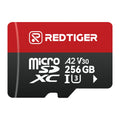
Parking mode adds significant write cycles to the SD card beyond normal driving use. A standard card degrades faster under such loads. High-endurance cards like SanDisk High Endurance or Samsung PRO Endurance can handle parking mode better.
Format the Card Monthly
Loop recording accumulates file system fragmentation over time. Monthly formatting through the cam settings keeps the card running at full write speed. It also prevents the silent recording gaps appearing on an unformatted card after prolonged use.
Check Battery Health Annually
Even with low-voltage protection, a battery in poor condition may trigger the cutoff sooner. It can lead to shorter parking mode windows. An annual battery health check confirms your starting reserve is adequate for extended parking mode sessions.
Conclusion
A hardwire kit allows a dash cam to deliver its full potential by providing the continuous power needed for features like parking mode. While a standard power connection is enough for everyday driving recording, a properly installed hardwire kit helps extend protection beyond your time on the road.
Redtiger dash cams come with compatible hardwire kits included at purchase, making it easier to set up parking mode and maintain reliable power for supported models.
Explore Redtiger dash cams to find the right camera and protection solution for your vehicle.


Frequently Asked Questions (FAQs)
1. Will a hardwire kit drain my car battery?
Not if the kit includes low-voltage protection and it’s set to a proper cutoff threshold. The Redtiger hardwire kit cuts power automatically at 11.8V. The parking mode can run for 12–24 hours before the cutoff activates in a good battery.
2. Can I install a hardwire kit myself?
Yes. The job requires no cutting, soldering, or specialized electrical knowledge. You just need to identify fuse types and route a cable neatly through interior trim. Redtiger’s step-by-step installation guide explains every step with photos. However, incorrect wiring or fuse connections may affect your vehicle’s electrical system. If you're unsure, professional installation is recommended.
3. Do I need a hardwire kit if I don't use parking mode?
Not strictly. Still, there are good reasons to consider it. A hardwired installation gives a more professional result with no visibly hanging cable. If you ever decide to enable parking mode later, the hardwire kit is already in place.


Leave a comment
All comments are moderated before being published.
This site is protected by hCaptcha and the hCaptcha Privacy Policy and Terms of Service apply.