



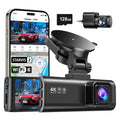
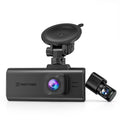

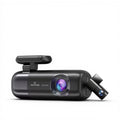
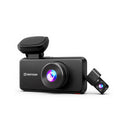
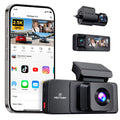

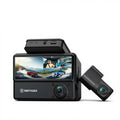














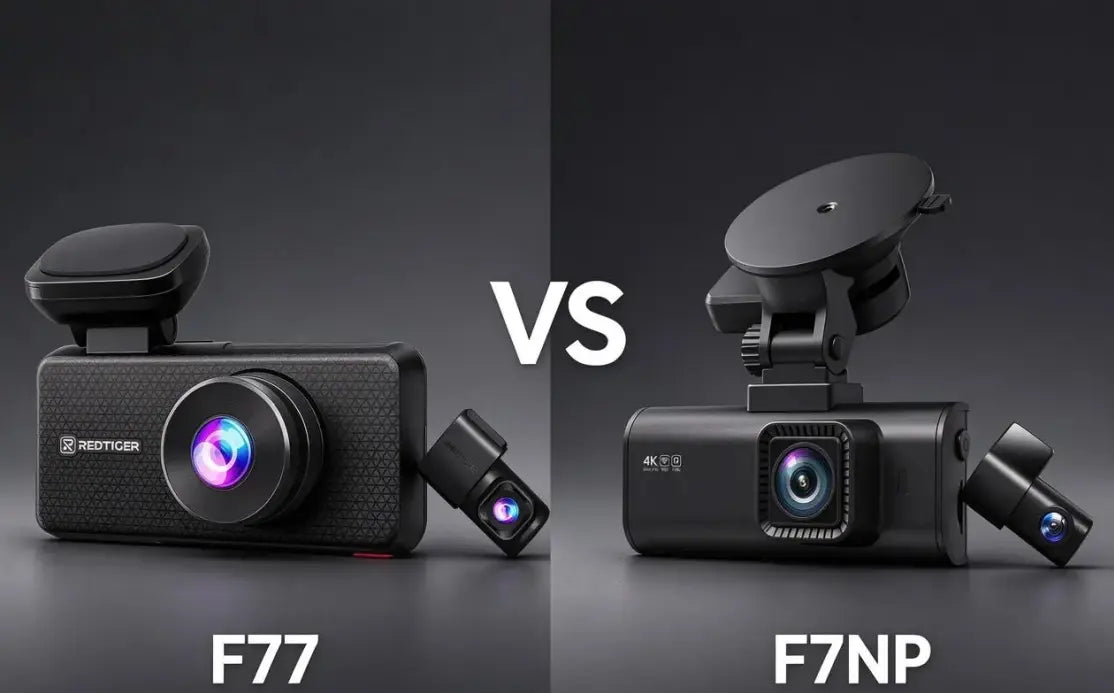
More drivers are looking into 4K dash cams to avoid questions about footage quality. Even within the REDTIGER lineup, you may find yourself torn between the F77 and F7NP, two solid 4K cams. Now it becomes clear: which one fits your requirements and budget?
Both provide 4K front video output and STARVIS 2 night-vision technology. However, the F77 records native 4K through a Sony IMX678 sensor. Meanwhile, REDTIGER describes the F7NP's 4K output as upscaled. They also differ in rear-cam resolution, screen size, Wi-Fi speed, storage, and price.
The F77 is a dual-native-4K model with a larger screen, voice control, and built-in eMMC storage. The F7NP offers 4K front and 1080P rear, a removable microSD card, and better Wi-Fi speed at a lower price. This guide elaborates on the differences between the REDTIGER F77 and F7NP.
REDTIGER F77 vs F7NP: Quick Overview
|
Feature
|
REDTIGER F77
|
REDTIGER F7NP
|
|
Front Video
|
Native 4K; Sony IMX678
|
4K output; REDTIGER describes it as upscaled
|
|
Rear Video
|
Native 4K; Sony IMX678
|
1080P
|
|
Wi-Fi
|
5.8GHz Wi-Fi 6; 8 MB/s stated
|
5.8GHz Wi-Fi 6; up to 20 MB/s stated
|
|
Display / Control
|
4-inch touchscreen + voice control
|
3.18-inch non-touch; no voice control
|
|
Storage
|
Built-in 128GB/256GB eMMC
|
microSD up to 512GB
|
|
Price
|
About $220 (128GB)
|
About $130
|
The F77 records native 4K and adds a 4K rear camera. In contrast, the F7NP outputs 4K front video with a 1080P rear cam. The F7NP also has a higher Wi-Fi transfer rate and a lower price.
The F7NP captures true 4K UHD (3840×2160) from its front Sony STARVIS 2 IMX678 sensor and 1080P Full HD from the rear camera. Unlike some dash cams that upscale lower-resolution footage, the F7NP records natively at 4K — delivering the sharpness you need for license plate recognition and detail retention.
They diverge most clearly in the rear camera. The F77 uses a second Sony IMX678 STARVIS 2 sensor for native 4K rear recording. The F7NP's rear camera records at 1080P.
The F77 also steps up to a larger 4-inch touch screen with voice control. The F7NP features a smaller 3.18-inch non-touch display, while its 5.8GHz Wi-Fi supports transfers up to 20 MB/s.
The F7NP costs about $130. The F77 costs about $220 for the 128GB version. The F77's higher price reflects its dual native 4 K recording, larger touchscreen, voice control, and built-in eMMC storage.
Many drivers want native 4K recording at both ends of the vehicle. The F77 offers a larger touchscreen and voice control.
Some drivers prioritize lower cost, a 4K front, 1080P rear, and removable storage. That's where the F7NP seems more suitable with faster Wi-Fi.
REDTIGER F77 vs F7NP: Key Differences Compared
Seven specs most clearly separate the two models: front-camera architecture, rear resolution, Wi-Fi transfer rate, voice control, night-vision specifications, GPS/parking/storage, and price.
Front Camera Resolution and Image Sensor
The F77 uses a Sony IMX678 STARVIS 2 sensor on the front camera. REDTIGER confirms STARVIS 2 for the F7NP but identifies the sensor as an F7NP 4K Sensor rather than an IMX678.
STARVIS 2 is a back-illuminated sensor design that captures more light per pixel. It translates into cleaner, more usable footage in low light instead of grainy, hard-to-read video from older sensors.
TechRadar recommends against describing the two front cameras as using the same sensor. The F77's IMX678 records native 4K. Meanwhile, REDTIGER describe the F7NP's 4K output as upscaled.
Rear Camera Resolution
It marks the biggest practical difference between the two models. The F77's rear camera uses a Sony IMX678 STARVIS 2 sensor for native 4K recording, matching the front camera's sensor and resolution.
By contrast, the F7NP's rear camera records at 1080P. A higher-resolution rear camera can provide more image detail for reviewing distant vehicles or plates. However, actual readability also depends on lighting, distance, motion, lens condition, and viewing angle.
That said, more resolution gives you more pixels to zoom into after the fact. 1080P footage is also usable evidence, just with noticeably less detail once you crop in on something far away.
Wi-Fi Speed and File Transfer
Both dash cams connect over 5.8GHz Wi-Fi. REDTIGER lists up to 20 MB/s for the F7NP and 8 MB/s for the F77. The shared 5.8GHz band doesn't define faster file transfers for the F77.
The F7NP is rated for app transfers of up to 20 MB/s. In other words, the F7NP has the higher stated transfer rate. Both models still support wireless viewing and downloading through the REDTIGER app.
In practice, faster Wi-Fi mainly saves you time when you need to pull a specific clip fast, for example, right after an incident. There, the footage remains unaffected.
Voice Control and Hands-Free Operation
The F77 includes voice control with roughly a dozen supported commands. It lets you lock the current clip, take a photo, or turn the screen on and off without touching the camera while driving.
The F7NP doesn't include voice control. So, any required adjustments should happen through physical buttons or the companion app. Some drivers prefer to keep their hands on the wheel while adjusting settings, which works in F77's favor.
Night Vision and Low-Light Performance
Both cameras use REDTIGER's STARVIS 2 night-vision technology, with HDR/WDR processing. The F77 uses HDR on both front and rear. Whereas the F7NP specifies front HDR and WDR night vision.
The F77's front camera uses an F1.8 aperture and its IMX678 sensor. Meanwhile, the F7NP lists an F1.8 aperture and STARVIS 2/WDR night vision. The F77's main imaging advantage is its native 4K rear cam.
GPS, Parking Mode, and Storage Support
Both models include built-in GPS and support parking monitoring with a hardwire setup. The F77 supports G-sensor and time-lapse parking modes.
The F7NP also supports parking mode, with REDTIGER specifying time-lapse and G-sensor options. These modes require continuous power from a suitable hardwire setup.
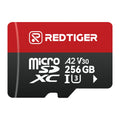
They differ in storage. The F7NP records to a removable microSD card and supports up to 512GB. The basic package comes with a 128GB card. A high-endurance card is appropriate for continuous dash-cam recording.
In contrast, the F77 uses built-in 128GB or 256GB eMMC storage for recording. REDTIGER also sells SD cards you can use with the F77 for video backup. But the camera's recording storage is the built-in eMMC.
Price and Value: About $130 vs. About $220
At about $130 on REDTIGER, the F7NP offers 4K front video output, 1080P rear recording, GPS, parking mode, STARVIS 2 night-vision technology, and removable microSD storage.
The F77 is listed at about $220 for the 128GB version. The higher price adds native 4K rear recording with a second IMX678 sensor, a larger 4-inch touchscreen, voice control, and built-in eMMC storage.
The trade-off seems rather straightforward. The F77 adds native 4K rear recording and premium controls. Meanwhile, the F7NP costs less with a higher Wi-Fi transfer rate.
REDTIGER F77 Dual 4K Dash Cam: Who It's For
The F77 is designed for drivers who want native 4K recording on both ends of the vehicle. It also adds a larger touch screen, voice control, and built-in eMMC storage.
Some drivers value rear-camera clarity as much as front-camera clarity. Others want voice control while driving. For those, the F77 offers the more complete package.
Dual 4K Recording: Front and Rear Clarity
The F77 uses matching Sony IMX678 STARVIS 2 sensors on the front and rear cameras, giving both channels native 4K recording. That makes the rear channel much closer to the front in resolution and sensor capability than the F7NP's 1080P rear camera.
4-Inch Touch Screen and Premium Build
The larger touch display makes reviewing footage, adjusting settings, and navigating menus much easier than using small physical buttons. That said, a properly mounted F77 enables a more polished, premium feel.
5.8GHz Wi-Fi for Quick Transfers
The F77 supports 5.8GHz Wi-Fi for wireless viewing and downloads, with REDTIGER currently listing an 8 MB/s transfer rate. The F7NP's stated rate is higher at up to 20 MB/s.
REDTIGER F7NP 4K Dash Cam: Who It's For
The F7NP targets drivers who want 4K front video, 1080P rear coverage, GPS, parking mode, and STARVIS 2 night-vision technology at a lower price.
You won't have to pay for the F77's dual-native-4K setup and premium controls.
For most drivers, budget matters as much as dash cam specs. For those, the F7NP gives up relatively little for a real price difference.
4K Front Recording with Sony STARVIS 2
The F7NP's front camera uses a 4K Sensor based on STARVIS 2 technology. REDTIGER describes the 4K output as upscaled, not native.
1080P Rear Camera for Evidence-Level Coverage
It won't match the F77's rear clarity. But 1080P is still perfectly usable for documenting a rear-end collision, a parking lot dispute, or a hit-and-run, just with somewhat less detail to zoom into afterward.
GPS, 5.8GHz Wi-Fi, and 20MB/s Transfers
The F7NP has built-in GPS, 5.8GHz Wi-Fi transfer up to 20 MB/s, and a removable microSD card. Those features distinguish it from the F77, which has built-in eMMC storage and a lower 8 MB/s Wi-Fi rate.
F77 vs F7NP: Which REDTIGER Dash Cam Should You Buy?
Neither camera is universally "better" for every ride and driver. The right pick depends on what you need from your rear camera and how much that's worth to you.
Choose the F77 if you want native 4K recording on both front and rear cameras, matching IMX678 sensors, a larger touch screen, voice control, and built-in eMMC storage.
Choose the F7NP if you want a lower-cost front-and-rear system with 4K front output, a 1080P rear camera, removable microSD storage, and a higher stated Wi-Fi transfer rate.
Both REDTIGER dual-channel dash cams differ in front-cam sensor and storage. The F77 holds native 4K on both channels. But the F7NP is lower cost and has a removable SD card.
Installation and First-Time Setup
Neither camera is meaningfully harder to install than the other.
Both use a front camera, a connected rear camera, and a power connection, but their storage setup differs. The F7NP uses a removable microSD card, while the F77 records to built-in eMMC storage.
A few practical tips make the first setup smoother regardless of model.
Mounting the Front Camera
Center the mount near the top of the windshield, close to the rearview mirror. Keep the camera level so the recorded frame lines up straight with the road ahead.
Running the Rear Camera Cable
Route the rear camera cable along the headliner and down the A-pillar. Don't drape it across the windshield. Tuck it behind trim panels where possible for a cleaner, more secure install.
Formatting the microSD Card and Updating Firmware
For the F7NP, format the included or a new high-endurance microSD card in-camera before your first drive. Check REDTIGER support resources or the app for any applicable firmware updates.
The F77's built-in eMMC storage means you don't need to format or replace a recording microSD card. REDTIGER provides firmware updates through its support process.
Conclusion
The REDTIGER F77 and F7NP both provide 4K front output with STARVIS 2, but the underlying specs differ. The F77 uses native 4K IMX678 sensors front and rear, while the F7NP pairs 4K front with a 1080P rear cam.
The F77 adds a larger touch screen, voice control, and built-in eMMC storage. The F7NP costs less and offers a higher stated Wi-Fi transfer rate. You'll have to accept the 1080P rear camera and a less advanced display/control setup.
Your decision eventually depends on whether native 4K rear recording and integrated controls matter more. Otherwise, you should keep the price, storage considerations, and the compared Wi-Fi transfer rate in mind.
Frequently Asked Questions (FAQs)
-
What is the difference between REDTIGER F77 and F7NP?
-
Which is better: REDTIGER F77 or F7NP?
-
Does the REDTIGER F7NP have a rear camera?
-
Is the REDTIGER F77 worth the extra money?
-
Do both dash cams have Sony STARVIS 2 sensors?

Leave a comment
All comments are moderated before being published.
This site is protected by hCaptcha and the hCaptcha Privacy Policy and Terms of Service apply.