
















You may decide to get a dash cam and a backup camera. And somewhere along the way, you asked yourself: do the two things do the same job, or do you need both? Both use cameras. Both mount to your vehicle. Both improve how much you can see.
But you're looking at two different tools to serve two different moments in your drive. A backup camera watches the six inches behind your bumper while you park. A dash cam watches the road ahead and behind to build a continuous record of everything.
One is a spotter. The other is a witness. The smart move is knowing how the two work before attempting to fill the intended safety gaps in your vehicle. This guide answers the question drivers ask most: can a dash cam work as a backup camera?
A 2025 Cali Weekly report found that "16 percent of American drivers now own dash cams", with 39% of owners having bought one "following a car accident or near accident". One in five has already used footage in an insurance claim, and roughly half report less stress behind the wheel since installing the camera.
What's the Difference Between a Dash Cam and a Backup Camera?
A dash cam records continuously while you drive, serving as an evidence log of every road incident (accidents, near-misses, road rage incidents, and parking lot damages).
A backup camera activates only when you shift into reverse. It provides a live feed of the zone directly behind the bumper, helping you avoid obstacles that aren't visible in the mirrors.
They look similar, but their jobs don't overlap. Both are safety tools, but they protect you at different times. Let's look at each one more closely to understand its functions.
What Does a Dash Cam Do?
A dash cam mounts to your windshield or dashboard. It runs continuously from the moment you start your engine until you shut it down. And the cam records in short loops (one to five minutes) to automatically overwrite the oldest footage.
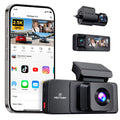
A built-in G-sensor detects the impact during an incident and locks that clip. Modern dual-channel dash cams add a rear-facing camera to record what's happening behind your vehicle. Meanwhile, three-channel models feature an added interior-facing cabin camera.
It results in a complete record of the road around a vehicle, stored and time-stamped. None of the functions require you to do anything after the initial setup. Since the camera runs in the background, it remains almost invisible until you need the footage.
What Does a Backup Camera Do?
A backup camera is also called a reversing camera. It's a dedicated safety device that shows directly behind the vehicle when you shift into reverse. It mounts near your license plate or bumper, points downward and outward, and sends a live feed to your dashboard display.
Backup cameras became mandatory on all new US passenger vehicles weighing less than 10,000 pounds after May 2018. The rule falls under FMVSS 111, a federal regulation tied to the Cameron Gulbransen Kids Transportation Safety Act.
It's because the NHTSA attributes roughly 210 fatalities and 15,000 injuries per year to backover crashes. The zone directly behind your SUV, truck, or van bumper creates a blind spot that mirrors alone can't fully address.
Most backup camera systems overlay dynamic parking guidelines on the live feed. It marks colored lines that shift as you turn the wheel. The active, real-time visual aid is what makes a backup camera genuinely useful for low-speed maneuvering. And it's a feature that standard dash cams do not replicate.
Can a Dash Cam Work as a Backup Camera?
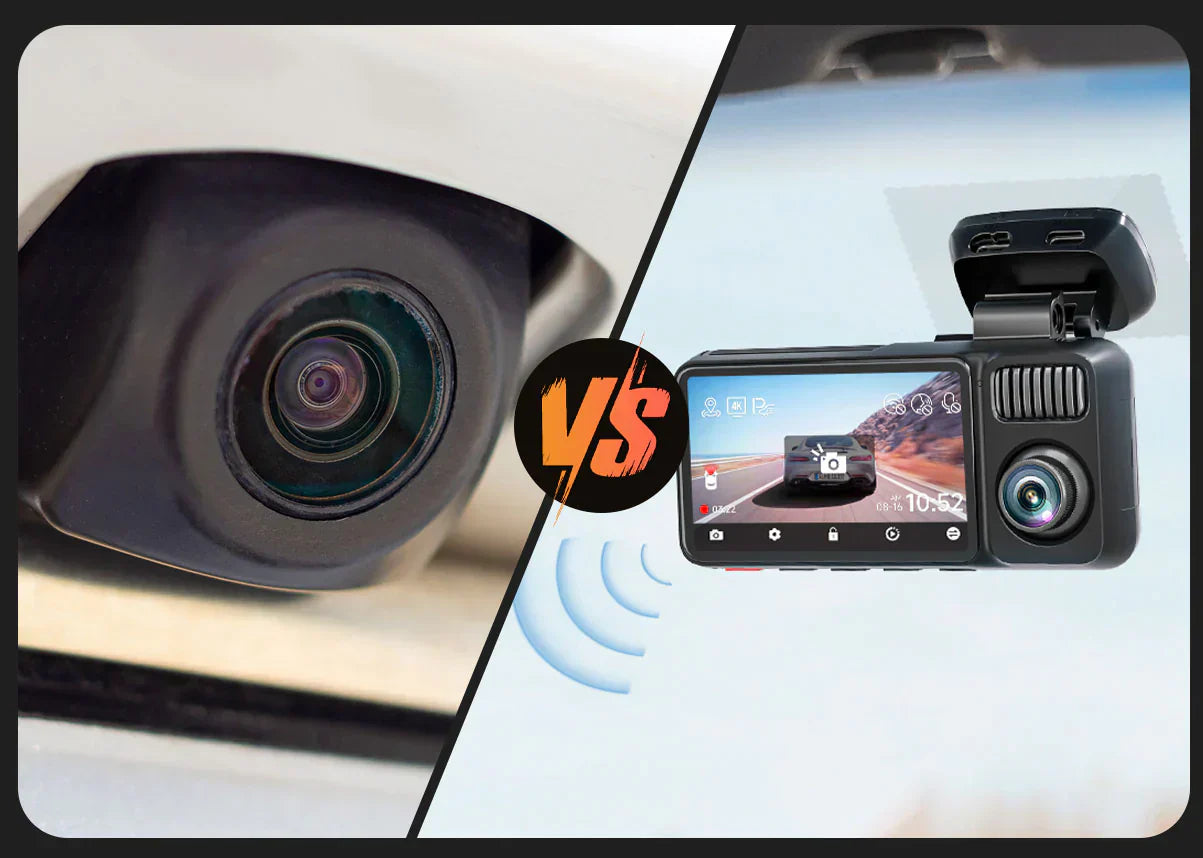
The short answer: no; not in the way that matters for safe reversing. A rear-facing dash cam remains mounted high on the rear window, not near the bumper. That mounting position creates a blind spot in the critical low zone directly behind your vehicle.
It can't provide dynamic parking guidelines of a dedicated backup camera overlaying the screen. And it remains the most common source of confusion when drivers shop for a combination dash cam and backup camera.
Some dual-channel cams include a reverse-trigger wire that switches the display to the rear feed while shifting into reverse. That's a useful feature, but it still shows the rear window view from a high mounting position rather than the close-range bumper zone.
Why Mounting Position Changes Everything?
A dedicated backup camera mounts near the license plate, usually 12–18 inches from the ground. That low angle gives you a clear view of the area immediately behind your bumper. That's where a child, a bicycle, or a shopping cart can easily hide from mirrors.
A rear dash cam mounted on the rear window gives a useful view of the road behind you while you're driving. When you reverse, the same camera captures a wide-angle view. However, the angle points outward only. It means the area from your bumper to about three or four feet behind the vehicle is still outside the frame.
In addition, dedicated backup cameras are weatherproof for exterior mounting and can withstand vibration and exposure to extreme temperatures. Rear dash cams use interior glass mounting that may not reliably withstand the rigors of permanent exposure.
What a Rear Dash Cam Can and Can't Do While Reversing
A rear dash cam while reversing can –
- Show you traffic approaching from both sides as you back out of a driveway or parking space.
- Give you a wider view of vehicles and pedestrians in the parking lane behind you.
- Provide recorded footage of any contact or near-miss during a reversing maneuver.
- Trigger G-sensor recording when a collision occurs while reversing, automatically locking evidence.
A rear dash cam while reversing can't –
- Show you the close-range zone directly behind your bumper.
- Overlay dynamic steering-path guidelines on the screen.
- Replace the active maneuvering assistance with a true backup camera.
- Cover the low blind zone that accounts for the majority of backover accident risk.
Read more: Is a Dash Cam Worth It
Who Needs Both a Dash Cam and a Backup Camera?
1. Owners of Pre-2018 Vehicles
No factory backup camera or road recorder. Both tools add immediate safety value. The total cost is less than the cost of a single accident-related insurance claim.
2. Truck and Large SUV Owners
Long rear overhangs create large blind spots, making backup cameras valuable. A rear dash cam adds documentation and wider rear visibility while driving.
3. Rideshare and Delivery Drivers
High daily mileage pushes exposure to parking events and road accidents. A three-channel dash cam provides documentation for every type of dispute.
AutoGuide (June 2025) made the case plainly in its rideshare safety guide: "Your best defense is a dash cam" -- and that "the interior camera should be the most important feature that rideshare drivers should be aware of". The report cited the F17 Elite as a system that can "record everything clearly 24 hours a day" and noted that "in parking mode, both front and cabin cameras help record crucial details in cases of break-ins, vandalism, or hit-and-runs".
4. Parents with Teen Drivers
A dash cam records driving behavior for coaching and accountability. A backup camera reduces the risks associated with backing, which new drivers are more prone to.
5. Drivers Parking in Urban Areas
Tight spaces, garages, and crowded lots put bumpers at constant risk. A dash cam with parking mode gets anything while the vehicle is unattended.
Which Redtiger Models Give You the Most Complete Coverage?
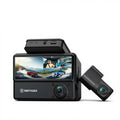
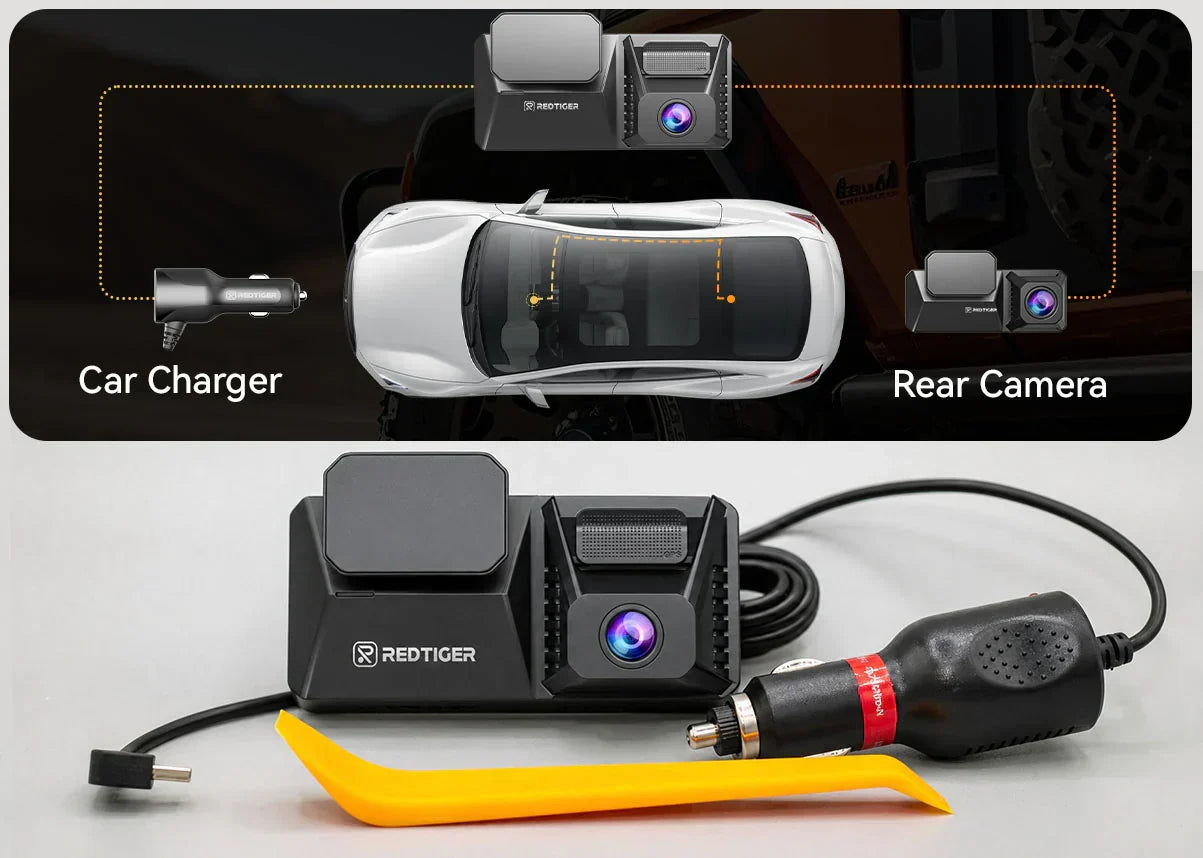
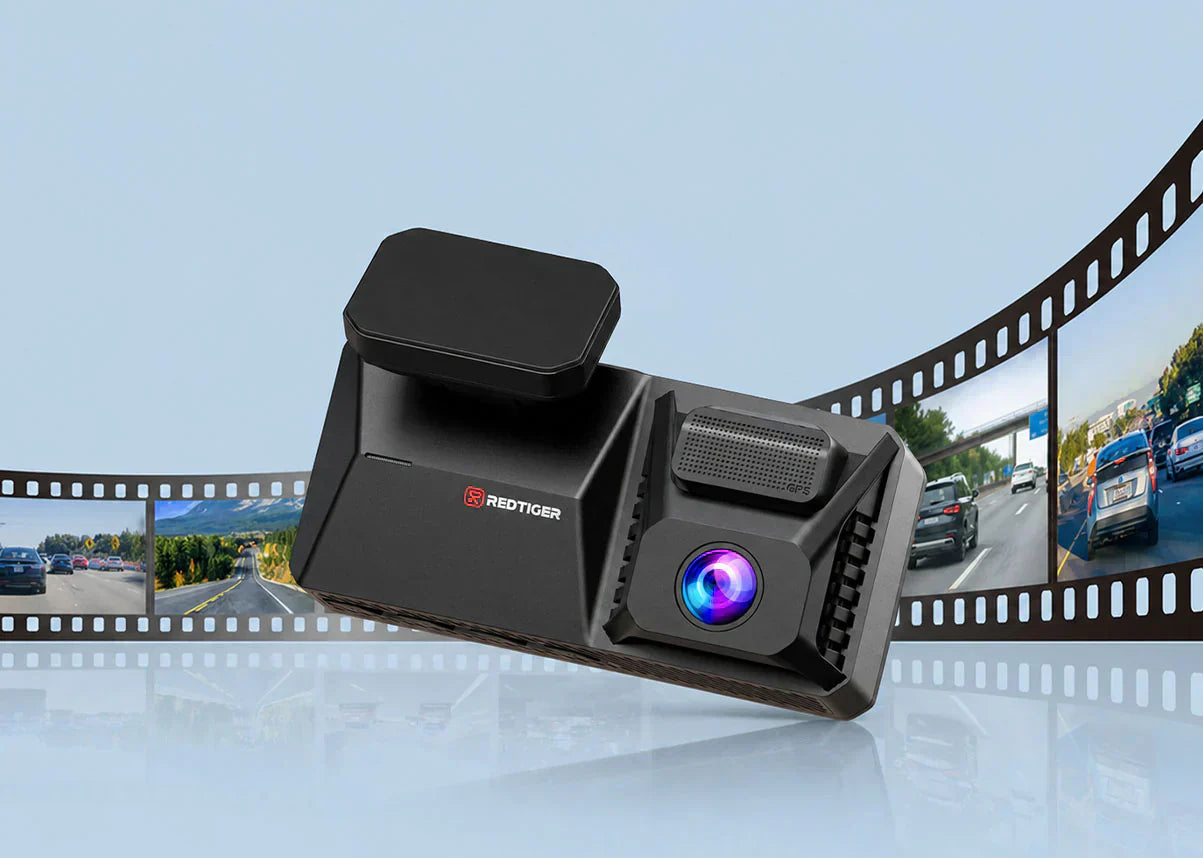
Redtiger builds the dash cam lineup around front- and rear-facing recording. Every dual-channel model gives you a road recorder + a rear view in one system. The rear camera doesn't replace a backup camera, but it lets drivers add a strong documentary layer on top.
Redtiger's rear cameras add meaningful rear visibility for drivers without a backup camera. Speaking of which, three models stand out depending on how much coverage you need. Let's take a look at how each model fits into a real-world scenario.
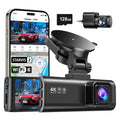
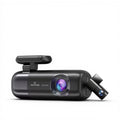
1. Redtiger F7NA: 4K Front and Rear with Sony STARVIS 2
The Redtiger F7NA is a two-channel model built around the Sony STARVIS 2 IMX678 sensor. It records 4K front and 1080P rear, with 5.8GHz WiFi 6 (up to 20MB/s download speed), built-in GPS, voice control, and WDR/HDR night vision on both channels.
- Sony STARVIS 2 IMX678 front sensor for exceptional daytime and night clarity.
- 4K front recording captures license plates, road signs, and lane markings with precision.
- Built-in GPS logs route, speed, and location data embedded into every clip.
- 5.8GHz WiFi 6 for fast footage transfer to the Redtiger app on iOS or Android.
- Voice control for hands-free operation (lock footage, take photos, and start/stop recording).
- Supports up to 512GB microSD – weeks of footage before any overwriting begins.
The F7NA is the right fit for drivers who want a proven two-channel system with premium sensor technology and don't need cabin recording.
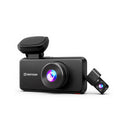
2. Redtiger F77: Dual 4K Front and Rear with Built-in Storge
The F77 is Redtiger's flagship two-channel model — and the standout feature is true dual 4K recording. Both the front and rear cameras capture at 3840×2160 @ 30 fps using Sony STARVIS 2 IMX678 sensors, delivering identical clarity from both ends of the vehicle. On top of that, it's the first F7-series model to offer built-in 128GB/256GB eMMC storage — no memory card to manage, format, or replace.
- Dual Sony STARVIS 2 IMX678 sensors — 4K front and 4K rear, both channels running at 30 fps with HDR night vision.
- Built-in 128GB/256GB eMMC — faster and more reliable than SD cards; no formatting or replacement needed.
- 4-inch IPS touchscreen for intuitive in-camera menu navigation.
- 12 voice commands for completely hands-free control while driving.
- 5.8GHz Wi-Fi 6 transfers a 4K clip to your phone in approximately 30 seconds.
- 24-hour parking mode via included hardwire kit, with G-sensor and time-lapse modes.
- Supercapacitor power buffer for reliable operation in extreme temperatures; no battery degradation.
The F77 is the right choice for drivers who want maximum dual-channel video quality — identical 4K performance on both cameras — without the maintenance overhead of SD card management.
TechRadar reviewed the F77 and concluded: "This 4K dash cam with two ultra-wide lenses shoots some of the sharpest video I've seen".
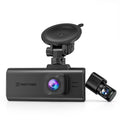
3. Redtiger F17 Elite: Three-Channel Coverage for A Complete Recording
The F17 Elite is Redtiger's three-channel system with full-color night vision on every channel — a rare feature that sets it apart. Unlike conventional dash cams that switch to grainy infrared at night, all three cameras maintain vibrant, detailed color footage even in near-darkness.
It simultaneously covers the front (4K), rear (2.5K), and cabin interior (1080P), powered by dual Sony STARVIS 2 sensors. The third camera faces the cabin, recording what's happening inside the vehicle — not just outside it.
- Full-color night vision on all three channels — 4K front, 2.5K rear, and 1080P interior, no IR grayscale.
- Dual STARVIS 2 sensors: IMX678 (front, 4K, 150° FOV) and IMX675 (rear, 2.5K, 155° FOV).
- 1080P interior camera with 160° wide-angle coverage and full-color low-light performance.
- Movable front and interior lenses for independent angle adjustment after mounting.
- 5.8GHz Wi-Fi 6 (up to 30MB/s download) with dual-band app connectivity.
- Voice control with a responsive 3-inch touchscreen interface.
- 128GB SD card included; expandable for extended recording coverage.
- 24-hour parking mode with included hardwire kit, G-sensor and time-lapse options.
For drivers who want the most comprehensive documentary record — inside and out, day and night, in full color — the F17 Elite is Redtiger's most complete answer.
That complete-coverage approach has resonated with professional rideshare drivers. UberPeople.net, a forum used by Uber and Lyft drivers, hosted a dedicated F17 Elite review focused on its real-world value for drivers who log long hours on the road.
Conclusion
A dash cam and backup camera are teammates, not substitutes or replacements. One records your drive and provides evidence to protect you. The other guides you safely through the reversing maneuvers where mirror visibility runs out. The differences should help you build a full setup that covers every moment of your time behind the wheel.
A Redtiger dual-channel dash cam fills the documentation gap with a factory backup camera. Meanwhile, pairing a dedicated backup camera with a Redtiger front-and-rear system gives you comprehensive coverage for older vehicles.
The F7NA, F77, and F17 Elite each address a different level of that coverage need. All three share the same fundamental design features. Visit Redtiger to compare the full lineup and find the model that fits your vehicle, driving habits, and needed coverage.


Frequently Asked Questions (FAQs)
My car already has a backup camera. Do I still need a dash cam?
Yes. Your factory backup camera only records the view behind you while reversing. A dash cam runs continuously, captures every accident, and documents the parking lot dent. Those two tools solve two separate problems.
Can I use a Redtiger rear camera as my backup camera?
Redtiger's rear cameras give you a live view of the rear when you reverse. Since they mount inside the rear window, they don't fully replicate the close-range view of a dedicated backup camera. They also don't provide dynamic parking guidelines.
What's the best Redtiger model for both front and rear coverage?
The F7NA or F77 covers the primary use case of front-and-rear road documentation. The F7NA supports up to 512GB of storage for long-term footage retention. The F77's built-in 128GB eMMC storage and dual 4K displays deliver a low-maintenance experience. The F17 Elite is the right step up when you need interior cabin recording.
How does parking mode help if I already have a backup camera?
Parking mode on a dash cam operates when your car is off and unattended. Using a hardwire kit, Redtiger's parking mode watches for motion or impact via the G-sensor and records any event that triggers it.

Leave a comment
All comments are moderated before being published.
This site is protected by hCaptcha and the hCaptcha Privacy Policy and Terms of Service apply.