
















If you've shopped for a dash cam in the last two years, you've seen "Sony STARVIS 2" splashed across product pages, Amazon listings, and YouTube reviews. It's the buzzword of the moment in the low-light camera segment — and like most marketing buzzwords, it's mostly accurate, occasionally misused, and rarely well-explained.
This guide answers the question from the buyer's perspective: what is Sony STARVIS 2, what does it actually change about your dash cam footage, and how do you tell the real thing from a sticker? We'll keep the technical jargon to a minimum, point out the marketing red flags, and at the end you'll know exactly which cameras in REDTIGER's lineup use STARVIS 2 and which one to start with.
Sony STARVIS 2 in One Sentence
STARVIS 2 is Sony's second-generation image sensor architecture, built specifically for low-light surveillance and automotive cameras — including the dash cam in your car.
Sony Semiconductor Solutions introduced STARVIS 2 in 2022 as the successor to the original STARVIS lineup that had dominated the dash cam and security camera world since the mid-2010s. The "2" isn't a marketing flourish — it's a real generational step, with redesigned pixel architecture and improved low-light sensitivity per Sony's own positioning of the family.
That's the elevator pitch. The rest of this guide unpacks what that means when your dash cam is rolling at 11pm on a poorly lit street.
Why Dash Cams Need a Sensor Built for the Job
Most consumer cameras — including the one in your phone — are designed for two scenarios: daylight, and indoor lighting with a flash. That's not how dash cam footage gets recorded. Drivers actually deal with:
- Mixed lighting at night. A street with one streetlight every 50 feet, areas of pitch dark between, and the occasional blast of high-beam headlights from oncoming traffic.
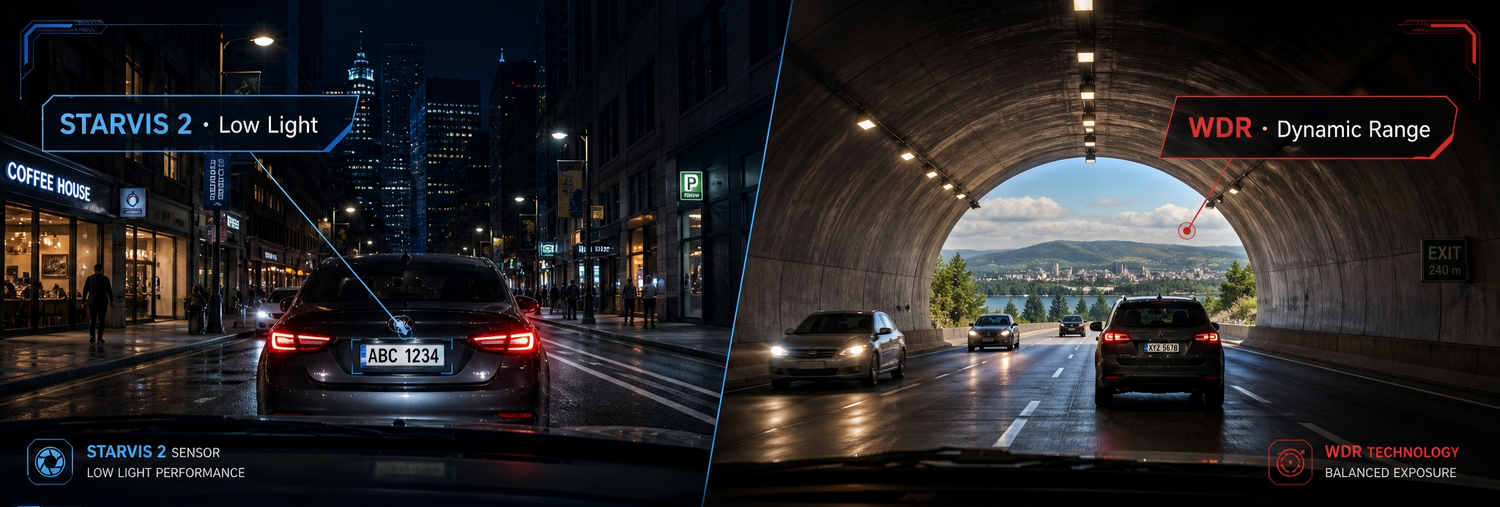
- Tunnel-to-daylight transitions. Your camera goes from near-blackness to direct sun in one second. A sensor that can't recover detail across that range will blow out the highlights or crush the shadows.
- Parking-lot incidents at 2am. Often the worst-lit scenes you'll ever need to capture, and exactly the moment when license-plate readability matters for an insurance or police report.
- Headlight glare. Oncoming high-beams that wash out the entire frame on weaker sensors.
Three sensor design choices determine whether a camera handles these conditions well:
- Pixel size. Larger pixels collect more light per unit time. This is why a 1080P sensor with bigger pixels can outperform a 4K sensor with smaller pixels in pure low-light scenarios.
- Back-illumination (BSI). A sensor architecture that places the wiring behind the photodiodes instead of in front of them — letting more light reach the sensitive parts of the chip. STARVIS and STARVIS 2 are both BSI architectures.
- Dynamic range. The ability to capture bright and dark detail in the same frame. Crucial for headlight glare and tunnel exits.
STARVIS 2 was designed with these three priorities front-and-center for surveillance and automotive use. That's the bridge between "Sony branding on a spec sheet" and "you can actually read the license plate at night."
STARVIS 1 vs STARVIS 2 — What Actually Changed
Here's where to be careful: the specific quantitative differences between STARVIS and STARVIS 2 (sensitivity in lux, dynamic range in dB, etc.) vary by individual sensor model. Sony positions STARVIS 2 broadly as offering improvements in low-light sensitivity, dynamic range, and near-infrared (NIR) response over the original STARVIS family — but the exact numbers depend on which IMX-numbered sensor you're comparing to which.
What's clear at the architectural level:
- Both are back-illuminated CMOS sensors built for low-light applications.
- STARVIS 2 is the second-generation lineup, with redesigned pixel structures aimed at better low-light performance.
- STARVIS 2 maintains and extends near-infrared response, which matters for cameras that pair the sensor with infrared illumination (more common in security than dash cams, but still relevant for some interior cabin cameras).
- A STARVIS 2 sensor of a given resolution will, on average, give you better night-driving footage than a non-STARVIS sensor of the same resolution.
- A STARVIS 2 sensor will typically outperform a STARVIS 1 sensor of similar resolution in mixed-lighting conditions and headlight-glare scenarios.
If a YouTube reviewer claims a specific "30% better low-light" number, ask which two sensors they're comparing. If they can't tell you, they're repeating marketing copy.
Reading the IMX Numbers
Sony names every image sensor with an "IMX" prefix and a 3- to 4-digit number. The IMX number is what you should look for on a spec sheet — not just "Sony STARVIS 2" by itself.
The most common STARVIS 2 sensor in current consumer dash cams is the Sony IMX678 — an 8-megapixel sensor capable of native 4K (3840×2160) recording. This is the sensor in REDTIGER's F7NA front camera, and it's the sensor used on both front and rear cameras in REDTIGER's F77. According to REDTIGER's own technical writeup, the IMX678 delivers a 30% improvement in low-light performance compared to the older IMX335 sensor used in some earlier F7N-series dash cams.
Buyer's takeaway: when you read a dash cam spec sheet, look for the IMX number. If a product says "Sony STARVIS 2" but doesn't disclose the IMX model, that's a yellow flag. Honest manufacturers list the model.
When STARVIS 2 Matters Most
These are the scenarios where the STARVIS 2 difference shows up most clearly in real footage:
- Reading license plates under street lighting at night. The most common reason drivers need their dash cam to actually work — and the most common scenario where weaker sensors fail.
- Capturing detail in mixed lighting. A parking lot where some areas are lit and others are pitch dark, or the moment your car emerges from a tunnel into bright sun.
- Recovering detail from headlight glare. When oncoming traffic's high-beams would otherwise blow out everything else in the frame.
- 24-hour parking mode in dim environments. Most parking-mode incidents happen in poorly lit garages or street parking. A sensor that performs well in low light is the difference between "we can see what happened" and "the footage is unusable."
There's a less-obvious scenario worth flagging too: a 1080P STARVIS 2 sensor will sometimes produce more usable night-driving footage than a 4K sensor that doesn't use STARVIS 2. Sensor quality matters more than pixel count when light is the limiting factor.
When STARVIS 2 Doesn't Matter
Honest counterpoint, because not every camera channel needs the latest sensor:
- Daylight driving. Almost any modern automotive sensor handles daylight well. STARVIS 2's advantages are concentrated in low-light scenarios.
- Cabin / interior cameras. Interior cameras have different lighting needs, and most rideshare cabin recording is fine with a non-STARVIS sensor paired with infrared LEDs.
- Tight budget. If the cost difference is significant, and you mostly drive in daylight, a non-STARVIS camera with good optics and decent dynamic range may be the more rational pick.
REDTIGER Cameras That Use Sony STARVIS 2
REDTIGER's current lineup includes five dash cams with Sony STARVIS 2 branding. Here's the short tour:
F7NA — STARVIS 2 entry point
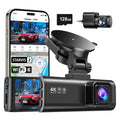
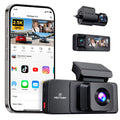
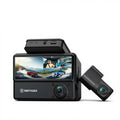
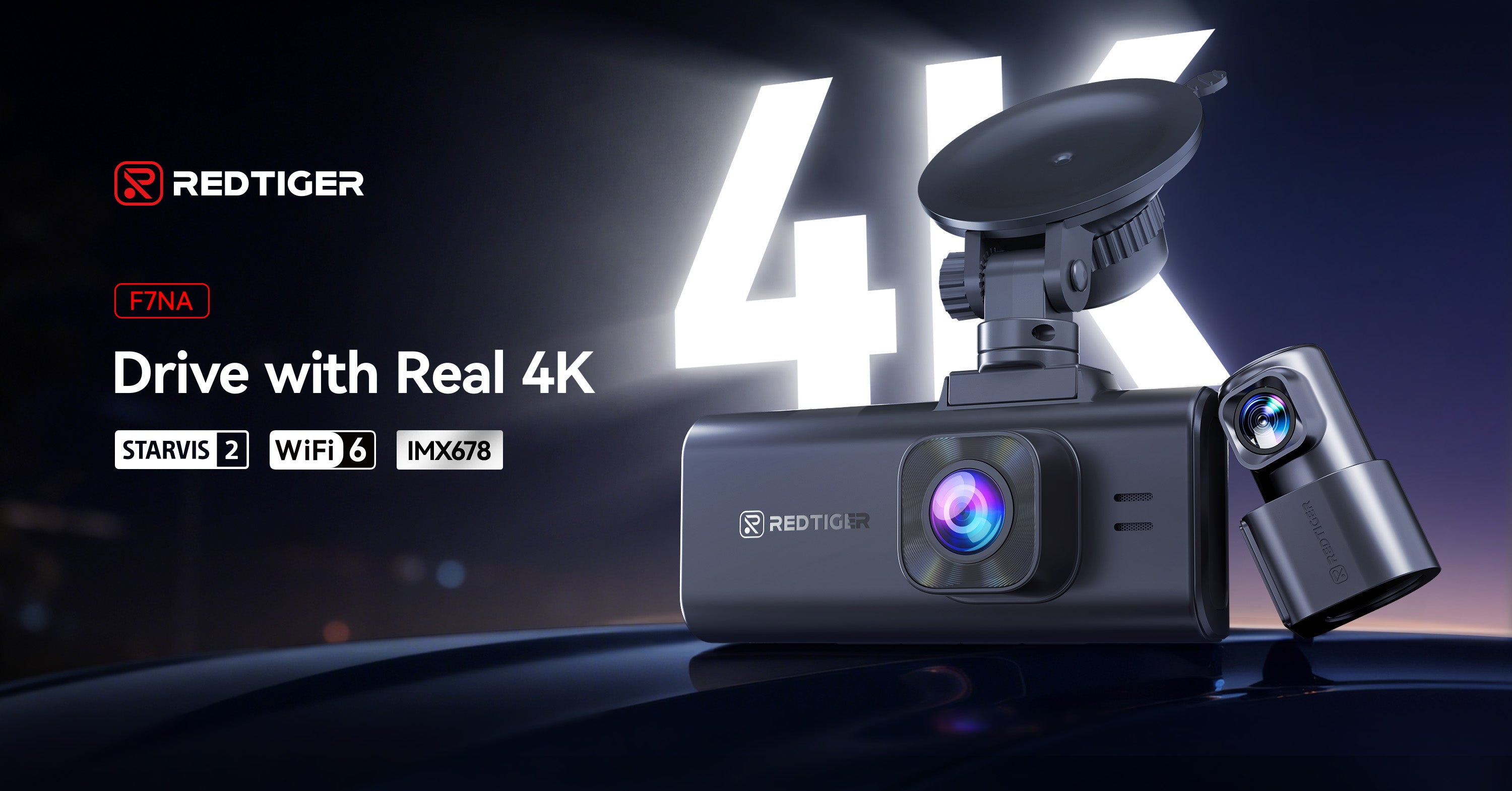
The newest 2-channel front-and-rear dash cam, with a Sony STARVIS 2 sensor on the front (4K native), 1080P rear, WiFi 6, and 24-hour parking mode support. At its launch price under $200, it's the most accessible way to get a Sony STARVIS 2 sensor in a REDTIGER camera.
Pick the F7NA if: you want STARVIS 2 night performance on the channel that matters most (the front), and you're willing to accept a 1080P rear in exchange for a sub-$200 sticker.

F77 — Dual STARVIS 2 (both channels)
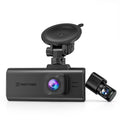
The premium 2-channel option, with dual Sony IMX678 STARVIS 2 sensors — one front, one rear, both shooting native 4K (3840×2160). It includes a free hardwire kit and SD card.
Pick the F77 if: you specifically want STARVIS 2 night performance on both channels (e.g., rideshare drivers, or frequent highway drivers where rear-vehicle identification matters).

How to Verify a Dash Cam Actually Has STARVIS 2 Before You Buy
- Find the IMX number on the spec sheet. Reputable manufacturers list it. If a product says "Sony STARVIS 2" without naming a specific IMX sensor (IMX678, IMX585, etc.), ask in pre-purchase support before buying.
- Watch for "STARVIS-like" or "low-light technology" language. These are NOT Sony brands. If the marketing avoids the words "Sony" and "IMX," assume it's not Sony.
- Cross-check the resolution. A "4K STARVIS 2" sensor at this point in the market almost certainly means IMX678. If a product claims 4K STARVIS 2 and lists a resolution that doesn't match standard IMX678 output, ask for the IMX model.
Frequently Asked Questions
Is STARVIS the same as STARVIS 2?
No. STARVIS is the original Sony low-light sensor lineup (mid-2010s onward), and STARVIS 2 is the second-generation family introduced in 2022. Both are back-illuminated CMOS architectures, but STARVIS 2 features redesigned pixel structures and improved low-light performance.
Does Sony STARVIS 2 always mean better night footage than STARVIS 1?
Generally yes within the same resolution class, but the exact comparison depends on which IMX-numbered sensors you're matching up. A STARVIS 2 sensor at 4K versus a STARVIS 1 sensor at 4K will typically favor STARVIS 2 in low-light and mixed-lighting scenarios.
My dash cam says it has a "Sony lens" — does that mean it has STARVIS 2?
No. A "Sony lens" refers to the optical glass, not the image sensor. Look for the IMX sensor number to confirm a Sony image sensor.
Are all REDTIGER dash cams Sony STARVIS 2?
No. As of 2026, five REDTIGER cameras prominently feature Sony STARVIS 2 sensors: the F7NA, F77, F7N Elite, F17 Plus, and VP40. Check individual product pages for details.
Can I see a difference between STARVIS 2 and a regular sensor on my phone screen?
For most night-driving differences (license plate readability, mixed-lighting recovery), you can absolutely see the difference on a phone or laptop screen at full resolution. Always submit the original file from the SD card for evidence purposes, not a compressed re-uploaded version.
The Bottom Line: How to Get STARVIS 2 in a REDTIGER Camera
If you've read this far, you're probably looking for a clear recommendation. Here's the short version:
- Most drivers should start with the REDTIGER F7NA. It's the entry point into Sony STARVIS 2 — IMX678 STARVIS 2 on the front channel where it matters most, native 4K, WiFi 6, and 24-hour parking mode, all under $200 at launch.
- Upgrade to the REDTIGER F77 only if you specifically need STARVIS 2 on both channels — for example, if you're a rideshare driver, or want maximum evidence quality on the rear channel for tailgating documentation.
For most use cases, STARVIS 2 on the front and 1080P on the rear (the F7NA configuration) covers the scenarios that actually generate insurance claims.

Leave a comment
All comments are moderated before being published.
This site is protected by hCaptcha and the hCaptcha Privacy Policy and Terms of Service apply.