























3-Channel Buyer’s Guide
Is the Third Camera Worth It?
For daily driving, a third camera is worth paying for only when the cabin is part of the evidence you want to preserve.

The verdict
The third camera is valuable when it closes a real evidence gap.
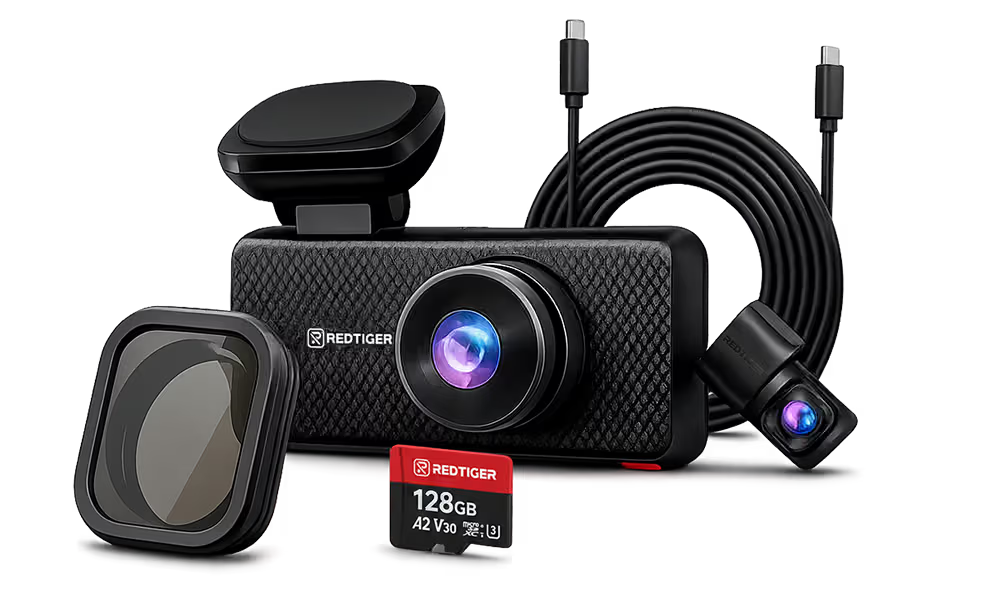
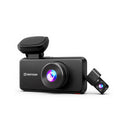
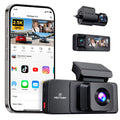
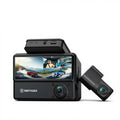
A 3-channel system typically records the road ahead, the road behind, and the vehicle interior. The cabin view adds the driver, passengers, and some side-window context depending on placement.
More cameras are not automatically better. Another channel adds footage to store, review, position, and manage—and raises privacy questions.
Narrow concession: if the cabin is not part of your evidence problem, a strong 2-channel system may be the better daily-driving value.
Coverage comparison
Channel count is a coverage map—not a quality score.
| Setup | What it records | Best fit | Main trade-off |
|---|---|---|---|
| 2-channel | Front road + rear road | Exterior collisions and simpler installation | No cabin record |
| 3-channel | Front + rear + cabin | Passengers, shared vehicles, night cabin context | More storage and privacy decisions |
| 4-channel | Front + rear + two interior views | Larger cabins with a specific remaining gap | More complexity than many drivers need |
A cabin camera may capture side-window context, but no 3-channel label guarantees true 360-degree exterior coverage. Lens angle, mounting position, seat layout, and obstructions still define the view.
Daily-driving scenarios
Four times the interior view changes the record.
You carry passengers
For rideshare, taxi, carpool, or frequent passenger use, an interior camera can document interactions exterior footage cannot show. Recording and consent rules vary, especially for audio.
More than one person drives
In a shared household vehicle, cabin footage can add context about who was driving and what happened inside the car before an exterior event.
You drive after dark
Cabin cameras differ at night. Some use infrared and record monochrome footage; others are designed for color cabin recording. Verify the exact channel, not only a generic night-vision claim.
You want incident context
Exterior footage may show impact geometry. Interior footage can sometimes add driver, passenger, or post-incident context—but it cannot guarantee a legal or insurance outcome.
Before you buy
The third channel has four real costs.
Storage
Three channels write more total video than two. Exact runtime depends on resolution, bitrate, codec, frame rate, parking settings, and card capacity.
Placement
Preview all channels before hiding cables. Check the mirror, visors, headrests, window line, and nighttime framing.
Privacy
A cabin camera records people. Decide whether audio is necessary and check applicable notice or consent rules.
Review speed
More footage helps only if you can find and export the right clip. Check channel labels, timestamps, event protection, app workflow, and transfer speed.
Evidence gaps
Plan the views—and the footage workflow—before an incident.
Solo commuter
Start with front and rear. Add the cabin only when driver actions, roadside interactions, valuables, or side-window context are part of the evidence problem.
Family or shared car
Cabin context can be useful when several people drive, but agree on footage access, audio, and retention before installation.
Occasional rideshare
Confirm cabin and audio controls are easy to verify. A control you cannot check under time pressure is not dependable.
Larger cabin
Preview occupied seats before buying a fourth channel. Step up only when one interior lens leaves a specific zone outside the frame.
Run daylight and nighttime test events. Confirm synchronized timestamps, channel names, event-lock behavior, and export steps. Estimate storage from real clips recorded with the settings you will keep rather than relying on a generic capacity chart.
After an incident, preserve the original files, make a working copy, and keep related front, rear, and cabin clips together. These steps do not guarantee an outcome, but reduce the risk of losing useful context.
F17 family
Choose the smallest system that closes the gap.
F17 Elite
3: front + rear + interior
4K + 2.5K + 1080pBest for buyers prioritizing exterior detail, Wi‑Fi 6, and full-color cabin night recording.
Full Night Color is identified for the cabin. Verify current bundle, price, and availability.
View F17 EliteF17
3: front + rear + interior
Recheck current listingA simpler F17-family 3-channel option.
Do not infer sensor, speed, bundle, or pricing from other F17 models.
View F17F17 Plus
4: front + rear + two interior views
2.7K + 1080p ×3For drivers whose single cabin view still leaves a meaningful gap.
This is a 4-channel system; NiteGuard is listed as unsupported.
View F17 PlusDecision checklist
Five questions make the answer obvious.
- 01
What event am I trying to document?
- 02
Who rides in or shares the car?
- 03
Will I need useful cabin footage after dark?
- 04
Am I comfortable managing cabin video and audio privacy?
- 05
Can storage and retrieval handle another stream?
Pick 2-channel when the road is the problem. Pick 3-channel when the cabin is part of the story.
Step up to 4-channel only when one interior view still leaves a specific, meaningful gap.
FAQ
The third camera, answered.
Is a 3-channel dash cam worth it for a daily commute?
Yes when passengers, shared driving, rideshare use, or cabin context matter. If you only need front and rear road footage, 2-channel may be the better value.
Do I need an interior camera if I am not a rideshare driver?
Not automatically. Families, shared-car households, and night drivers may benefit; solo commuters focused on exterior collisions may not.
Does a 3-channel dash cam record the sides?
A cabin lens may capture some side-window context, but coverage depends on placement, lens angle, cabin geometry, and obstructions.
Will three cameras use more storage?
Generally yes. Exact runtime depends on channel resolution, bitrate, codec, frame rate, parking settings, and card capacity.
Is cabin recording legal?
Rules vary by jurisdiction, especially for audio and passenger consent. Check local requirements and disclose recording when required.
Is F17 Plus a 3-channel dash cam?
No. REDTIGER’s current product page lists F17 Plus as a 4-channel system.