




















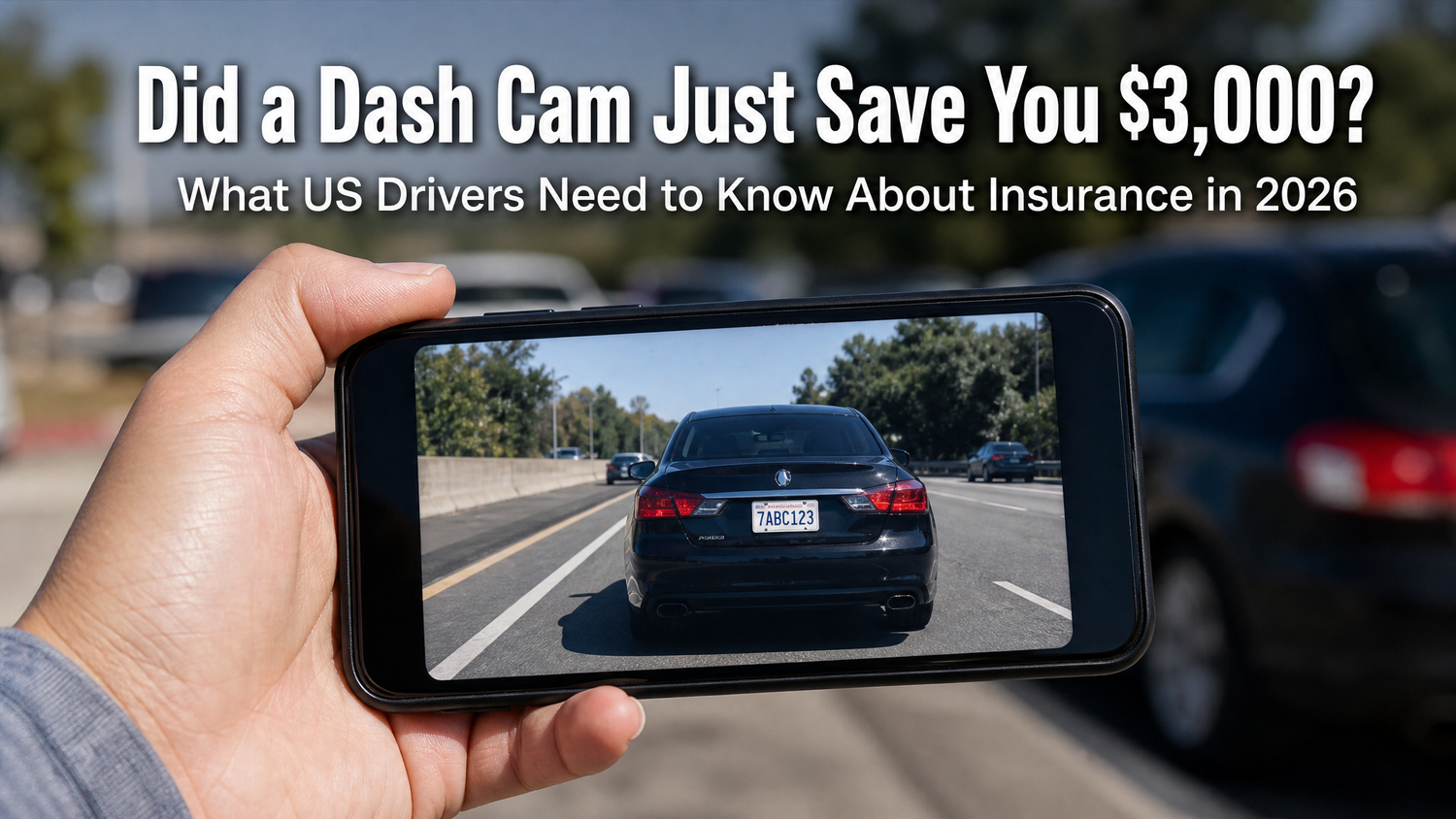
The short answer is: probably not in the way you are hoping — but the financial case for a dash cam is real, and for the wrong kind of accident it can save you far more than any premium discount ever would.
This article breaks down exactly how dash cams interact with US car insurance, what insurers actually do with footage, and when a dash cam can be the difference between a protected claim and a costly he-said-she-said dispute.
The Short Answer: Indirect Savings, Not a Direct Discount
In the United Kingdom and Canada, several insurers offer explicit premium reductions for policyholders who install approved dash cams. That benefit has not meaningfully crossed the Atlantic. As of 2026, no major US auto insurer has a published, standardized program that automatically lowers your rate for having a dash cam.
That does not mean the financial benefit is zero. It means the benefit shows up differently — through claims outcomes rather than line-item discounts.
Here is how the math actually works in practice:
- A single disputed fault finding can raise your premium by hundreds of dollars annually for three to five years.
- A single at-fault accident on your record, even a minor one, can cost you thousands in cumulative rate increases.
- Dash cam footage that clears you of fault in even one disputed incident can preserve your clean driving record — which is worth more over time than a modest percentage off your current premium.
The benefit is real. It is just not automatic, and it is not guaranteed. Anyone who tells you a dash cam will definitely lower your bill is overstating what the technology does.
How Dash Cam Footage Protects You in a Claim
The core value of a dash cam is evidence. Insurance claims, at their foundation, are disputes about what happened. Without footage, your insurer weighs your account against the other driver's account, and the outcome can go either way.
Fault Disputes
Most US states use comparative fault or contributory negligence rules, meaning the percentage of fault assigned to each driver directly affects how much each party's insurer pays — and what happens to each driver's record. A clear video record of who ran the red light, who changed lanes unsafely, or who was following too closely removes ambiguity and can shift fault findings in your favor.
For a deeper look at how this works in practice, see our guide: The Ultimate Guide: How to Use Dash Cam Footage for Car Insurance Claims in the US.
Hit-and-Run Incidents
Hit-and-run incidents are underreported and underresolved. Without a plate number or witness, you are typically filing under your own uninsured motorist coverage, which still affects your claim history. Front and rear dash cam footage can capture the plate, the vehicle description, or enough detail for law enforcement to pursue the other driver — potentially shifting liability away from your policy entirely.
Insurance Fraud and Staged Accidents
Staged collision schemes — where a fraudster deliberately causes a crash and then claims injury — cost US insurers billions of dollars annually and those costs are passed to every policyholder through higher rates. Dash cam footage can expose staged accidents immediately, protecting you from fraudulent injury claims. Read more: How Dash Cams Help Combat Insurance Fraud.
Telematics vs. Dash Cam: Two Different Ways to Lower Premiums
It is worth distinguishing between two technologies that often get conflated in the insurance conversation.
Telematics programs — such as Progressive Snapshot, State Farm Drive Safe & Save, and Allstate Drivewise — are usage-based insurance products where your insurer installs a device in your vehicle (or uses a smartphone app) to monitor driving behavior: speed, braking, cornering, time of day, and mileage. Drivers who demonstrate safe habits can earn measurable premium reductions, sometimes significant ones.
Dash cameras are recording devices, not monitoring devices. They observe and document events. They do not transmit data to your insurer. Your insurer does not know you have one unless you tell them or submit footage in a claim.
These two technologies serve different purposes:
| Telematics | Dash Cam | |
|---|---|---|
| Primary benefit | Potential premium reduction | Evidence in a claim dispute |
| Insurer involvement | Insurer collects your data | Insurer only sees footage if you submit it |
| Privacy trade-off | High — ongoing monitoring | Low — you control the footage |
| Best for | Drivers with demonstrably safe habits | Any driver who wants claims protection |
Some drivers use both. If you qualify for a telematics discount and also want claims protection, there is no conflict in running a dash cam alongside an enrollment in Snapshot or Drive Safe & Save.
When a Dash Cam DOES Lead to Lower Costs
Here are the concrete scenarios where dash cam footage has a direct financial impact.
Disputed fault in a multi-car accident. You are rear-ended at a stoplight, but the other driver claims you reversed into them. Without footage, your insurer may settle by splitting fault. With footage, the dispute ends quickly, your record stays clean.
Parking lot damage. A camera with parking mode and a rear lens catches the driver who backed into your parked vehicle. You have their plate, a timestamp, and an insurance claim that goes against their policy, not yours.
Hit-and-run with a captured plate. Police can identify the other vehicle. Your uninsured motorist claim may be avoidable entirely if the responsible party is identified and held liable.
Fraudulent injury claims. A driver deliberately brake-checks you and then claims whiplash. Footage showing the staged stop eliminates the fraudulent claim before it can inflate your loss history.
Teen or secondary drivers. Parents of new drivers sometimes review dash cam footage as a coaching tool. Safer driving habits over time contribute to better outcomes in telematics programs and fewer incidents overall.
How to Talk to Your Insurer About Your Dash Cam
Most US insurers do not have a standard process for registering a dash cam on a policy. That does not mean the conversation is useless — it means you need to be proactive.
Before an incident:
- Call your insurer and ask directly: "Do you have any programs or considerations for policyholders who use dash cameras?" Some regional and specialty insurers are beginning to factor this in.
- Ask your agent how footage should be submitted in the event of a claim — email, online portal, or physical media.
- Document the make, model, and installation date of your camera. Store that information with your policy documents.
After an incident:
- Do not delete footage. Back it up immediately to a phone, laptop, or cloud storage.
- Note the exact time and location of the incident and verify it matches your camera's timestamp.
- Submit footage to your insurer proactively if it supports your account of events. Your claims adjuster will be better equipped to reach a fast, accurate fault determination.
- Be aware that footage is a two-way street — see the FAQ below on footage being used against you.
Choosing the Right Dash Cam for Insurance Purposes
Not all dash cams are equally useful in a claims context. When insurance protection is a priority, these features matter most.
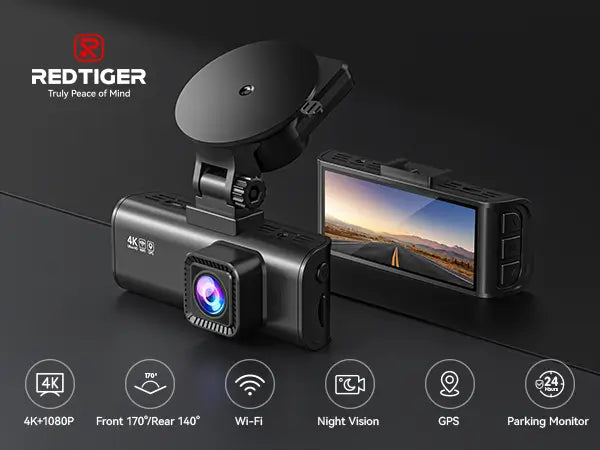
GPS with speed and location data. GPS logging timestamps your position and speed at the moment of an incident, adding objective context that corroborates your account. It also establishes the route, which matters in disputes involving location.
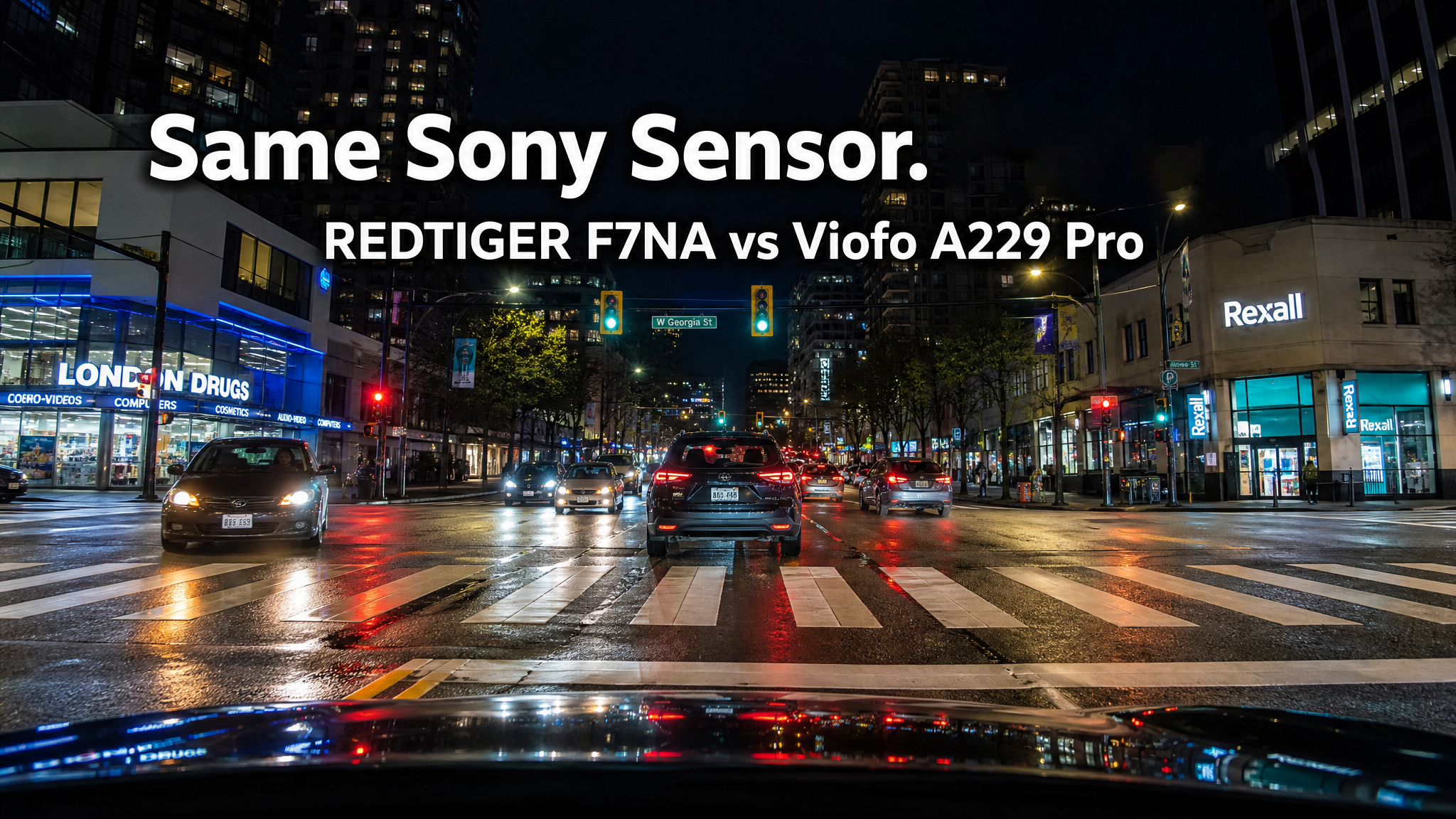
Night vision / low-light performance. A significant percentage of accidents occur in low-light conditions. A camera that produces unusable footage after dark defeats the purpose. Look for sensors rated for night performance — REDTIGER uses Sony STARVIS 2 imaging sensors on flagship models specifically for this reason.
Rear camera coverage. Rear-end collisions are among the most frequently disputed incidents. A front-only camera leaves a gap in your evidence. Front-and-rear coverage closes that gap.
Parking mode with motion detection. Parking lot incidents and hit-and-runs while parked account for a large number of minor claims. A camera that continues monitoring while the ignition is off extends your coverage to those situations.
Loop recording and sufficient storage. The camera should overwrite old footage automatically so storage never fills up. A minimum of 32GB is recommended; 64GB or higher is better for vehicles that park overnight in public areas.
Timestamp integrity. Footage with accurate, GPS-synced timestamps is more useful to adjusters and, if necessary, attorneys or courts.
Recommended Options
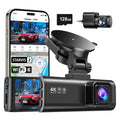
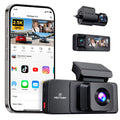
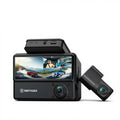
For most drivers seeking front-and-rear incident coverage, the REDTIGER F7NA ($159.99) delivers native 4K front resolution, Sony STARVIS 2 night imaging, built-in GPS, and a rear camera — a practical, insurance-relevant configuration at a mid-range price point.
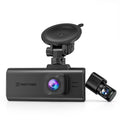
For rideshare drivers, fleet operators, or anyone who wants interior and three-channel coverage, the REDTIGER F17 Elite ($239.99) adds a third interior-facing lens alongside front and rear cameras. Three-channel coverage is particularly valuable in rideshare disputes where the events inside the vehicle are as legally relevant as those outside it.
Frequently Asked Questions
Does having a dash cam lower my car insurance premium?
In the US, no major insurer currently offers an automatic premium discount for dash cam ownership. The financial benefit is indirect: footage that protects your fault determination and claim history can preserve your clean driving record, which has a significant long-term effect on your rates. Some regional or specialty insurers may consider dash cams as a favorable factor — it is worth asking your agent directly.
Which insurance companies recognize dash cam footage in the US?
All major US insurers — including State Farm, GEICO, Progressive, Allstate, USAA, and others — will accept and review dash cam footage submitted as evidence in a claim. Adjusters treat it as evidence in a fault determination, the same way they would treat witness statements or police reports. No major US carrier has a published discount program tied to dash cam ownership.
What dash cam features matter most for insurance claims?
GPS with timestamped location data, a rear camera, clear low-light or night recording capability, and parking mode are the most claims-relevant features. GPS data adds an objective data layer to the video record. A rear camera covers the incidents that are most frequently disputed. Night recording ensures the footage is usable across all conditions. Parking mode extends coverage to unattended vehicle incidents.
Can dash cam footage be used against me by my own insurance company?
Yes. When you submit footage, your insurer reviews the complete record — not just the portion that helps your case. If the footage shows speeding, distraction, or other contributing behavior, that information becomes part of the claim file. If footage clearly supports your account, submit it. If it is ambiguous or shows possible fault on your part, consult an attorney before sharing it with anyone.
Is a dash cam worth buying just for insurance purposes?
For most drivers, yes — but frame the value correctly. You are not buying a device that lowers next month's bill. You are buying protection against one specific financial harm: a disputed fault finding that raises your rates for years. The cumulative cost of a single at-fault determination typically exceeds the price of a good dash cam many times over. Protection against hit-and-run damage and staged fraud adds further value on top of that.
The Bottom Line: A dash cam will not appear as a line-item discount on your next renewal. What it will do is give you objective evidence in the moments when your word alone is not enough — and those moments can be far more expensive than any discount would cover. The REDTIGER F7NA ($159.99) covers the key insurance-relevant bases: GPS, Sony STARVIS 2 night imaging, native 4K, and rear coverage. For rideshare or three-channel documentation, the REDTIGER F17 Elite ($239.99) adds interior coverage without compromising front or rear quality.

Leave a comment
All comments are moderated before being published.
This site is protected by hCaptcha and the hCaptcha Privacy Policy and Terms of Service apply.