



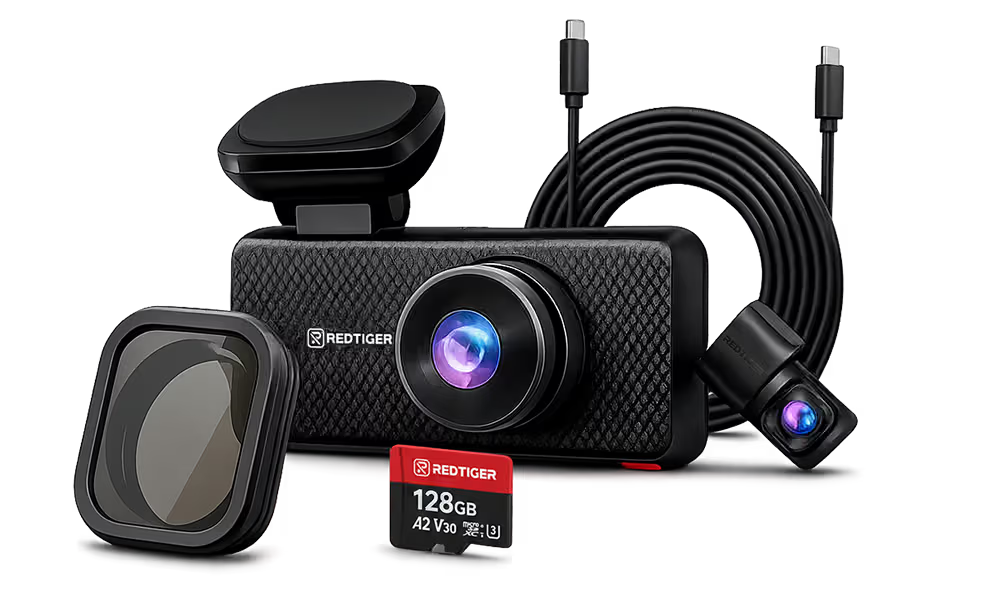



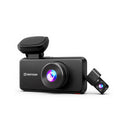
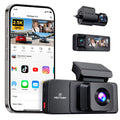

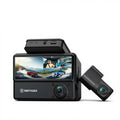


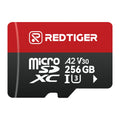










Quick answer: The best dash cam for a first-time buyer in the $150 range in 2026 is the REDTIGER F7NA at $159.99. It is $10 above the $150 threshold — and the difference between it and everything genuinely under $150 is native 4K with Sony STARVIS 2, the highest-spec sensor in the sub-$200 category. This guide explains what that means and whether it is worth it for a first purchase.
What "Under $150" Actually Gets You
The $100–$150 range is well-populated. Most cameras in this range share a common profile: adequate footage in good daylight, acceptable performance in moderate light, and noticeable degradation in low-light conditions — dusk, dawn, rain, underground parking, nighttime streets.
Here is how the sub-$200 range breaks down:
| Price Range | What You Get | Limitation |
|---|---|---|
| Under $80 | Basic sensor, 1080P | Footage often too noisy to read plates at night |
| $80–$110 | Sony STARVIS 2, upscaled 4K, improved low-light | Upscaled output, not native 4K capture |
| $110–$150 | STARVIS 2 with upscaled 4K (REDTIGER F7NP, $129.99) | Same sensor ceiling; upscaled resolution |
| $150–$165 | Sony STARVIS 2, native 4K | F7NA — sensor and resolution step up at $159.99 |
"4K" refers to exported video files with a resolution of no less than 3840 × 2160.
The IMX678 is the specific Sony sensor model used in REDTIGER's top-tier cameras. It is back-side illuminated, 8 megapixels, and built for automotive low-light applications. REDTIGER's published data cites a 30% low-light improvement for IMX678-equipped cameras versus earlier sensor platforms. In practice: footage that captures a license plate at 40–50 feet in nighttime conditions rather than a blurry smear of pixels.
If your budget is firm at $120, the F7NP is the best choice at that price. If you can stretch to $160, the F7NA gives you meaningfully better image quality. The $50 gap is the cheapest way to move from STARVIS 2 upscaled to native 4K in REDTIGER's lineup.
REDTIGER F7NA — What You Get at $159.99
Native 4K Front Camera
The F7NA's front sensor physically captures at 3840×2160 pixels — every pixel in the frame is real data from the sensor. This is what "native 4K" means. Upscaled cameras record at a lower resolution and algorithmically scale the output — the pixel count matches but the actual captured detail does not.
For a first-time buyer, the practical implication is license plate legibility. Native 4K resolves plates at 40–50 feet ahead in good light — the camera can read the car that just cut you off from a normal following distance. For anything beyond casual use, this is the capability that turns footage into evidence.
Sony IMX678 STARVIS 2 Sensor
The sensor determines footage quality in every condition that matters: dusk, dawn, nighttime, rain, tunnels, underground garages. The IMX678 STARVIS 2 is a back-side illuminated sensor — more light reaches the sensor per pixel. The result is cleaner footage in low light, less grain, and better dynamic range in the same frame.
For a full technical breakdown of this sensor generation, see our Sony STARVIS 2 sensor guide.
1080P Rear Camera
The rear camera records at 1080P — sufficient for its primary job: capturing the vehicle directly behind you and documenting the plate of anything that rear-ends you. At typical following distances, 1080P rear footage is usable evidence.
WiFi 6 at 20 Mb/s
A 60-second 4K clip transfers to your phone in under a minute via the REDTIGER app. For a first-time buyer, this is the simplest way to pull footage: open the app, connect, download. No removing the SD card, no adapters.
3.69-Inch Touchscreen, GPS, and ADAS
Settings, playback, and recording modes all happen on a 3.69-inch touchscreen — large enough to use clearly on a windshield. Built-in GPS logs speed and location on every clip. Lane Departure Warning, Forward Collision Warning, and Vehicle Start Alert are included.
Supercapacitor at -4°F to 158°F
No lithium battery to degrade in summer heat. The supercapacitor handles the windshield temperature range reliably year-round — rated to 158°F, which covers direct sun exposure in the hottest US climates.
F7NA vs F7NP: Which One Is Right for You?
| F7NP | F7NA | |
|---|---|---|
| Front resolution | 4K (upscaled) | Native 4K |
| Front sensor | Sony STARVIS 2 | Sony IMX678 STARVIS 2 |
| Parking mode | Time-lapse + collision | 24-hour continuous |
| Hardwire kit | ✅ Included free | Purchase separately ($33.99) |
| WiFi | WiFi 6 / 20 Mb/s | WiFi 6 / 20 Mb/s |
| Price | $129.99 | $159.99 |
"4K" refers to exported video files with a resolution of no less than 3840 × 2160.
Choose the F7NP ($129.99) if: Budget is firm, you want parking mode without an extra purchase, and native 4K is not a requirement. The F7NP is the best value in REDTIGER's lineup at the $120 price point.
Choose the F7NA ($159.99) if: You want native 4K — the sensor generation that produces readable plates at distance and cleaner night footage. If you are likely to use this as insurance evidence, the image quality difference at the sensor level is meaningful.
For a detailed guide to the F7NP, see Best Simple Dash Cam for Beginners (2026).
What Beginners Should Look for — and What to Ignore
Look for: Sony STARVIS 2 (sensor generation), native vs. upscaled 4K (resolution quality), supercapacitor (reliability in heat), and a 2-year warranty.
Ignore: Resolution labels without sensor info — "4K" alone tells you nothing if the page does not specify native or upscaled. Claimed low-light scores without a source. List prices that do not reflect actual retail cost.
One question to ask before buying any dash cam: Is the 4K native? If the product page does not specify, assume upscaled. A camera that captures natively at 4K will say so clearly — it is a premium specification worth highlighting.
For a full breakdown of resolution tiers and what they mean for evidence quality, see our 1080P vs 2K vs 4K guide.
Frequently Asked Questions
What is the best dash cam under $150 for a first-time buyer?
The REDTIGER F7NA at $159.99 is the strongest pick in this price range. It is slightly above $150, but it is the cheapest way to get Sony STARVIS 2 with native 4K in a dual-channel system. Everything genuinely under $150 either uses an older sensor generation or upscales the 4K output. If budget is firm at $120, the REDTIGER F7NP ($129.99) delivers Sony STARVIS 2 with upscaled 4K and a free hardwire kit.
What is the difference between native 4K and upscaled 4K on a dash cam?
Native 4K means the camera sensor physically captures at 3840×2160 pixels — every pixel is real data. Upscaled 4K means the sensor captures at a lower resolution and the processor mathematically enlarges the output to 4K dimensions. The file size is similar, but the actual captured detail is not. In practical terms, native 4K produces sharper footage at distance — particularly for license plates and road signs in low light.
Does the REDTIGER F7NA include a hardwire kit for parking mode?
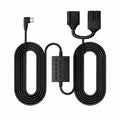
No. The F7NA's 24-hour parking mode requires a hardwire kit, sold separately. The REDTIGER OBD Hardwire Kit ($33.99) is the compatible option. If you want parking mode without an extra purchase, the F7NP includes a hardwire kit at $129.99. For the F7NA with parking mode ready from day one, budget approximately $194 total ($159.99 + $33.99).
Is a dash cam easy to set up for a beginner?
Yes. The F7NA uses a 3M adhesive mount on the windshield and a 12V port power cable. Setup takes 10–15 minutes: attach the mount, route the cable down the A-pillar trim, plug into the 12V port, and the camera starts recording automatically when you start the car. The 3.69-inch touchscreen lets you adjust settings directly on the device. The REDTIGER app connects over WiFi 6 for footage review and download without removing the SD card.
Best in the $150 range: The REDTIGER F7NA ($159.99) — Sony STARVIS 2, native 4K, WiFi 6, GPS, ADAS, supercapacitor rated to 158°F. The $10 over $150 buys the sensor step-up from upscaled to evidence-grade native 4K. Firmer on budget? The REDTIGER F7NP ($129.99) includes Sony STARVIS 2 and a free hardwire kit at the lower entry point.

Leave a comment
All comments are moderated before being published.
This site is protected by hCaptcha and the hCaptcha Privacy Policy and Terms of Service apply.