



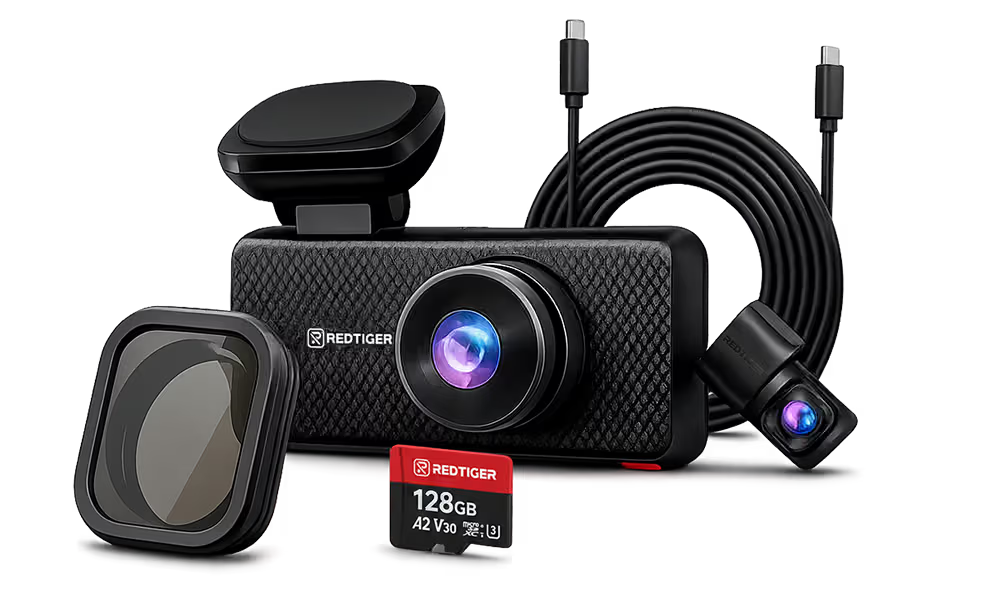


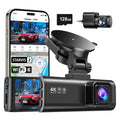
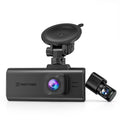

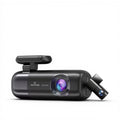
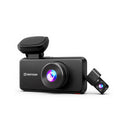
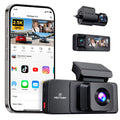

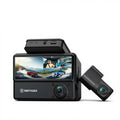











If you want complete video coverage of every angle of your vehicle, a 3-channel dash cam is the only setup that delivers it. After comparing the leading options available in 2026, the REDTIGER F17 Elite stands out as the top pick for US daily drivers, rideshare operators, and families who need full-vehicle documentation.
What Is a 3-Channel Dash Cam?
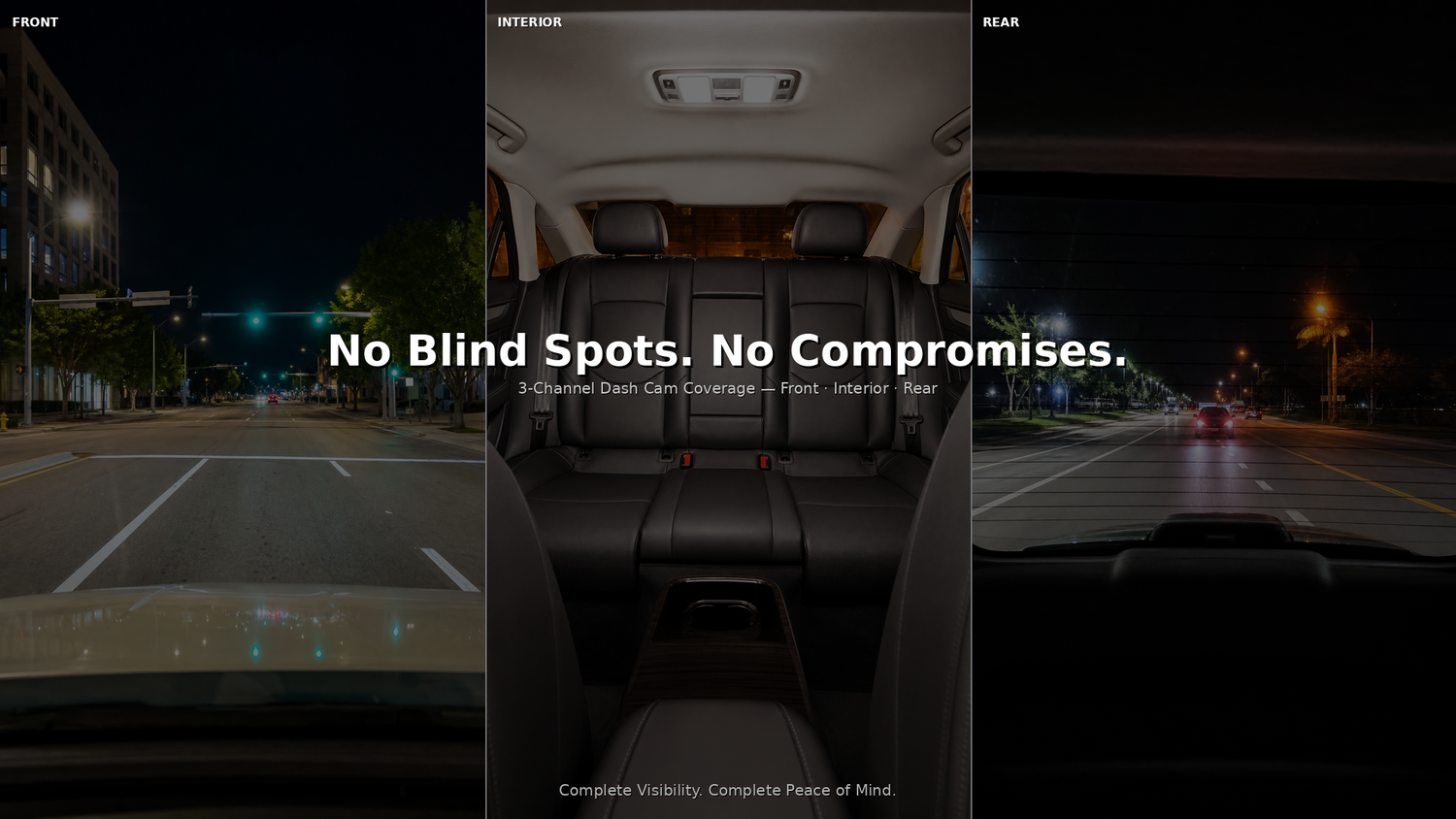
A 3-channel dash cam records simultaneously from three separate cameras mounted to one system: a forward-facing lens, a rear-facing lens, and an interior cabin lens. Each channel captures its own independent video stream, stored to a single SD card.
This is fundamentally different from 1-channel or 2-channel systems:
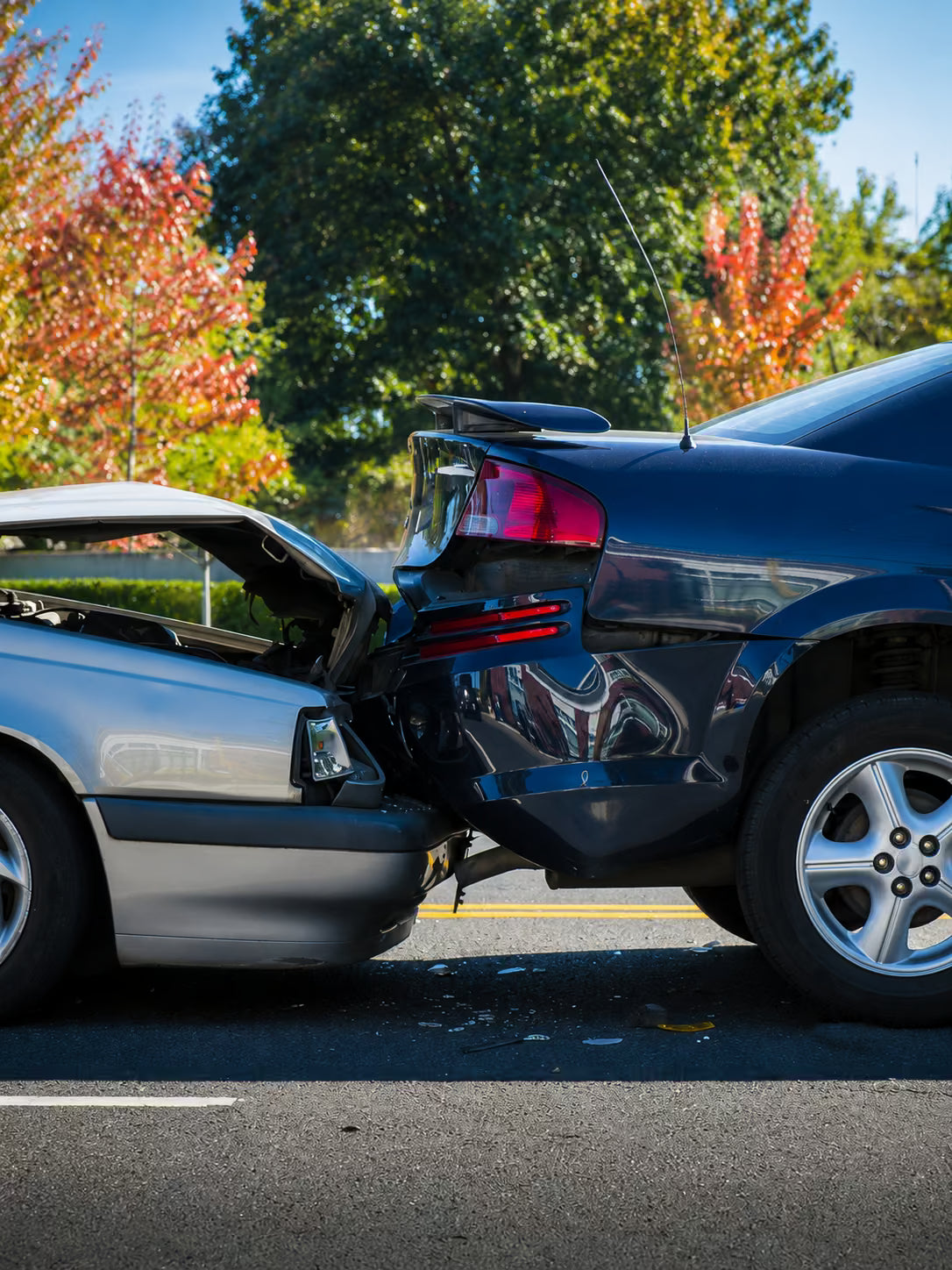
- 1-channel: Captures the road ahead only. Rear-end collisions, parking lot scrapes, and cabin incidents go unrecorded.
- 2-channel (front + rear): Covers the road in both directions but leaves the cabin interior blind — a significant gap for rideshare drivers and anyone with passengers.
- 3-channel (front + rear + interior): Closes every gap. You get the full external picture plus an interior record of passenger behavior, carjacking attempts, and any in-cabin incident that could become a liability.
The interior camera is what separates a 3-channel system from everything else. It turns a dash cam into a complete vehicle surveillance platform.
Who Needs 3-Channel Coverage?
Rideshare and delivery drivers (Uber, Lyft, DoorDash): The interior camera is critical. If a passenger files a false complaint or a dispute arises, timestamped, GPS-tagged interior footage is the difference between losing your account and keeping it.
Families with teen drivers or frequent carpools: Parents who share vehicles with new drivers gain the ability to review footage after an incident or close call. Interior coverage also confirms seatbelt use and attentiveness behind the wheel.
Fleet operators and small business owners: Whether you run a delivery van, a mobile service vehicle, or a company carpool, 3-channel coverage provides documentation that protects the business from fraudulent claims and helps manage driver accountability.
High-theft and high-density parking environments: Drivers who park in city garages or street parking with a history of break-ins need interior coverage in addition to exterior parking surveillance. Interior footage captures smash-and-grab attempts and documents exactly what was taken.
Anyone in a high-litigation market: In states with aggressive no-fault insurance laws or high rates of staged accident fraud, a third camera pointed into the cabin removes any ambiguity about what happened inside the vehicle.

The Best 3-Channel Dash Cams of 2026
#1 — REDTIGER F17 Elite (Top Pick)
The F17 Elite earns the top spot on the strength of its sensor hardware, WiFi 6 connectivity, and full-color night vision across all three channels. It is the most complete 3-channel system available in the under-$250 price range.
Full review in the section below.
#2 — Vantrue E3 Lite (Budget 3-Channel Option)
The Vantrue E3 Lite is a competitively priced 3-channel system aimed at rideshare drivers who need basic front, rear, and interior coverage without advanced connectivity features. A viable entry-level pick for drivers who do not need WiFi 6 or high-resolution rear footage and are working within a tighter budget.
#3 — Garmin Dash Cam Tandem (Interior-Specialist)
The Garmin Tandem is a dual-lens system with one lens facing forward and one facing the cabin interior. It does not include a true rear exterior camera — a narrower use case than a full 3-channel, but worth noting for drivers who prioritize Garmin's incident detection software and do not need rear road coverage.
#4 — BlackVue DR970X-3CH (Premium Fleet Option)
BlackVue's 3-channel offering sits in the premium fleet segment, designed for commercial operators who need cloud connectivity, remote live view, and centralized fleet management. The price point is significantly higher than consumer options, and the feature set reflects that professional focus.
REDTIGER F17 Elite — Full Review
Resolution and Image Quality
The F17 Elite uses a three-sensor array that sets it apart from nearly every other consumer 3-channel system:
- Front camera: 4K (2160P) resolution, Sony STARVIS 2 sensor, F1.8 aperture
- Rear camera: 2.5K (1440P) resolution, Sony STARVIS 2 sensor — verify on product page before publishing
- Interior camera: 1080P resolution, Sony IMX307 sensor
Sony STARVIS 2 sensors are the current benchmark for low-light dash cam performance. The IMX678 front sensor is an 8-megapixel back-side illuminated sensor — it captures significantly more light per pixel than most competing front cameras. At F1.8 aperture, the front lens resolves license plate numbers in challenging nighttime conditions: the kind of detail that matters when filing an insurance claim after a hit-and-run.
The 2.5K rear resolution is above average for this segment. Most 3-channel systems pair a 4K front with a 1080P rear, leaving rear footage visibly softer. The IMX675 rear sensor maintains the evidence quality that the front camera establishes.
NiteGuard Interior Night Vision
The interior camera uses REDTIGER's NiteGuard technology with the Sony IMX307 sensor to deliver full-color night vision inside the cabin without an infrared flash. This is a meaningful distinction: infrared night vision produces monochrome footage, while NiteGuard preserves color — which matters for identifying clothing, hair color, or any item inside the vehicle during a low-light incident.
For rideshare drivers working night shifts, this is the feature that makes the F17 Elite the clear recommendation over cameras that use standard IR interior lenses.
WiFi 6 Connectivity
The F17 Elite uses 5.8GHz WiFi 6 with a maximum transfer speed of 30 Mb/s. In practical terms, this means a 10-minute 4K front clip transfers to your phone in a fraction of the time it would take over older 2.4GHz WiFi. If you are reviewing footage after an incident on the side of the road or in a parking lot, this speed gap matters.
The companion app connects directly to the camera without requiring a home network. Review, download, and share footage directly from your phone.
GPS and Parking Mode
GPS is built in and logs speed and location data alongside every recorded clip. In the event of a dispute, GPS-stamped footage shows exactly where the vehicle was and how fast it was traveling — information that carries real weight with insurance adjusters and attorneys.
The parking mode uses NiteGuard technology and time-lapse recording for 24/7 surveillance when the vehicle is unattended. The camera runs on a supercapacitor rather than a lithium battery, which means it handles the heat of a parked car in direct summer sun without the degradation risk that affects lithium-powered cameras over time.
For a detailed breakdown of parking mode types and power requirements, see our parking mode battery drain guide.
Display, Controls, and Storage
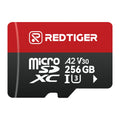
The 3.18-inch touchscreen is larger than most competitor displays in this class. Voice control is available for hands-free operation while driving. Storage supports microSD cards up to 512GB — at 4K front resolution, that gives you several hours of continuous loop recording before the oldest footage is overwritten.
Pricing
The F17 Elite is available at $259.99.
What to Look for When Buying a 3-Channel Dash Cam
Front camera resolution. 4K is the current standard worth paying for. It resolves license plates, road signs, and driver details that lower resolutions miss entirely. If the front camera is below 2K, the footage may not hold up as evidence in a dispute.
Interior camera night vision type. Infrared night vision produces usable footage but in monochrome only. Full-color night vision (like NiteGuard) produces better evidence quality — especially for rideshare drivers working after dark.
Rear camera resolution. Many 3-channel systems cut costs by pairing a high-resolution front with a 1080P rear. For complete evidence quality, look for a rear sensor at 1440P (2.5K) or higher.
WiFi speed and app quality. The faster the WiFi connection, the less time you spend waiting to review or share footage after an incident. WiFi 6 at 5.8GHz is the current best available in consumer dash cams.
Parking mode power source. Supercapacitors are more heat-tolerant and longer-lasting than lithium batteries for parked surveillance. This matters in hot climates where parked car temperatures routinely exceed 140°F.
Storage capacity. 3-channel recording at high resolution fills storage faster than single-channel systems. Confirm that the camera supports 256GB or 512GB microSD to avoid short loop windows.
GPS logging. Without GPS, footage lacks the speed and location data that adds credibility to insurance and legal claims.
Frequently Asked Questions
Do I need a 3-channel dash cam if I am not a rideshare driver?
A 3-channel setup benefits any driver who parks in high-risk areas, shares a vehicle with others, or wants complete documentation for insurance purposes. The interior camera records any in-cabin incident — including carjacking attempts, vandalism through open windows, and passenger disputes in personal vehicles — not just rideshare pickups.
Does the REDTIGER F17 Elite work without a constant hardwire connection?
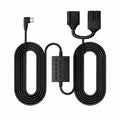
Yes. The F17 Elite uses a supercapacitor, which means it does not require a continuous power draw to maintain battery health. For 24/7 parking mode surveillance, a hardwire kit is recommended to draw power from the vehicle's fuse box while parked. Without hardwiring, parking mode will activate using residual charge, but duration will be limited.
How much storage do I need for a 3-channel dash cam?
For daily driving, 256GB is a practical minimum for a 3-channel system recording at high resolution. The REDTIGER F17 Elite supports up to 512GB, which provides a longer loop window before the oldest footage is overwritten — important if you do not check the camera daily.
Is 4K front resolution actually necessary, or is 1080P sufficient?
In real-world claim scenarios, the difference between 4K and 1080P footage is the ability to read a license plate on a vehicle 30 to 40 feet ahead. At 1080P, plates at that distance are often unreadable. If you are ever involved in a hit-and-run or a disputed-fault accident, 4K front resolution is what makes the footage actionable rather than just illustrative.
The Bottom Line: For US drivers who want complete vehicle coverage — front road, rear road, and cabin interior — the REDTIGER F17 Elite ($259.99) leads the 3-channel category in 2026. Sony STARVIS 2 sensors, full-color NiteGuard interior night vision, WiFi 6 at 30 Mb/s, GPS logging, and a hardwire kit included. Whether you drive for Uber, manage a household vehicle, or park in conditions that put your car at risk, the F17 Elite delivers the evidence quality and coverage angle that single- or dual-channel systems cannot.

Leave a comment
All comments are moderated before being published.
This site is protected by hCaptcha and the hCaptcha Privacy Policy and Terms of Service apply.