
















Dash Cam Heat Resistant: What to Know Before Summer Destroys Your Dash Cam?
|
|
Time to read 8 min

Help Center
Get help with setup, updates, and information

Track My Order
Check Your Package Tracking Status Online

Learn About Dash Cam
The Latest Dash Cam News and Information

Redtiger Player
Play the videos you've recorded on your PC

REDTIGER CAM APP
Download the Redtiger app and use it via a Wi-Fi connection
 Channel
 Sensor
 Video Resolution
 Display
 Lens Aperture
 HDR/WDR
 Wi-Fi
Wi-Fi
 Touch Screen Control
 Voice Control
 Parking Mode
 NiteGuard ™ Parking Mode
 Night vision capability
 GPS Logger
 G-sensor
 Loop Recording
 Storage
 CPL Supported
 Mounting Type (Default)
 Battery & Charging
 Working Temperature
We provide comprehensive pre-sales and after-sales service.

Redtiger offers free shipping on orders totaling $50 or more. We recommend purchasing shipping protection to safeguard your package and money.

Redtiger offers a 30-day money-back guarantee. You may contact us for a no-questions-asked return within 30 days of receiving your order.

Ordering a dashcam through the Redtiger official website entitles you to an additional 6-month extended warranty. This brings the total warranty period to 24 months.

Redtiger provides 24/7 customer service. You can contact us via email or call our customer service hotline directly.
No need to worry about after-sales service—we provide comprehensive after-sales support.
We offer free shipping on qualifying orders with no hidden fees or surprise charges.
Most orders are processed within 1–2 business days and shipped through trusted carriers to ensure safe and timely delivery.
You’ll receive tracking details as soon as your order ships, so you can follow it every step of the way.
From checkout to delivery, we make the process simple and worry-free.

Your satisfaction comes first. If you’re not completely happy with your purchase, you can request a return within 30 days of delivery.
Simply reach out to our support team and we’ll guide you through the process.
Once your item is received and inspected, your refund will be issued promptly according to our policy.
Shop with confidence knowing your purchase is protected.

We use industry-standard encryption and trusted payment providers to protect every transaction.
Your personal and payment information is securely processed and never stored or shared without authorization.
Multiple secure payment options are available for your convenience, so you can complete your purchase with total confidence.

Have a question? We’re here to help.
Our dedicated customer support team responds quickly and provides clear, helpful solutions — whether it’s product guidance, order updates, or after-sales support.
We’re committed to delivering a smooth experience before and after your purchase.
|
|
Time to read 8 min
Your dashboard may hit a boiling 160°F on a Phoenix afternoon in July. The dash cam remains right in the middle, getting baked behind the glass. Most cameras aren't built for such extremities.
It either ends up distorting the footage or leaves a completely dead device by the end of a single summer. Living in a hot climate should already have scored one camera fail. If you're shopping before that, this guide is exactly what you need.
What you need is a dash cam that is heat-resistant enough for Arizona heat, Texas summers, and Florida heat. And the choice requires a specific set of features that most product listings gloss over.
Table of contents
Most drivers underestimate how hot a parked car gets in the sun. The numbers are more extreme than intuition suggests. And they define the design challenge for a heat-resistant dash cam.
Ambient temperatures reach 95°F on a typical summer afternoon in Phoenix or Houston. And dashboard surfaces in direct sun routinely reach 150°F to 175°F. That's not the cabin's air temperature, which peaks around 130°F to 145°F.
Most consumer electronics can operate safely up to around 60°C (140°F). A budget dash cam with a lithium-ion battery on a 165°F dashboard goes well beyond the safe operating range. Batteries swell, optical lenses distort, firmware corrupts, and the camera shuts down or fails permanently.
Temperature alone isn't the full picture in Florida heat. High humidity combined with heat cycling creates condensation inside camera housings. Moisture on the lens or sensor ends usable footage. It causes corrosion of circuit contacts, damaging the camera permanently. The best dash cam for Florida heat needs to handle thermal stress + moisture cycling. A sealed housing with quality gaskets is as crucial as the operating temperature rating in a humid coastal environment.
Phoenix and Tucson regularly see ambient temperatures above 110°F from June through September. Dallas and Houston aren't far behind. In these climates, the heat stress on a dash cam becomes a 90-day-long test.
The best dash cam for Arizona and Texas heat is one designed for continuous exposure. They aren't just rated to survive an occasional hot afternoon. That distinction matters more than any single temperature spec.
Understanding the specific ways heat damages a dash cam helps you figure out the protective features. Several things go wrong for various reasons.
Most budget and mid-range dash cams use lithium-ion batteries. Its exposure above 60°C accelerates capacity degradation rapidly. Above 70°C, the battery begins to swell. And going over 80°C, thermal runaway becomes a genuine fire risk.
Hot-climate drivers frequently report dead batteries in dash cams within four to six months. The camera may still function when plugged in. However, parking mode frequently stops working because the battery can no longer hold a useful charge.
A standard microSD card can operate continuously up to around 70°C. Any standard card prone to repeated heat cycles develops write errors, corrupts existing footage, and eventually fails.
It's one of the most common failure points hot-climate drivers encounter. Though the camera looks functional, every clip shows corruption artifacts or won't play back. Actually, the storage failed.
The dash cam mount is a frequently overlooked heat vulnerability. Adhesive-backed mounts use a pressure-sensitive adhesive that softens and loses bond strength above 60°C to 70°C. The camera droops, rotates, or drops entirely.
A dash cam heat shield or windshield sunshade reduces dashboard surface temperature enough. For permanent solutions, choose bracket-style mounts that attach to the rearview mirror housing.
Optical components expand under heat at different rates than their housing materials. In cameras not designed for hot climates, thermal expansion can cause visible barrel distortion in footage.
In the worst scenario, lens separation from the housing. Firmware stored on flash memory chips can also get corrupted when repeated temperature cycling pushes the chip near or beyond its rated range.
The operating temperature range is the most direct indicator of heat resilience. Look for units rated to at least 65°C, preferably 70°C or above. Below 60°C, the camera may fail during an ordinary summer.
Be Careful: Some manufacturers list a higher storage temperature alongside, or instead of, the operating range. Confirm you're reading the operating spec before making any purchase decision.
If you're in a hot climate and picking one spec for heat resilience, make it this one. A supercapacitor stores energy electrostatically rather than through a chemical reaction. For parking mode, a supercapacitor provides enough stored energy to complete a safe shutdown. It even writes the last loop clip after power is cut – reliably, after years of heat exposure.
For extended parking recording, pair the supercap cam with a hardwired connection from the battery. The supercap handles safe shutdowns; the hardwire supplies the ongoing power.
A dash cam designed for hot-climate use should explicitly recommend a high-endurance microSD card. Standard cards fail in hot vehicles.
High-endurance cards from Samsung, SanDisk, and Lexar can operate at elevated temperatures in hot climates. Spare $20 to $35 for a quality 128GB high-endurance card alongside your camera purchase.
For Florida heat and other humid climates, a sealed housing to prevent moisture ingress is mandatory. Look for cameras with sealed lens housings or humidity testing in the specs. Glass lens elements are preferable to plastic. It's because plastic ones distort more readily under sustained heat and lose optical clarity after a single summer season.
No need to panic regarding your dash cam sitting in the scorching heat. Execute the following steps from today to make a real difference.
A reflective windshield sunshade is the highest single-impact step for reducing dashboard heat. The University of Florida found that a sunshade can reduce interior cabin temperatures by up to 15°F. Dashboard surface temperatures drop further, by 30°F or more.
At $10 to $20 for a quality reflective shade, it's the most cost-effective dash cam heat shield available. The only requirement is consistency. You need to use it every time you park in the sun.
The rearview mirror already blocks some of the direct sunlight hitting the windshield. Mounting your dash cam directly behind it reduces the direct solar load on it.
It's not as effective as a full sunshade, but it's a zero-cost improvement that takes 30 seconds to implement. And it also keeps the camera out of the driver's primary line of sight.
Your current camera may produce corrupted clips or storage errors in hot weather. In that case, swap the standard card for a high-endurance microSD card rated for 70°C operation. In a large proportion of hot-climate failure reports, the card is the problem, not the camera. It's a $25 fix worth trying before a $150+ camera replacement.
Many drivers rely on parking mode during the summer. For them, a hardwire kit with a battery cutoff voltage protector allows the camera to draw power from the vehicle battery.
The cutoff prevents the dash cam from draining the car battery below the starting voltage. Combined with a supercapacitor-equipped camera, it becomes the most reliable setup for hot-climate parking mode.
Specification |
Budget Dash Cam |
Mid-Range Cam |
Redtiger Heat-Resistant Cam |
Operating Temperature Range |
-10°C to 55°C |
-20°C to 60°C |
-20°C to 70°C+ |
Power Storage |
Li-ion battery |
Li-ion battery |
Supercapacitor |
Parking Mode in Heat |
Unreliable — battery swells |
Limited |
Stable — capacitor holds |
Storage Recommendation |
Standard microSD |
Standard or high-endurance |
High-endurance microSD |
Heat Shutdown Risk |
High above 60°C |
Moderate |
Low — engineered for heat |
Recommended Climate |
Mild/temperate |
Moderate heat regions |
Arizona, Texas, Florida, desert |
Redtiger dash cams use supercapacitors instead of lithium-ion batteries in hot-climate-ready models. It stores enough energy to write the final loop clip and shuts down cleanly without power. It comes with no swelling, capacity loss, or thermal runaway risk.
Redtiger rates the operating temperature of its heat-resistant dash cams at 70°C. It marks the continuous operating range for which the camera is designed and tested. It keeps recording reliably through conditions that shut down less capable units.
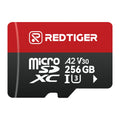
Redtiger explicitly recommends high-endurance microSD cards to guide card selection for hot-climate use. The camera firmware manages write cycles efficiently, reducing thermal stress during loop recording in high-temp conditions.
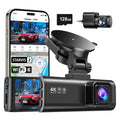
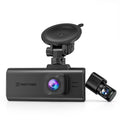
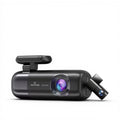
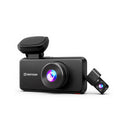
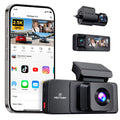
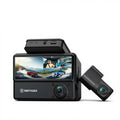
Redtiger's lineup hits the market with the specific demands of Southern US drivers in mind. You may need the best dash cam for the heat in Arizona, Texas, or Florida. A master combination of supercapacitor power management, an operating range of 70°C, sealed optics, and high-endurance storage compatibility keeps the camera working year-round.
Heat is the most predictable threat to a dash cam in the Southern United States. You can entirely avoid the mishaps with the right equipment and a few basic protective habits. A standard cam with a lithium-ion battery, a stock microSD card, and an adhesive mount on a Phoenix dashboard is on borrowed time.
A dash cam that's heat-resistant enough for real desert and subtropical conditions needs what Redtiger offers. Pair that with a windshield sunshade and a rearview mirror mounting position. And your camera records reliably through summer after summer without corruption, distortion, or unexpected shutdown.
The best dash cam for Arizona heat combines a supercapacitor, a continuous operating temperature rating of 70°C or higher, and explicit compatibility with high-endurance microSD cards.
Yes. Sustained heat above a lithium-ion battery's rated range permanently reduces capacity. Repeated heat cycling corrupts microSD data and permanently degrades the card's write performance. Adhesive mounts fail. Lens elements distort or separate.
Use a reflective windshield sunshade, mount the dash cam behind the rearview mirror, switch to a high-endurance microSD card rated for 70°C operation, and upgrade to a camera with a supercapacitor.
Yes, it's the most impactful spec for heat-resistant dash cam performance. A supercapacitor doesn't degrade at high temperatures, doesn't swell, and poses no thermal runaway risk. It maintains function across years of hot-climate exposure without capacity loss.
Use a high-endurance microSD card rated for continuous operation at 70°C or higher. Samsung PRO Endurance, SanDisk High Endurance, and Lexar High-Endurance are all reliable options.

