



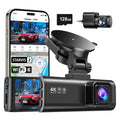
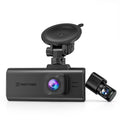

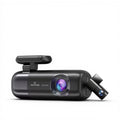
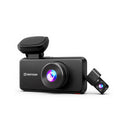












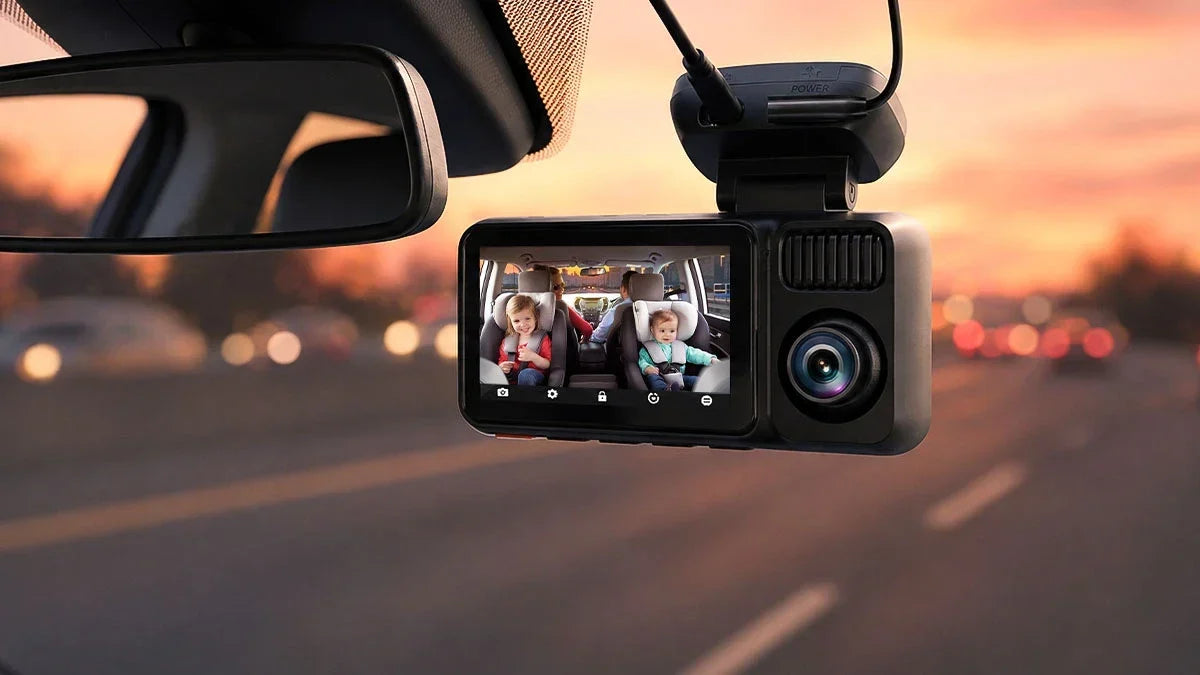
Using a dash cam as a baby car camera might sound unconventional at first. However, many parents drive with a rear-facing car seat, which blocks their view of the baby while they're focused on the road. A dash cam with an interior-facing lens gives you a live view of the back seat right on your dashboard screen.
You’ll even have recorded footage for later review. This guide explains why rear-facing seats make everything tricky in the first place. Then, you’ll know how a cabin dash cam compares to a traditional baby monitor, and why to invest in something like the REDTIGER F17 Plus, a 4-channel dash cam.
Can a Dash Cam Be Used as a Baby Car Camera?
The immediate answer: Yes. A dash cam with an interior or cabin-facing camera works well as a baby car camera. Modern models add a second or third lens pointed back into the cabin. Thus, you’ll get a live feed of your baby's car seat on the same screen that shows your front-facing road footage.
That combination is what makes the option rather useful instead of a novelty. A single device handles two jobs at once. First, it protects you legally and financially with recorded evidence if something goes wrong on the road.
Second, it lets you glance at a screen to check on your baby without twisting around in your seat. Many parents already have a dash cam for driving protection. For those, introducing cabin monitoring means choosing a model with an extra lens rather than buying a separate gadget.
Why Parents Need a Baby Camera for Rear-Facing Car Seats
Parents need a baby camera for rear-facing car seats because rear-facing is the safest way for infants and toddlers to ride. However, it's also the position that makes it quite troublesome to see your child while driving.
A dash cam's cabin lens closes that visibility gap without compromising on safety. Rear-facing isn't a personal preference; it's the law in several states. Take California, Connecticut, New Jersey, Oklahoma, Oregon, Pennsylvania, Rhode Island, and South Carolina, for instance.
All require children younger than 2 or those under specific weight and height thresholds to ride in a rear-facing car seat. Beyond the legal minimum, the American Academy of Pediatrics and the CDC both recommend keeping children rear-facing well past their second birthday.
But the idea case: keep the children riding until they reach the maximum height or weight allowed by their specific seat. NHTSA's crash data show that correctly used child safety seats reduce the risk of fatal injury by 71 percent for infants and 54 percent for toddlers.
The safety case is clear, but it creates a real, everyday challenge. A rear-facing seat, by design, points your baby away from you. Therefore, a quick glance in the rearview mirror shows you the back of a headrest at best.
Many parents resort to angled mirrors clipped to the headrest. It helps to some extent, but still requires taking your eyes off the road to interpret. A cabin dash cam solves the issue more directly: the interior lens streams a live, properly lit view of your baby's face to the dashboard screen.
Summary Comparison: Dash Cam vs Traditional Baby Car Monitors
A dash cam with a cabin camera does everything a dedicated baby car monitor does. Then, it adds driving protection on top. A standalone monitor shows only the baby seat; a dash cam shows the baby seat and the road, recording both.
| Feature | Dash Cam (Cabin Camera) | Traditional Baby Car Monitor |
| Monitor the Baby | Yes, live view plus recorded footage | Yes, live view only in most models |
| Record Road Footage | Yes, front and often rear roads too | No, not designed for this |
| Accident Evidence | Yes, saved automatically with G-sensor | No, most don't record or save clips |
| Night Vision | Yes, infrared on most cabin cameras | Varies by model |
| Parking Monitoring | Yes, with a hardwire kit installed | No, turns off with the car |
The ultimate advantage of a dash cam as a baby car camera is that you won’t have to choose between watching your baby and protecting yourself on the road. A standalone monitor gives you a live feed.
Meanwhile, a dash cam levels up with automatic recording and night vision. Furthermore, installing a hardwire kit means continuous parking monitoring long after you've parked and walked away.
Must-Have Features in a Dash Cam Baby Car Camera
The right dash cam baby car camera balances a clear view of your child with solid driving protection. Since you're buying two devices in one, several features make the biggest difference in practicality.
Interior Camera for Rear-Seat Monitoring
A dedicated cabin lens, adjustable or rotating, lets you aim the view directly at a rear-facing car seat. That means, no settling for whatever fixed angle the camera happens to cover.
Wide-Angle Viewing Coverage
A wide field of view lets you see your baby's entire seat, not just a cropped view of their face. The same advantage holds even when the seat isn't installed dead center in the back row.
Night Vision for Low-Light Driving
Infrared night vision keeps the cabin view usable after sunset or in cars with tinted windows. Therefore, you're not left staring at a dark, useless frame on evening drives (Mustang7g review).
High-Resolution Recording
Sharper resolution on the cabin lens can help you confirm whether the baby is comfortable and breathing normally. Otherwise, you’ll be checking up on their present as only a vague shape.
WiFi Connectivity for Easy Footage Access
Built-in WiFi lets you pull clips straight to your phone to review later or share with a partner or caregiver. So, you won’t have to dig the memory card out of the dash cam.
Parking Mode for Additional Vehicle Protection
A cabin dash cam with parking mode keeps recording, or stays alert, even after you've turned off the engine. It adds extra protection when your baby's car seat is left empty in a parked car.
How REDTIGER F17 Plus Works as a Baby Car Camera
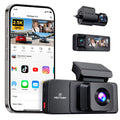
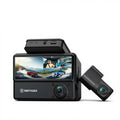
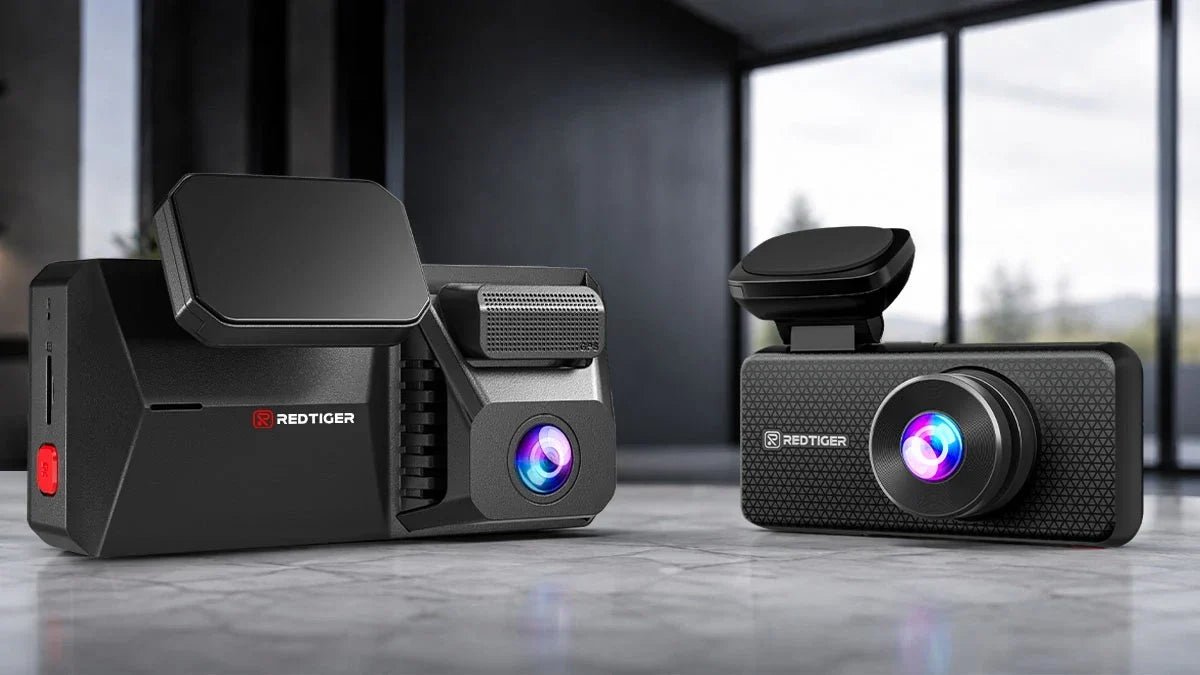
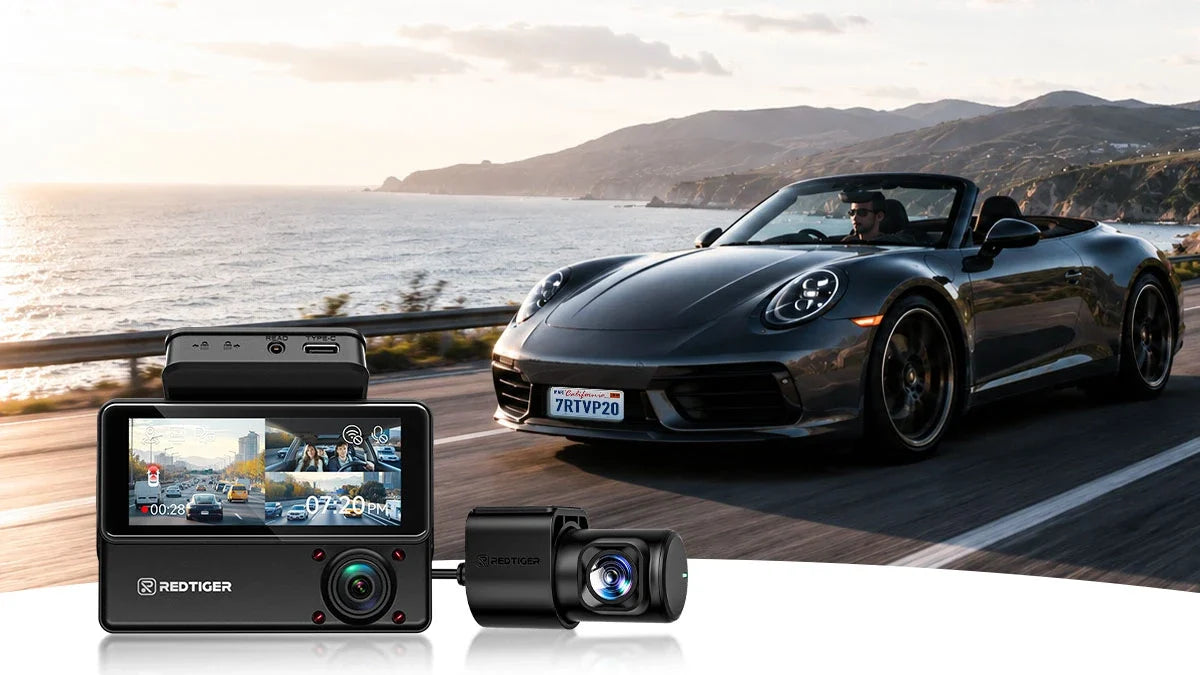
The REDTIGER F17 Plus is a 4-channel dash cam built for full-coverage applications. It combines road-facing protection with a dedicated interior lens for watching a rear-facing car seat.
Its four channels cover a 2.7K front camera, a 1080P cabin front camera, a 1080P cabin rear camera, and a 1080P rear camera. Thus, you’ll have a 360-degree coverage of the car in a single system without juggling separate devices.
In addition, the cabin camera uses a 360-degree rotating dual-lens design. You can angle it precisely toward a rear-facing car seat instead of settling for a fixed, awkward view.
On the imaging side, the front camera's Sony STARVIS 2 sensor with HDR captures cleaner detail in mixed lighting, like tunnels or oncoming headlights. Meanwhile, the dual infrared night vision keeps the cabin view visible after dark.
A 5.8 GHz WiFi connection lets you quickly pull clips to your phone via the REDTIGER app. And the built-in GPS actively timestamps your route and speed on every recording.

How to Set Up Your F17 Plus to Monitor a Rear-Facing Car Seat
Setting up the F17 Plus to watch a rear-facing car seat takes about ten minutes once it's mounted. Mache Forum’s testing mostly came down to aiming the cabin lens correctly and confirming the view.
- Mount the F17 Plus at the center of the front windshield. It should be high enough to keep your line of sight free yet low enough to stay within your wiper's cleaning path.
- Rotate and adjust the rear-plus-cabin camera to aim directly at the rear-facing car seat area. Also, check whether the seat sits centered in the frame rather than at the edge.
- Keep an eye on the real-time view on the touchscreen from time to time. It’ll help you confirm the baby seat remains centered and clearly visible before you start driving.
- Always take some time to test the infrared night vision after dark. You must make sure your baby is still clearly visible in low-light conditions, adjusting the angle if necessary.
- Properly set up loop recording and the G-sensor from your cam settings. Otherwise, critical footage may not be saved automatically and may be overwritten by newer clips.
Conclusion
A dash cam, as a baby car camera, gives parents something a mirror or a single-purpose monitor can't. You’ll have a clear, well-lit view of a rear-facing car seat combined with the driving protection. It grants strong safety for extended rear-facing seating, with the everyday difficulty of seeing your baby from the driver's seat, aside from those legal constraints.
No wonder a cabin dash cam earns its place on the dashboard. A 4-channel dash cam like the REDTIGER F17 Plus takes it further with a rotatable cabin lens with full front-and-rear road coverage. You don’t have to choose between watching your baby and protecting your car. Set it up and aim it at the seat – you've got the peace of mind every time you pull out.
If you're looking for more options, check out our guide to the best 4-channel dash cam for a closer look at available choices.
Frequently Asked Questions (FAQs)
Can a dash cam replace a baby monitor in a car?
For in-car use, yes. A dash cam with a cabin lens gives you the same live view as a dedicated baby monitor provides. Plus, you’ll have the recorded footage and road protection that a standalone monitor doesn't offer.
Can I monitor my baby in a rear-facing car seat with a dash cam?
Yes. It’s applicable as long as the dash cam has an adjustable or rotating cabin camera that can be angled toward the back seat. Mount the main unit centrally on the windshield. Then, rotate the cabin lens until the car seat is clearly centered in the live view.
What Is the best dash cam for family safety?
A 4-channel dash cam with a dedicated cabin camera, night vision, and parking mode covers the most ground for family use. It monitors the road, your child, and the parked car in one system. The REDTIGER F17 Plus fits that description with its 2.7K front cam, dual 1080P cabin and rear cams, and built-in infrared night vision.
Does an interior dash cam work at night?
Yes. Most interior dash cam models include infrared night vision. The cabins, understandably, get dark quickly once the sun goes down. It's worth testing the feature after dark before you rely on it. It’s because infrared quality can significantly vary between dash cam models. Even the camera placement can affect how well it lights up a rear-facing seat.

Leave a comment
All comments are moderated before being published.
This site is protected by hCaptcha and the hCaptcha Privacy Policy and Terms of Service apply.