
















Best Dash Cam for SUV Driving: Top 2026 Picks Compared
Most SUV owners end up buying a random two-channel dash cam for cars, only to regret it later. In the USA, an SUV needs more coverage than a standard sedan on any road. Everything gets larger with an SUV – more on-road vehicles, more cargo space, and more passengers.
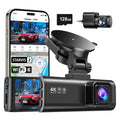
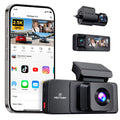
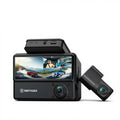
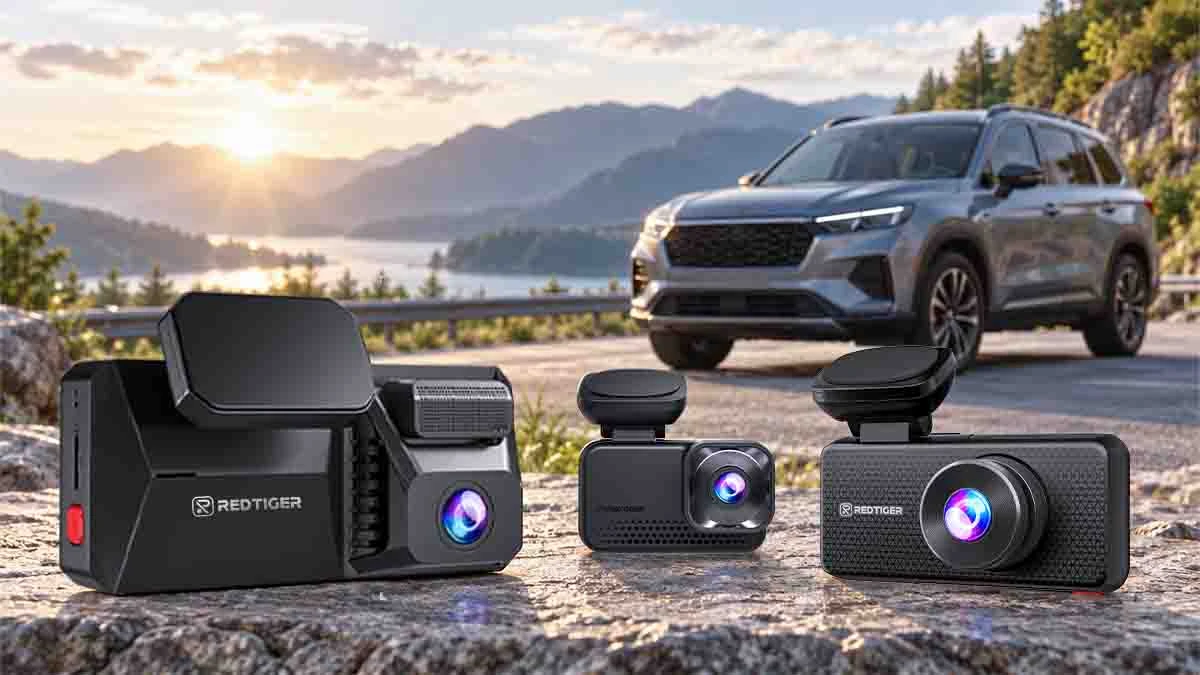
REDTIGER F17 Elite 4K 3-Channel Dash Cam is arguably the best dash cam for SUV use in 2026. Its three-channel setup covers the front, rear, and interior at once. However, the "best overall" doesn't mean "best for everyone."
Many care more about front-and-rear image quality than interior coverage. Some go for a lot of night driving on rural roads. This guide breaks down what determines an SUV dash cam, compares three REDTIGER models, and helps you choose the right one for how you drive.
Why an SUV Needs a Different Dash Cam in 2026
An SUV's size, cargo space, and passenger load create coverage needs that a small sedan doesn't have. That effectively changes what the "best dash cam" actually means for SUVs.
Many dash cams are built for compact cars. They barely translate well to a three-row SUV with a cargo area, a family in the back seats, and a body long enough to create real blind spots.
Longer Body, Bigger Blind Spots
A federal study measured rear blind zones across vehicle types. It found that direct-view blind zones were consistently larger for taller, longer vehicles than for standard passenger cars.
The NHTSA says that the same logic directly applies to most SUVs. A comparatively wider rear camera field of view can close that gap, unlike a solo factory mirror.
Rear and Cargo-Area Coverage
An SUV's rear window sits farther from the driver. Cargo, a third-row headrest, or a rear wiper often partially blocks it. So rear camera placement and field of view matter more than in a car with a short, unobstructed rear window.
Family, Rideshare, and Passenger Coverage
With more seats to fill, SUVs see more use for family trips, carpooling, and rideshare driving. Interior footage adds real value to such situations. Documenting a dispute or having peace of mind about who's in the back seat can save the day.
Parking and Heat Challenges
A larger vehicle often sits in larger, more crowded, and busier parking lots. It also absorbs more direct sun across its extended glass area. So, parking mode reliability and heat tolerance become crucial for an SUV that spends extended time sitting in a hot lot.
Why 2-Channel and 3-Channel Setups Matter
A 2-channel setup covers the road ahead and directly behind. Surely, the two-way coverage handles most collision scenarios well enough.
Meanwhile, a 3-channel setup adds interior/cabin coverage. That's where a modern SUV's extra seating capacity comes in.
How We Ranked the Best Dash Cams for SUVs in 2026
We compared the three REDTIGER models (F17 Elite, F77, ViewClear70) against the same criteria. We've weighted them toward what matters for SUV-specific use rather than raw spec-sheet numbers.
Evaluation Criteria
- Video Resolution: 4K, 2K, or dual 4K across the available channels.
- Sensors: Sony STARVIS 2, IMX678, and HDR processing for handling mixed lighting.
- Channels: 1-channel, 2-channel, or 3-channel coverage.
- Night Vision and Low-Light Performance: How usable footage actually looks after dark.
- Field of View and Coverage: How much of the road and cabin each camera actually captures.
- Parking Mode and Buffered Recording: Whether the camera keeps working while the SUV sits unattended.
- WiFi App Speed, GPS, and Voice Control: How easily you can actually pull and manage footage.
- Installation Difficulty in SUVs: How the cable routing and mounting hold up in a larger cabin.
- Heat Resistance and Reliability: How the camera holds up to a hot, sun-soaked SUV interior.
Best Dash Cams for SUVs in 2026
Each of the three REDTIGER models leads in a different priority: full coverage, front-and-rear image quality, or night-driving performance. The table below compares them side by side
Model
Channels
Resolution + Sensor
Best For
REDTIGER F17 Elite
3 (front + rear + interior)
4K/2.5K/1080P, full STARVIS 2
Family SUVs, full coverage
REDTIGER F77
2 (front + rear)
Dual 4K, Sony IMX678
Highway driving, image quality
REDTIGER ViewClear 70
2 (front + rear)
4K front + 2.5K rear, dual HDR
Night and rural driving
REDTIGER F17 Elite: Best Overall Dash Cam for SUVs
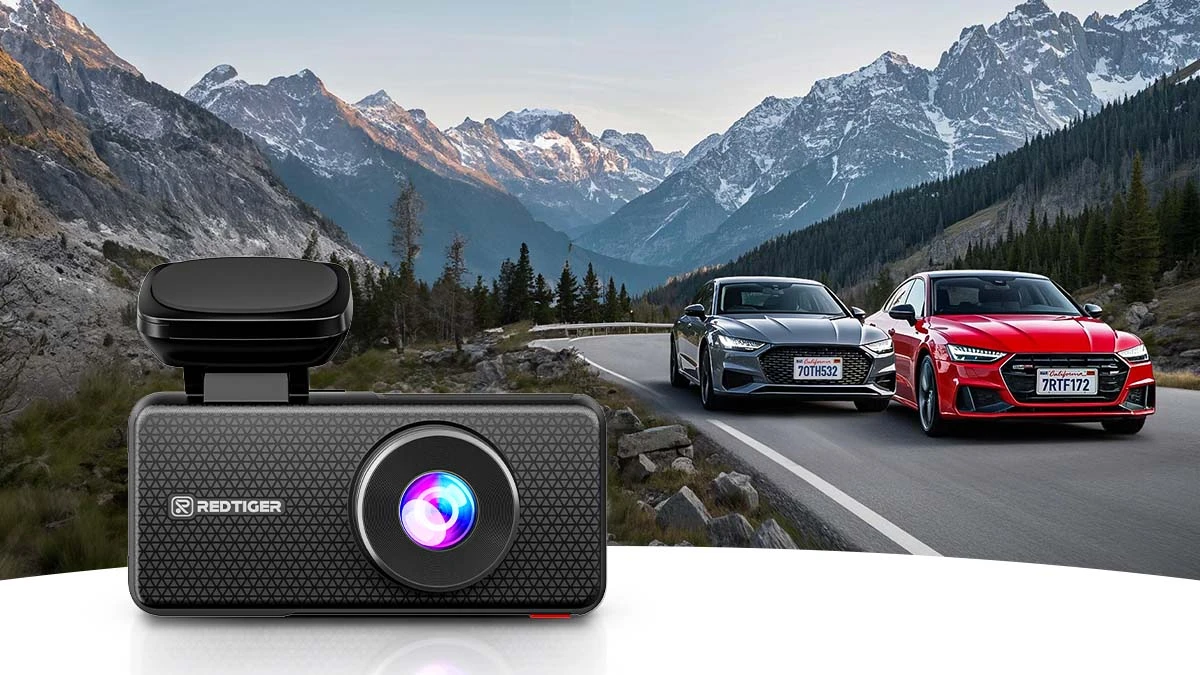
Three-channel coverage matters more in an SUV than in a compact sedan because SUVs have more cabin space and carry more people. The F17 Elite pairs Sony STARVIS 2 sensors (IMX678 front, IMX675 rear) with a Sony STARVIS IMX662 interior camera.
It also comes with WiFi 6 for faster transfers and 24/7 parking mode support once hardwired (Auto Guide). For a three-row family SUV, that interior channel documents everything from a sibling squabble to a roadside stop.
Your road trips benefit from having the whole vehicle, not just the road ahead, on record. Broader coverage like the F17 Elite seems more useful for day-to-day rides than chasing the highest resolution number on a spec sheet.
REDTIGER F77: Best 4K Front and Rear Dash Cam for SUVs
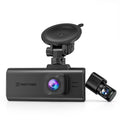
The REDTIGER F77 pairs dual Sony IMX678 sensors for genuine 4K resolution on both the front and rear cameras. It also offers voice control, 5.8GHz WiFi for quick syncing, and built-in 128GB/256GB eMMC storage (up to 10× faster than SD cards).
Many large SUVs do a lot of highway driving and road trips. That dual 4K clarity on both ends becomes a priority, especially for drivers who want to maximize front- and rear-image quality.
REDTIGER ViewClear 70: Best SUV Dash Cam for Night Driving
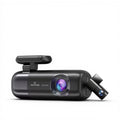
The ViewClear 70 pairs a 4K Sony STARVIS 2 IMX678 front camera with a 2.5K Omnivision OS04J10 rear camera, with HDR processing and Hyper Night Clarity on both lenses. That combination matters on long-distance driving and rural, poorly lit roads.
Picking out details like road signs and the outlines of other vehicles requires extra assistance. It depends on how well a dash cam's sensor handles low light, not just its daytime resolution.
3-Channel vs. Dual-Channel Dash Cams for SUVs: Which Is Better?
Neither setup is universally "better" from real-world-use perspectives. A 3-channel system is worth the extra cost when interior footage adds real value.
Meanwhile, a dual-channel system remains the simpler, often sufficient choice otherwise. We've broken down where each setup wins for SUV-specific uses.
Factor
3-Channel (F17 Elite)
Dual-Channel (F77 / ViewClear 70)
Front coverage
Yes
Yes
Rear coverage
Yes
Yes
Interior coverage
Yes
No
Family SUV fit
Strong
Good
Three-row SUV fit
Strong
Moderate
Road trip fit
Strong
Strong
Simpler setup
More cabling
Simpler
How to Choose the Best Dash Cam for Your SUV
Four quick questions narrow this decision down faster than comparing every spec side by side. Answering them in order will land you on the right model. You won't even need to weigh every individual spec.
Do you need interior recording?
- If Yes: the F17 Elite's three-channel setup is built for that.
- If No: the F77 or ViewClear 70 covers front-and-rear needs well.
Do you prioritize maximum front-and-rear resolution?
- If Yes: the F77's dual-4K setup is the strongest match.
Do you frequently drive at night?
- If Yes: the ViewClear 70's dual HDR and night vision are built specifically for that.
Do you regularly drive with children or passengers?
- If Yes: the F17 Elite's interior channel adds real value here too.
REDTIGER excels at meeting your dash cam needs with versatile options. For a deeper understanding of the full REDTIGER lineup, go through additional specs beyond the three.
Installing REDTIGER Dash Cam: Do SUVs Need a Different Dash Cam Setup?
Yes: it's the sought-after answer to a question frequently asked/discussed/mentioned across forums.
The biggest difference shows up in cable routing and rear camera placement. An SUV's cabin and rear glass are laid out differently than a sedan's.
Planning a few installation details ahead of your execution can save unnecessary redo, effort, and time.
Step #01: Front Camera Placement
Mount near the top of the windshield, close to the rearview mirror, same as in most vehicles.
Step #02: Rear Camera Placement on SUVs
An SUV's rear hatch glass sits farther back and often at a steeper angle than a sedan's trunk-mounted rear window. Confirm whether the camera's angle actually captures a usable view once mounted.
Step #03: Larger Rear Windows and Rear Hatch Considerations
Some SUVs have a rear wiper or defrost lines that can partially obstruct a rear camera's view. Test the placement before committing to permanent mounting.
Step #04: Cable Routing in Larger Vehicles
A longer cabin means a longer run from the front camera to the rear. Check your dash cam's included cable length against your SUV's actual dimensions before buying, and size up if needed.
Step #05: Interior Camera Positioning
Mount the interior lens to capture the front seats and, ideally, the second row. Don't point directly into a bright window that could wash out the image.
Always keep the camera's field of view unobstructed. Avoid mounting near roof racks, third-row headrests, or cargo covers that could block part of the recorded frame.
Conclusion
As we've introduced the REDTIGER F17 Elite right at the start, it's the best overall choice. The three-channel setup provides front, rear, and interior coverage in one system with additional feature-heavy perks. Many drivers may prioritize 4K front and rear recording over an interior channel.
They may prefer the F77, while the ViewClear 70 is a strong option for nighttime or poorly lit rural-road driving. Match the dash cam's coverage to how you use your SUV; don't default to larger spec numbers. Measure your drive against the four questions, and the right pick should become obvious quickly.
Frequently Asked Questions (FAQs)
It depends on how you use the SUV. A 3-channel dash cam like the F17 Elite is a strong fit for family SUVs and three-row vehicles where interior footage adds real value. However, a dual-channel setup covers most collision scenarios just as well for solo or couple drivers.
Yes, for most drivers. 4K captures enough detail to read license plates and road signs clearly. That level of detail matters more in a dispute or insurance claim than in day-to-day viewing.
The REDTIGER F17 Elite is the strongest pick for a family SUV. Its three-channel setup documents the front, rear, and interior at once. The comprehensive coverage is useful for everything from road trips to keeping an eye on passengers in the back.
The REDTIGER ViewClear 70 is built specifically for night driving conditions. It pairs dual 4K cams with HDR processing and enhanced night vision to handle rural, poorly lit roads better than most standard daytime-focused sensors.
It depends on your specific SUV's length and where you're routing the cable. Measure the path from the front camera to the rear. And choose an extended cable if your vehicle is longer than average.

Leave a comment
All comments are moderated before being published.
This site is protected by hCaptcha and the hCaptcha Privacy Policy and Terms of Service apply.