



















Is a Dual Dash Cam Worth It? How Front & Rear Video Protects You
|
|
Time to read 8 min

Help Center
Get help with setup, updates, and information

Track My Order
Check Your Package Tracking Status Online

Learn About Dash Cam
The Latest Dash Cam News and Information

Redtiger Player
Play the videos you've recorded on your PC

REDTIGER CAM APP
Download the Redtiger app and use it via a Wi-Fi connection
 Channel
 Sensor
 Video Resolution
 Display
 Lens Aperture
 HDR/WDR
 Wi-Fi
Wi-Fi
 Touch Screen Control
 Voice Control
 Parking Mode
 NiteGuard ™ Parking Mode
 Night vision capability
 GPS Logger
 G-sensor
 Loop Recording
 Storage
 CPL Supported
 Mounting Type (Default)
 Battery & Charging
 Working Temperature
We provide comprehensive pre-sales and after-sales service.

Redtiger offers free shipping on orders totaling $50 or more. We recommend purchasing shipping protection to safeguard your package and money.

Redtiger offers a 30-day money-back guarantee. You may contact us for a no-questions-asked return within 30 days of receiving your order.

Ordering a dashcam through the Redtiger official website entitles you to an additional 6-month extended warranty. This brings the total warranty period to 24 months.

Redtiger provides 24/7 customer service. You can contact us via email or call our customer service hotline directly.
No need to worry about after-sales service—we provide comprehensive after-sales support.
We offer free shipping on qualifying orders with no hidden fees or surprise charges.
Most orders are processed within 1–2 business days and shipped through trusted carriers to ensure safe and timely delivery.
You’ll receive tracking details as soon as your order ships, so you can follow it every step of the way.
From checkout to delivery, we make the process simple and worry-free.

Your satisfaction comes first. If you’re not completely happy with your purchase, you can request a return within 30 days of delivery.
Simply reach out to our support team and we’ll guide you through the process.
Once your item is received and inspected, your refund will be issued promptly according to our policy.
Shop with confidence knowing your purchase is protected.

We use industry-standard encryption and trusted payment providers to protect every transaction.
Your personal and payment information is securely processed and never stored or shared without authorization.
Multiple secure payment options are available for your convenience, so you can complete your purchase with total confidence.

Have a question? We’re here to help.
Our dedicated customer support team responds quickly and provides clear, helpful solutions — whether it’s product guidance, order updates, or after-sales support.
We’re committed to delivering a smooth experience before and after your purchase.
|
|
Time to read 8 min
You might wonder, is a dual dash cam worth it for you or your family? Many drivers ask this when they want strong protection for their car and themselves every day. A single dash cam records what happens in front, which helps a lot, but many accidents and problems come from behind or the sides.
Table of contents
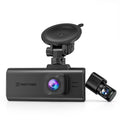
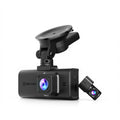
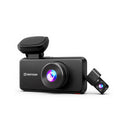
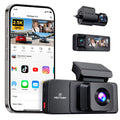
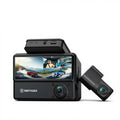
A dual-channel dash cam is a system that records both the front and rear of your vehicle at the same time. It typically includes two separate cameras: one facing forward and one facing backward. This setup ensures that you capture everything happening on the road ahead as well as behind you.
The front camera records the driving scene, including traffic, signals, and potential hazards. The rear camera focuses on what happens behind the car, such as other vehicles, pedestrians, or parking incidents. Both feeds are recorded simultaneously to provide a complete view.
Many dual dash cams offer features like loop recording, parking mode, and motion detection. This makes them useful for insurance claims, security, and overall peace of mind while driving.
When you think about whether a dual dash cam is worth it, it helps to look at the important benefits it gives you. These are not just about adding a second camera to your car. A dual dash cam system gives you better protection and clear proof if something happens.
With a dual dash cam, you get complete coverage for your vehicle. This system records the road in front and behind you at the same time. This means you capture a more complete picture of any incident, not just the part that happens in your forward view.
Your ability to document incidents improves greatly with a dual-camera setup. You will have video evidence from two different perspectives. This can clarify the sequence of events in a complex accident and show the actions of all drivers involved for a clear record.
A dual dash cam captures evidence from multiple angles, which is a huge benefit. If another car clips you from the side during a lane change or if a collision happens at an angle, having front and rear footage helps to reconstruct the event with greater accuracy.
When you use a dual dash cam, you make your car much safer. A single camera can miss a lot, but a dual cam records what happens in front of you and behind you at the same time. This means you have a better chance of catching anything that might happen, no matter where it comes from.
Rear‑end collisions are one of the most common types of crashes in the United States. According to the National Highway Safety Administration (NHTSA), rear-end collisions account for 7.5% of fatal automobile collisions. However, they account for 29% of all automobile accidents, making them one of the most frequent types of automobile accidents in the United States. These collisions often occur in heavy traffic or stop‑and‑go conditions, and drivers striking another vehicle from behind are typically found at fault.
A dual dash cam records both the front and rear of your vehicle at the same time. This means you have video evidence of what happens behind you — such as tailgating, sudden stops, or hit‑and‑run situations — which can be critical when filing insurance claims or explaining an incident to authorities. Having this rear footage gives you a stronger record of events than a front‑only system.
In accidents that involve multiple vehicles, confusion is common. A dual-channel dash cam gives you a more complete perspective. It documents the actions of cars both in front of and behind you. This footage can show the full chain of events, which helps to determine fault correctly.
High-quality video is a key factor in determining whether a dual dash cam is worth the investment. Clear footage ensures you can capture important details, such as license plates, traffic signs, and subtle events around your car, which is critical for evidence and insurance claims. Premium dual dash cams now combine high resolution and advanced sensor technology to deliver reliable, usable video in a wide range of conditions.
Modern dual dash cams have evolved from 1080p to true 4K resolution on both front and rear cameras. This jump in pixel density provides sharper, more detailed footage, making it easier to identify vehicles, license plates, and road hazards. With 4K recording, even fast-moving incidents are captured with clarity, increasing the value of your dash cam as an evidence tool.
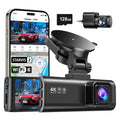
Advanced sensors further enhance video quality, especially in low-light conditions. For instance, the Redtiger F77 features Sony STARVIS 2 sensors in both cameras, enabling dual 4K recording that captures critical details like license plates even at night or during bad weather. The Redtiger ViewClear-70 combines a 4K front STARVIS 2 sensor with a 2.5K rear sensor optimized for low-light performance, providing excellent coverage for both front and rear views. These technologies ensure that your dash cam remains reliable regardless of lighting, reinforcing its worth as a safety and security investment.
Feature |
Redtiger F77 |
Redtiger ViewClear-70 |
Front Resolution |
Native 4K |
4K |
Rear Resolution |
Native 4K |
2.5K |
Sensor Technology |
Dual Sony STARVIS 2 |
Sony STARVIS 2 (Front) / Optimized Rear Sensor |
Night Vision |
Dual Night Vision |
Hyper Night Clarity |
HDR |
Front HDR + Rear HDR |
Dual HDR (Always Clear) |
Wi-Fi |
Fast 5.8 Ghz WiFi, 8Mb/s |
10X Faster WiFi 6 (5.8GHz)–Max 30M/s |
Key Benefit |
True dual 4K recording, superior low-light performance |
Fast Wi-Fi transfer, enhanced night clarity, dual HDR |
Even when you're not driving, a dual dash cam keeps your car safe. Your camera will keep an eye on your car all day and night when it's in parking mode. This means that if someone hits or damages your car while it is parked, you will be protected. If something happens, both your front and back cameras will turn on, so you have video proof.
In parking mode, a dual dash cam system keeps an eye on both the front and back of your car. If another car hits yours in a parking lot or someone tries to damage it, both cameras will turn on and record the event from two different angles.
If you wire it up correctly, your dual dash cam can use time-lapse recording to make a sped-up video of what is going on around it while it is parked. It can also wake up and record any suspicious activity using motion or impact detection, which gives you a complete record of what happened.
Today, dual dash cams can do a lot more than just record videos. You get smart features that make your daily life easier and add value. These features let you use your footage whenever you want and give you more information about each event. Your dash cam is now a useful tool that can help you drive better in many ways.
A lot of modern cameras come with built-in storage, so you don't have to buy a separate memory card. You can connect your camera to your smartphone with high-speed Wi-Fi. This connection lets you see, download, and share your video files wirelessly without having to take out the memory card.
With GPS logging, your video footage automatically records the location and speed of your car. This information is very useful for understanding any event. You can use voice control to operate your dash cam with simple commands. This means you can save a file or take a picture without ever taking your hands off the wheel.
You should think about the price and the protection it gives you if you wonder if a dual dash cam is worth it. At first, dual dash cams cost more, but you can get a lot more value for your money. These cameras cover more ground and make you and your car safer.
Because they have an extra camera unit and more advanced hardware, dual camera systems cost more than single cameras. However, this extra cost buys you complete front and rear coverage. You should view this not as an expense but as an investment in your total peace of mind on the road.
Being able to record a rear-end crash that would otherwise be your word against someone else's can make or break an insurance claim. This proof could keep you from having to pay a deductible or having your premiums go up. Models like the Redtiger F77 and Redtiger ViewClear-70 are top performers in dual dash cams, offering advanced dual 4K recording, superior low-light performance, and full front-to-rear coverage.
So, is it worth it to get two dash cams? Most people would say yes. A dual dash cam gives you strong security by showing what happens both in front and behind your car. You get clear videos of accidents, hits from behind and anything that happens while your car is parked.
Advanced models like the Redtiger F77 and ViewClear-70 have features that make your car even safer, like dual 4K recording and smart parking modes. A Redtiger dual dash cam is a good choice if you want to feel safe and protected every time you drive or park your car. You can check out Redtiger to find the model that works best for you.
For a closer look at some of the Best Dash Cam Front and Rear, check out our detailed guide to see which models stand out in performance and features.
A dual-channel dash cam records the front and back of your car, giving you full coverage and proof in case of a rear-end collision.
Yes, for most drivers, a dual dash cam is worth it. It provides full front-and-rear coverage, captures clear evidence in accidents, and adds extra security with features like parking mode. Top models like the Redtiger F77 and Redtiger ViewClear-70 deliver advanced dual 4K recording and excellent low-light performance, making them standout choices for complete protection on the road.
The second camera and extra hardware make dual dash cams more expensive at first, but they offer a lot more coverage and value.
A dual dash cam is a great choice if you want to be completely sure and have proof of things that can happen from any direction.

