














How Frequently Should You Take Breaks When Driving Long Distances
|
|
Time to read 6 min

Help Center
Get help with setup, updates, and information

Track My Order
Check Your Package Tracking Status Online

Learn About Dash Cam
The Latest Dash Cam News and Information

Redtiger Player
Play the videos you've recorded on your PC

REDTIGER CAM APP
Download the Redtiger app and use it via a Wi-Fi connection
 Channel
 Sensor
 Video Resolution
 Display
 Lens Aperture
 HDR/WDR
 Wi-Fi
Wi-Fi
 Touch Screen Control
 Voice Control
 Parking Mode
 NiteGuard ™ Parking Mode
 Night vision capability
 GPS Logger
 G-sensor
 Loop Recording
 Storage
 CPL Supported
 Mounting Type (Default)
 Battery & Charging
 Working Temperature
We provide comprehensive pre-sales and after-sales service.

Redtiger offers free shipping on orders totaling $50 or more. We recommend purchasing shipping protection to safeguard your package and money.

Redtiger offers a 30-day money-back guarantee. You may contact us for a no-questions-asked return within 30 days of receiving your order.

Ordering a dashcam through the Redtiger official website entitles you to an additional 6-month extended warranty. This brings the total warranty period to 24 months.

Redtiger provides 24/7 customer service. You can contact us via email or call our customer service hotline directly.
No need to worry about after-sales service—we provide comprehensive after-sales support.
We offer free shipping on qualifying orders with no hidden fees or surprise charges.
Most orders are processed within 1–2 business days and shipped through trusted carriers to ensure safe and timely delivery.
You’ll receive tracking details as soon as your order ships, so you can follow it every step of the way.
From checkout to delivery, we make the process simple and worry-free.

Your satisfaction comes first. If you’re not completely happy with your purchase, you can request a return within 30 days of delivery.
Simply reach out to our support team and we’ll guide you through the process.
Once your item is received and inspected, your refund will be issued promptly according to our policy.
Shop with confidence knowing your purchase is protected.

We use industry-standard encryption and trusted payment providers to protect every transaction.
Your personal and payment information is securely processed and never stored or shared without authorization.
Multiple secure payment options are available for your convenience, so you can complete your purchase with total confidence.

Have a question? We’re here to help.
Our dedicated customer support team responds quickly and provides clear, helpful solutions — whether it’s product guidance, order updates, or after-sales support.
We’re committed to delivering a smooth experience before and after your purchase.
|
|
Time to read 6 min
When you plan a long road trip, you might wonder how often you should stop to rest. Your safety and comfort need to have a break plan. Being in the car for a long time makes you tired and hurts your body. You need regular breaks to stay sharp.
When you're tired, you don't react as quickly to things on the road. You don't make good choices when you're tired, and your mind doesn't see danger right away. You are much less safe behind the wheel if you don't take breaks.
According to the National Highway Traffic Safety Administration (NHTSA), drowsy driving is a serious public health issue. In 2017 alone, more than 90,000 car accidents involved drowsy driving. In 2021, 684 people were killed in crashes involving a drowsy driver, and NHTSA estimates that fatigue-related crashes cost society approximately $109 billion annually when accounting for injuries and fatalities (not including property damage).
Most experts say you should stop every 100 to 150 miles or every two hours. If you're tired or the road is in bad shape, you might need to stop sooner. Change your plan as needed based on how you feel.
Being tired can make you react more slowly. You can't concentrate as well, which makes it more likely that you'll get into an accident. Experts say that driving while tired is just as dangerous as driving while drunk. Both make it harder to steer your car.
You might notice some signs first. If you yawn a lot or think your car is going off the road, pay attention. If you miss exits, drive at different speeds, or lose your place on the road, it's time to take a break.
The danger can grow quickly at times. You need to pull over and stop if you ever nod off or close your eyes by accident. If your eyelids feel heavy or your movements feel slow, your body is telling you that it can't go on. Stop as soon as you can.
If you use your break wisely, you'll be safer for the next part of your trip.
Get out of your car to wake up your body. Walk for a short time and stretch your arms and legs. Walking helps blood flow and makes you feel less stiff, especially after a long drive.
It's very important to drink water. Bring a water bottle and drink from it often. Eat nuts or fruit to get some energy. Don't eat a lot of food because it might make you sleepy.
Instead of just looking at your phone or dashboard, try looking far into the distance. This gives your eyes a break from looking at the road. Find something outside to look at to refresh your vision.
You won't get better if you stay in the driver's seat and look at your phone. Get up from your seat and take a break to see something new. Your mind stays tired when you check your screen.
You might need to take breaks sooner at times because of different things.
You will have to stop more often if you need to drive at night. Driving at night makes your eyes tired and your body wants to sleep. If you take more breaks at night, you won't get too sleepy.
When it's raining, snowing, or there is a lot of traffic, it wears you down faster. You might feel tired sooner. Plan extra stops to rest and relax when the weather is bad or the road is busy.
You might feel nervous or tense if you've never been on a long car trip before. This stress makes you tired. More experienced drivers don't get as tired, but everyone should take breaks. Stop as often as you need to if you're not used to long trips.
If you travel with kids or pets, you'll have to stop more often. Kids and pets need to move around, go to the bathroom, or get rid of extra energy. Every stop is good for you, too, so take advantage of these chances to stretch and clear your head.
You can do a few easy things to make your whole trip safer.
Getting enough water is a great way to stay energized. Drinking coffee or soda can make you sleepy later. Water keeps you awake and stops your energy from dropping suddenly.
You won't have to worry while you drive if you plan out your stops. Driving is less stressful when you know where you're going to stop. This also means you don't have to waste time looking for places to stop.
If you have another adult with you, switch drivers. This way, you can both relax while the other person drives. Sharing the driving on long trips keeps both of you awake and aware.
Make sure your car is in good shape by checking the oil and coolant levels, the air pressure in the tires, and the brakes. This can help you avoid problems while you're traveling. A quick check keeps you from being stuck on the side of the road.
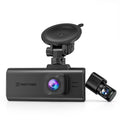
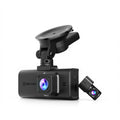
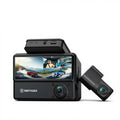
While personal discipline and awareness are essential for safe long-distance driving, modern technology can also provide valuable support. Beyond the fundamental strategies of staying hydrated and planning rest stops, dash cams with intelligent safety features have become an important tool for mitigating fatigue-related risks.
Some dash cams have alerts that tell you to stop and rest. These reminders show up after you have driven a certain distance or for a certain amount of time. It takes one worry off your mind.
Your dash cam is like having another pair of eyes. It records the whole drive in case something goes wrong. If you ever get into an accident, this record can help you prove what happened.
When you park your car in a rest area, parking mode lets the camera keep an eye on it. You will have a video record if something hits or touches your car. This gives you peace of mind while you sleep.
Dash cams with multiple cameras capture what happens around your entire vehicle—not just the road ahead. A front camera records the road, while rear and cabin cameras document your surroundings and interior activity. This 360° perspective becomes critical during long drives when fatigue might cause you to misjudge your position on the road or react slowly to changing traffic conditions.
Taking breaks every 100-150 miles or every two hours is essential for safe long-distance driving. Drowsy driving causes thousands of accidents annually—don't become part of these statistics.
Beyond personal discipline, modern dash cams provide practical support. By setting fatigue alerts at regular intervals, these cameras remind you to stop and rest, removing one more decision from your tired mind. Combined with intentional breaks, multi-camera recording, and parking mode protection, a quality dash cam makes long drives safer and less stressful.
Redtiger dash cams are designed for drivers who prioritize road safety. Don't let fatigue define your journey. Stop regularly, listen to your body, and leverage technology that keeps you accountable. Getting there safely is always more important than getting there fast.
You can get a toyota integrated dash cam on many new Toyota models. You want to check if your car offers it or if you can add it later.
A good break should last at least 15 to 20 minutes. For longer drives, plan to rest for 45 minutes every four hours.
If your eyelids feel heavy, you start drifting in your lane, or you have short moments of dozing off, you must pull over safely right away.
Yes, dash cams and some navigation apps alert you when it is time to rest. These tools also help record your trip and can add safety.
