






















Do All Semi Trucks Have Dash Cameras? Discover the Truth
|
|
Time to read 7 min

Help Center
Get help with setup, updates, and information

Track My Order
Check Your Package Tracking Status Online

Learn About Dash Cam
The Latest Dash Cam News and Information

Redtiger Player
Play the videos you've recorded on your PC

REDTIGER CAM APP
Download the Redtiger app and use it via a Wi-Fi connection
 Channel
 Sensor
 Video Resolution
 Display
 Lens Aperture
 HDR/WDR
 Wi-Fi
Wi-Fi
 Touch Screen Control
 Voice Control
 Parking Mode
 NiteGuard ™ Parking Mode
 Night vision capability
 GPS Logger
 G-sensor
 Loop Recording
 Storage
 CPL Supported
 Mounting Type (Default)
 Battery & Charging
 Working Temperature
We provide comprehensive pre-sales and after-sales service.

Redtiger offers free shipping on orders totaling $50 or more. We recommend purchasing shipping protection to safeguard your package and money.

Redtiger offers a 30-day money-back guarantee. You may contact us for a no-questions-asked return within 30 days of receiving your order.

Ordering a dashcam through the Redtiger official website entitles you to an additional 6-month extended warranty. This brings the total warranty period to 24 months.

Redtiger provides 24/7 customer service. You can contact us via email or call our customer service hotline directly.
No need to worry about after-sales service—we provide comprehensive after-sales support.
We offer free shipping on qualifying orders with no hidden fees or surprise charges.
Most orders are processed within 1–2 business days and shipped through trusted carriers to ensure safe and timely delivery.
You’ll receive tracking details as soon as your order ships, so you can follow it every step of the way.
From checkout to delivery, we make the process simple and worry-free.

Your satisfaction comes first. If you’re not completely happy with your purchase, you can request a return within 30 days of delivery.
Simply reach out to our support team and we’ll guide you through the process.
Once your item is received and inspected, your refund will be issued promptly according to our policy.
Shop with confidence knowing your purchase is protected.

We use industry-standard encryption and trusted payment providers to protect every transaction.
Your personal and payment information is securely processed and never stored or shared without authorization.
Multiple secure payment options are available for your convenience, so you can complete your purchase with total confidence.

Have a question? We’re here to help.
Our dedicated customer support team responds quickly and provides clear, helpful solutions — whether it’s product guidance, order updates, or after-sales support.
We’re committed to delivering a smooth experience before and after your purchase.
|
|
Time to read 7 min
When you're on the road or managing a fleet, you might wonder, Do All Semi Trucks Have Dash Cameras? While dash cams aren't legally required, more fleets and independent truckers are installing them to improve safety, protect against fraud, and document incidents.
This guide explores adoption rates, camera types, costs, and key benefits, helping you understand why dash cams are becoming essential equipment in today's trucking industry.
Table of contents
No, dash cameras are not legally required for all semi trucks in most regions. However, adoption across commercial fleets is high and continuing to grow. According to a 2025 industry safety survey, approximately 63% of fleets use forward-facing or dual-facing camera systems.
Telematics research also reports that around 68% of fleets have integrated camera systems into their safety programs.
Adoption is most common among large carriers, where safety compliance, liability reduction, and insurance requirements drive policy. Smaller operators vary more widely based on company policy and budget.
Dash cameras are on many trucks today for good reasons.
With a semi truck dash cam, someone can review how you drive and point out places where you can do better. This helps you become safer on the road. Coaches and managers can use the videos to give you tips that actually match the way you drive. If you are a new driver, these cameras let you learn by watching real situations from your own routes.
If you use your camera, you get protection from scams. You probably know that some people try to cause accidents and blame truckers. If you have video of what really happened, it's hard for anyone to blame you for something you didn't do. Insurance companies and police can use your footage to tell what really happened, which can save you a lot of time and trouble.
Many insurance companies offer discounts to fleets that use semi truck dash cams, viewing them as safer drivers. Dash cam footage can also support company safety programs, showing good driving habits. In some cases, drivers may qualify for safety incentives or insurance rewards based on their records.
When you are in an accident, a semi truck dash cam captures everything that happened. Instead of guessing who is at fault, you have a video record that shows the facts. This makes sorting out an accident much quicker and helps you avoid unfair blame.
A lot of people want to know if they have to put a dash camera in their truck because of the law.
Across the United States, there is no big rule from the government that says you must use a dash camera in your truck. Adding a dash camera is a choice for most fleets and drivers. When you add a semi truck dash cam, you do it for the benefits, not because the law says so.
Even though the country as a whole does not make dash cameras a rule, some places or special jobs do have their own rules. Some types of trucking, like towing, might require cameras in certain states or cities. That is why it is smart for you to check with your company and find out if your city or state has any special laws about dash cameras.
If you are thinking about getting a dash cam for your semi truck, you will notice there are different types.
A forward-facing camera sits near your front windshield and shows the road ahead. You usually put it high up inside your cab. This type of camera records what happens right in front of you, making it easy to see how an accident or event took place. It is the most used camera and many drivers prefer it for its simplicity and good price.
Driver-facing cameras look inside your cab. Companies may use these to see if you are texting or getting too tired during your route. Some drivers feel these cameras are too personal and do not want them in their trucks, so not every company uses them. You may want to check with your company, or decide for yourself if you want to have a camera facing you.
For some of you, having one camera is not enough. Multi-camera systems use several cameras so you can see every angle around your truck. With these, you don't worry about missing anything happening in your blind spots or at the back of your trailer. These full systems give you the most protection and the biggest view.
If you want to know how a semi truck dash cam records, you will find out that not all of them work the same way.
With most dash cameras, you will find something called continuous loop recording. This means your camera is always working and saves video all the time. Once the memory card is full, the oldest video will disappear to make room for new video.
Some dash cameras only save video when something special happens, like a hard stop or a sudden bump. These records save what happened right before, during, and after the event. This saves you space and makes it easy to find the right moment when you look back.
Cost for semi truck dash cams varies widely based on camera type, features, and whether you're an independent owner‑operator or a large fleet investing in advanced systems. Basic units suitable for individual drivers typically range from budget to mid‑tier price points: single‑ or dual‑camera setups start around $150–$300, while more comprehensive multi‑camera systems can reach $300–$600 or more for full coverage.
For fleets wanting advanced features like GPS tracking, cloud storage, AI alerts, telematics integration or multi‑angle coverage, premium setups often cost $1,000+ per truck, and many require ongoing cloud or service fees on top of hardware purchases. Here's how pricing typically breaks down:
When you look at the trucking industry, you can see dash cameras on more trucks every year. Many drivers and companies feel safer when they have cameras in place.
If you look at trucking today, more fleets and drivers add dash cams for semi trucks every year. People trust these cameras to give them proof if something goes wrong. As more companies see good results, others want to follow and put cameras in all trucks. It is a smart move if you care about staying safe and protecting yourself at work.
Tech keeps moving fast. Today's cameras can spot signs of distracted driving, send warnings, and store video on the cloud so you can get it from anywhere. The more technology grows, the more features you will get with new dash cameras for your truck. As time passes, your camera will become even more useful to you on the road.
If you are still wondering, do all semi trucks have dash cameras, the answer is no, but they show up on more trucks each year. More drivers and companies see the benefits, from accident reports to lowering costs. With the value dash cameras bring, it is easy to see why they become a normal part of every safe fleet or independent trucker's gear.
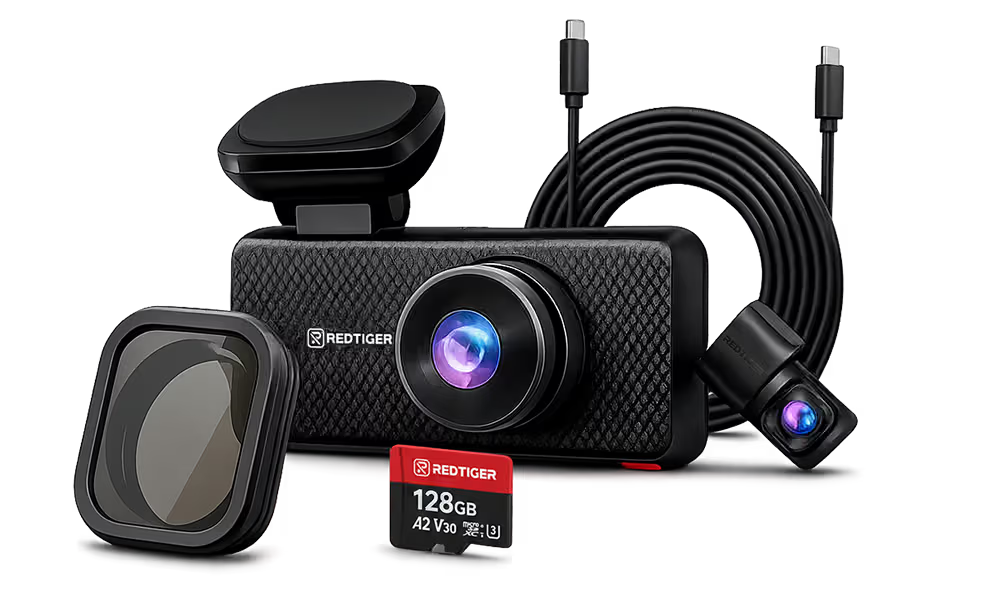
If you want an easy-to-use and reliable model, Redtiger can be a great choice for your next dash cam. In the end, a dash cam for your semi truck helps protect you, your job, and everyone who shares the road with you.
You do not need to have a dash cam by law. Most companies or drivers make this choice themselves for safety reasons.
You can use dashcam video as proof after an accident. Police, insurance, and courts trust this footage to help figure out what actually happened.
Most dash cameras keep recording all the time, and some only record when they detect something unusual. Both help you save important moments on the road.
Yes, your company can install a driver-facing camera to monitor safety and compliance. Acceptance depends on company policy and driver comfort, as some drivers may feel uneasy being recorded inside the cab.
