















3 Channel vs 4 Channel Dash Cam: Which Setup Protects Your Vehicle?
|
|
Time to read 9 min

Help Center
Get help with setup, updates, and information

Track My Order
Check Your Package Tracking Status Online

Learn About Dash Cam
The Latest Dash Cam News and Information

Redtiger Player
Play the videos you've recorded on your PC

REDTIGER CAM APP
Download the Redtiger app and use it via a Wi-Fi connection
 Channel
 Sensor
 Video Resolution
 Display
 Lens Aperture
 HDR/WDR
 Wi-Fi
Wi-Fi
 Touch Screen Control
 Voice Control
 Parking Mode
 NiteGuard ™ Parking Mode
 Night vision capability
 GPS Logger
 G-sensor
 Loop Recording
 Storage
 CPL Supported
 Mounting Type (Default)
 Battery & Charging
 Working Temperature
We provide comprehensive pre-sales and after-sales service.

Redtiger offers free shipping on orders totaling $50 or more. We recommend purchasing shipping protection to safeguard your package and money.

Redtiger offers a 30-day money-back guarantee. You may contact us for a no-questions-asked return within 30 days of receiving your order.

Ordering a dashcam through the Redtiger official website entitles you to an additional 6-month extended warranty. This brings the total warranty period to 24 months.

Redtiger provides 24/7 customer service. You can contact us via email or call our customer service hotline directly.
No need to worry about after-sales service—we provide comprehensive after-sales support.
We offer free shipping on qualifying orders with no hidden fees or surprise charges.
Most orders are processed within 1–2 business days and shipped through trusted carriers to ensure safe and timely delivery.
You’ll receive tracking details as soon as your order ships, so you can follow it every step of the way.
From checkout to delivery, we make the process simple and worry-free.

Your satisfaction comes first. If you’re not completely happy with your purchase, you can request a return within 30 days of delivery.
Simply reach out to our support team and we’ll guide you through the process.
Once your item is received and inspected, your refund will be issued promptly according to our policy.
Shop with confidence knowing your purchase is protected.

We use industry-standard encryption and trusted payment providers to protect every transaction.
Your personal and payment information is securely processed and never stored or shared without authorization.
Multiple secure payment options are available for your convenience, so you can complete your purchase with total confidence.

Have a question? We’re here to help.
Our dedicated customer support team responds quickly and provides clear, helpful solutions — whether it’s product guidance, order updates, or after-sales support.
We’re committed to delivering a smooth experience before and after your purchase.
|
|
Time to read 9 min
Choosing between a 3-channel and a 4-channel dash cam shouldn't be a hassle. But so many specs, camera configurations, and marketing claims often turn the decision confusing.
Both systems cover far more ground than a basic front-and-rear setup. The real question is whether the extra in a 4-channel system solves a problem or whether a 3-channel cam covers 95% of the incidents.
This insightful guide breaks down exactly how the two systems differ and who benefits from each one. It also discusses how to make the right call regarding a dash cam for your car without overthinking.
Table of contents
Before diving into the comparison, you should know that each configuration records precisely. Let's clear up the terminology first.
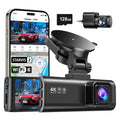
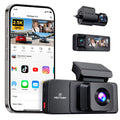
A 3-channel dash cam uses three separate camera feeds recorded simultaneously –
The combo covers the most common collision angles. It's a natural choice for rideshare drivers, parents monitoring teen drivers, and anyone who needs to record the inside and outside of the vehicle.
A 4-channel dash cam adds a fourth recording stream. That fourth camera is primarily positioned to cover one of these areas –
The result is near-360° coverage that closes the angular gaps a 3-channel system can't reach. It's particularly relevant for commercial vehicles and high-theft parking situations.
The straightforward answer: absolutely. For most personal vehicle drivers, a 3-channel dash cam provides everything needed for solid incident documentation.
There could be front collisions, rear-end impacts, and in-cabin disputes between drivers and passengers.
And they account for the overwhelming majority of real-world dash cam footage in insurance claims. A 3-channel setup covers all three angles, with no gaps in the scenarios that define daily driving risk.
Running three streams sounds heavy, but for most drivers it's manageable—a 128GB microSD card is often a reasonable starting point depending on resolution, bitrate, and loop settings. The main "cost" is installation: you'll route a rear cable and position the cabin lens cleanly, which many drivers can DIY with patience (or have installed quickly). If you want the most value, prioritize:
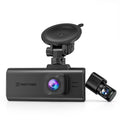
As one example, a model like the Redtiger F17 Elite is often cited in this category because it records 4K front + 2.5K rear + 1080p full color night vision interior with GPS and parking mode—the exact feature mix most drivers are shopping for.
There are specific situations where the fourth camera earns its cost and setup effort. Take a look at what happens when a 4-channel system goes from "nice to have" to "genuinely necessary."
According to data from Accident Analysis & Prevention (2023), approximately 74% of highway accidents involve side-impact collisions. A 3-channel dash cam captures what's directly in front and behind.
However, it holds no record of what struck the vehicle from the side. In dense traffic or high-speed merges, that blind spot can make the difference between a clear insurance claim and a disputed one.
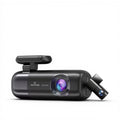
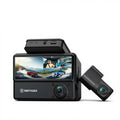
This is where systems like the Redtiger VisionPano 40 can help extend coverage to side angles, improving documentation in dense traffic, lane changes, and high-speed merges where blind spots are most critical.
Anyone operating a vehicle with a separate cargo area faces a documentation gap that a standard 3-channel setup can't close. It may concern a cargo van, box truck, or large SUV used for work purposes.
A fourth camera pointed at the cargo bed provides a continuous record of the contents, with a chain of custody for deliveries. It also keeps a record of evidence in the event of theft or damage claims.
In the U.S., infants are required to use approved car seats, and rear-facing seating is mandated or strongly recommended for young children in many states. This makes in-cabin monitoring more difficult while driving. A rear-mounted cabin camera facing forward toward the rear seats—such as configurations found in systems like the Redtiger F17 Plus—allows drivers to monitor children and cabin activity without turning around or losing focus on the road.
The NHTSA estimates that around six million accidents occur in US parking lots annually. A 4-channel dash cam in parking mode captures angles a 3-channel system misses entirely.
It includes side-swipes, door dings, and isolated hit-and-run incidents. For drivers parking in urban areas, tight garages, or high-density lots, the extra coverage pays for itself quickly.
Read more: What You Might Lose If You Don't Choose a 4-Channel Dash Cam
A 4-channel dash cam surely offers more coverage. However, it still comes with real downsides worth knowing before you buy.
A capable 3-channel dash cam mostly runs between $150 and $250. Quality 4-channel systems start around $220 that can climb well past $400 for premium units.
The fourth camera doesn't address a specific gap in your driving situation in most personal car use cases. In those cases, the price difference is hard to justify.
Recording four streams simultaneously, a 4K front feed + three 1080p supporting feeds, consumes microSD capacity fast. A 128GB card may provide sufficient loop recording headroom for a 3-channel system.
The same card requires upgrading to a 256GB or larger high-endurance microSD for a 4-channel setup. Budget for that additional storage cost when evaluating the total system price.
Some 4-channel dash cams degrade the quality of individual streams when all cameras run simultaneously. Otherwise, it becomes difficult to manage the continued processing load.
Always verify that the model you're considering maintains your target resolution on all active feeds. It's not just for the front camera (prime feed), but for every supporting feed as well.
The comparison below covers the dimensions that matter most for most buying decisions. Consider it as a quick reference before diving into the decision guide.
Feature |
3-Channel |
4-Channel |
Best For |
Coverage angles |
Front, rear, cabin |
Front, rear, cabin + side/cargo |
4-CH for fleets/vans |
No. of cameras |
3 |
4 |
Depends on use |
Typical resolution |
4K front + 1080p x2 |
4K front + 1080p x3 |
Similar front quality |
Storage demand |
Moderate |
High |
3-CH for daily use |
Price range |
$150–$250 |
$220–$400+ |
3-CH for budget |
Ideal user |
Rideshare, commuters, families |
Fleets, vans, delivery trucks |
Check the decision guide |
Still not sure which system fits your situation? This straightforward decision guide narrows it down quickly based on how and where you actually drive.
A 3-channel cam involves routing three feeds. The front unit routes to the windshield, the rear camera to the back window, and the interior camera remains mounted overhead or on the rearview mirror housing.
For drivers with basic DIY comfort, it seems like a weekend project. Professional installation typically runs 1 to 2 hours.
The fourth camera covers a side angle, a cargo area, or a second interior perspective. It requires routing a separate power and data cable through a different part of the vehicle.
For cargo-area coverage in a van or truck, it can involve significant interior panel removal. Budget for professional installation and confirm experiences with multi-channel dash cam systems.
To reduce this complexity, some multi-channel systems—such as certain Redtiger dash cam configurations—integrate multiple camera modules into the main unit or rear camera housing, helping simplify wiring and installation compared to fully separated setups.
Always choose high-endurance microSD cards rated for dashcam use. It's because standard cards degrade quickly under the continuous write cycles with a dash cam.
The 3-channel vs 4-channel dash cam showdown comes down to one question. You need to ask – does your vehicle and driving situation have coverage gaps that a 3-channel system can't close?
For most personal vehicle drivers, the answer is no. A quality 3-channel setup like the Redtiger F17 Elite covers the angles that define nearly every real-world incident, at a reasonable price and storage specs.
It's different for commercial vehicle operators, fleet managers, cargo drivers, and high-density parking navigators. Redtiger F17 Plus or VisionPano 40 closes gaps for documentation and dispute resolution.
Whichever one you choose, a 3-channel or 4-channel dash cam, Redtiger offers well-engineered options. These dash cams are exclusively built for drivers who need them to avoid fraudulent claims.
Not necessarily. A 4-channel cam provides more coverage, but "better" depends on whether the extra feed is actually needed. For most drivers, a 3-channel dash cam covers the incidents that actually occur.
Probably not, unless you operate a van/truck with a cargo area, manage a fleet, or park regularly in high-theft areas. In those cases, parking mode coverage from every angle is essential to tracking evidence.
A 3-channel system with a 4K front feed and two 1080p supporting cams works fine with a 128GB high-endurance microSD. It may require 256GB with a frequently active parking mode. A 4-channel setup with four simultaneous streams needs at least 256GB, with 512GB recommended for loop recording.
Yes, usually. Each additional camera needs its own power and data connection, and a traditional 4-channel setup requires routing extra wiring to the side, cargo, or additional cabin angles.
However, some systems use semi-integrated designs where multiple camera modules are built into a main unit or rear housing, reducing the amount of separate wiring compared to fully standalone setups.
Most 3-channel dash cam systems aren't designed to accept additional camera inputs. Expanding to four channels requires purchasing a new unit. Still, check the manufacturer's specifications before buying.

