

















What You Might Lose If You Don't Choose a 4-Channel Dash Cam
|
|
Time to read 7 min

Help Center
Get help with setup, updates, and information

Track My Order
Check Your Package Tracking Status Online

Learn About Dash Cam
The Latest Dash Cam News and Information

Redtiger Player
Play the videos you've recorded on your PC

REDTIGER CAM APP
Download the Redtiger app and use it via a Wi-Fi connection
 Channel
 Sensor
 Video Resolution
 Display
 Lens Aperture
 HDR/WDR
 Wi-Fi
Wi-Fi
 Touch Screen Control
 Voice Control
 Parking Mode
 NiteGuard ™ Parking Mode
 Night vision capability
 GPS Logger
 G-sensor
 Loop Recording
 Storage
 CPL Supported
 Mounting Type (Default)
 Battery & Charging
 Working Temperature
We provide comprehensive pre-sales and after-sales service.

Redtiger offers free shipping on orders totaling $50 or more. We recommend purchasing shipping protection to safeguard your package and money.

Redtiger offers a 30-day money-back guarantee. You may contact us for a no-questions-asked return within 30 days of receiving your order.

Ordering a dashcam through the Redtiger official website entitles you to an additional 6-month extended warranty. This brings the total warranty period to 24 months.

Redtiger provides 24/7 customer service. You can contact us via email or call our customer service hotline directly.
No need to worry about after-sales service—we provide comprehensive after-sales support.
We offer free shipping on qualifying orders with no hidden fees or surprise charges.
Most orders are processed within 1–2 business days and shipped through trusted carriers to ensure safe and timely delivery.
You’ll receive tracking details as soon as your order ships, so you can follow it every step of the way.
From checkout to delivery, we make the process simple and worry-free.

Your satisfaction comes first. If you’re not completely happy with your purchase, you can request a return within 30 days of delivery.
Simply reach out to our support team and we’ll guide you through the process.
Once your item is received and inspected, your refund will be issued promptly according to our policy.
Shop with confidence knowing your purchase is protected.

We use industry-standard encryption and trusted payment providers to protect every transaction.
Your personal and payment information is securely processed and never stored or shared without authorization.
Multiple secure payment options are available for your convenience, so you can complete your purchase with total confidence.

Have a question? We’re here to help.
Our dedicated customer support team responds quickly and provides clear, helpful solutions — whether it’s product guidance, order updates, or after-sales support.
We’re committed to delivering a smooth experience before and after your purchase.
|
|
Time to read 7 min
The industry has developed from the first "single front lens" to the multi-channel systems we see today in the fiercely competitive dash cam sector. Multi-channel dash cams are becoming more and more popular among automobile owners.
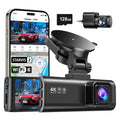
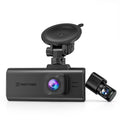
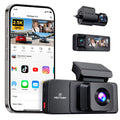
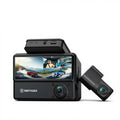
But do you, as a customer, really know what a 4-channel dash cam can provide you before making a purchase? Selecting 2-channel or 4-channel depends on whether your driving records can provide complete 360-degree protection, not only on the number of lenses. Today, we'll examine why more owners are opting for 4-channel solutions using the Redtiger F17Plus 4-Channel Dash Cam as an example.
Table of contents
4-channel recording greatly enhances side-impact documentation, cabin event reconstruction, and evidence continuity in low-speed or parked situations when compared to 1- or 2-channel systems.
A 4-channel dash cam, such as Redtiger F17 Plus reduces disputed liability by covering side impacts, cabin events, and parked incidents that 1- or 2-channel systems commonly miss.
Rideshare drivers, families with small children, and cars that routinely operate in crowded or cramped spaces will find it very helpful.
Blind spots are frequently the main source of difficulty when driving, obstructing insurance claims and liability assessments. While different types of dash cameras offer varying levels of coverage, a dash cam cannot foresee the onset of a traffic collision, its real usefulness is in offering vital information and visual assistance when an accident unavoidably occurs and disagreements emerge between parties.
1-Channel |
2-Channel |
3-Channel |
4-Channel |
|
Key Features |
Records front view only |
Records Front + Rear |
Records Front + Rear + Front Cabin |
Records Front + Rear + Front Cabin + Rear Cabin |
Core Advantages |
• Highest Cost-Performance
• Simplest installation (front power only)
• Compact size, highly discreet
|
• The Industry Standard
• Sufficient proof against rear-end collisions
• Balanced performance and price
|
• Coverage of exterior + interior
• Ideal for rideshare & cash-in-transit
• Strong defense against insurance scams
|
• Zero Blind SpotsA*
• Best for accident liability determination
• Essential for complex & high-risk driving scenarios
|
Key Disadvantages |
• Large rear and side blind spots
• No cabin recording
|
• Side blind spots
• No cabin recording
|
• Still has side blind spots
• Increased wiring, slightly complex installation
|
• Complex installation
• Consumes storage space extremely fast
|
Target Audience |
• Daily commuters
• Budget-conscious users
• New drivers (focus on front view)
|
• Most private car owners
• Drivers concerned about rear-end collisions
• New drivers / Average road conditions
|
• Rideshare/Taxi drivers
• Trucks/Long-distance coaches (monitor fatigue)
• Families with small children (cabin monitoring)
|
• Rideshare/Delivery drivers
• Fleets/Enterprise vehicles
• Drivers in frequent congestion
• Users with maximum safety requirements
|
Liability Determination |
⭐⭐
(Proves front vehicle fault only)
|
⭐⭐⭐⭐
(Resolves front and rear collisions)
|
⭐⭐⭐⭐
(Resolves front/rear collisions + cabin disputes)
|
⭐⭐⭐⭐⭐
(Complete evidence chain, solves complex accidents like side impacts and scams)
|
Storage Pressure |
⭐⭐
Low
|
⭐⭐⭐
Low
|
⭐⭐⭐⭐
Low
|
⭐⭐⭐⭐⭐
Extreme, requires large SD card
|
Installation Difficulty |
Very simple |
Medium, requires rear window wiring |
High, requires multi-channel wiring |
Highest, professional installation recommended |
The Redtiger F17 Plus 4-channel system was created especially to manage these challenging situations. It greatly enhances evidence continuity by expanding lens coverage, assisting owners in restoring the truth as much as feasible throughout the claims procedure and maintaining the initiative in protecting their rights.
The cabin blind spot refers to areas inside the vehicle that are not visible to the driver or exterior cameras, yet frequently become the source of disputes and missing evidence. No matter how good a driver is, there are always places inside and outside the car that are out of their line of sight.
The cabin blind spot is frequently the site of the most disagreements, aside from the actual blind spots at the front and back.
The cabin is rarely captured by conventional dash cams. However, in certain situations, cabin video is essential for real-world vehicle use:


The core lens that usually equipped with the highest resolution:
Typically 1080P resolution:
The value of these two lenses is often underestimated:
The cabin camera's wide-angle view can collect additional information from the inside out when a side-impact or side-swipe happens during a lane change, capturing important dynamics outside the side windows.
Rather than serious crashes, many evidence gaps in real-world driving are generated by routine incidents like side contact in confined places, low-speed lane changes, or parking lot scrapes. These accidents often occur outside of the conventional front-and-rear recording zones, when crucial context is most likely to be missed by 1-channel and 2-channel systems.
When important video is absent, liability assessment becomes difficult and increases long-term insurance costs and repair costs. The best 4 channel dash cam addresses these limitations through a combination of coverage, imaging, and usability features:
Supporting evidence & parameters:
Notes & limitations:
Supporting evidence & parameters:
Notes & limitations:
Supporting evidence & parameters:
Notes & limitations:


